Beauty
Breast Augmentation with Preservé Technique: How Does It Work?
Those who know me understand that I evaluate surgical innovations with caution. Before adopting one, I want to understand its rationale and concrete benefit for patients, not the promise that accompanies it.
At IMAGE REGENERATIVE, in Milano and St. Moritz locations, breast augmentation is among the procedures I perform most frequently, and the Preservé technique has modified some important steps.
After several procedures performed this way, I am increasingly convinced of the possibilities it offers in correctly selected patients. Let's see what it involves, on which plane the implant works, for whom it is indicated, and what it entails for recovery.
What is the Preservé technique?
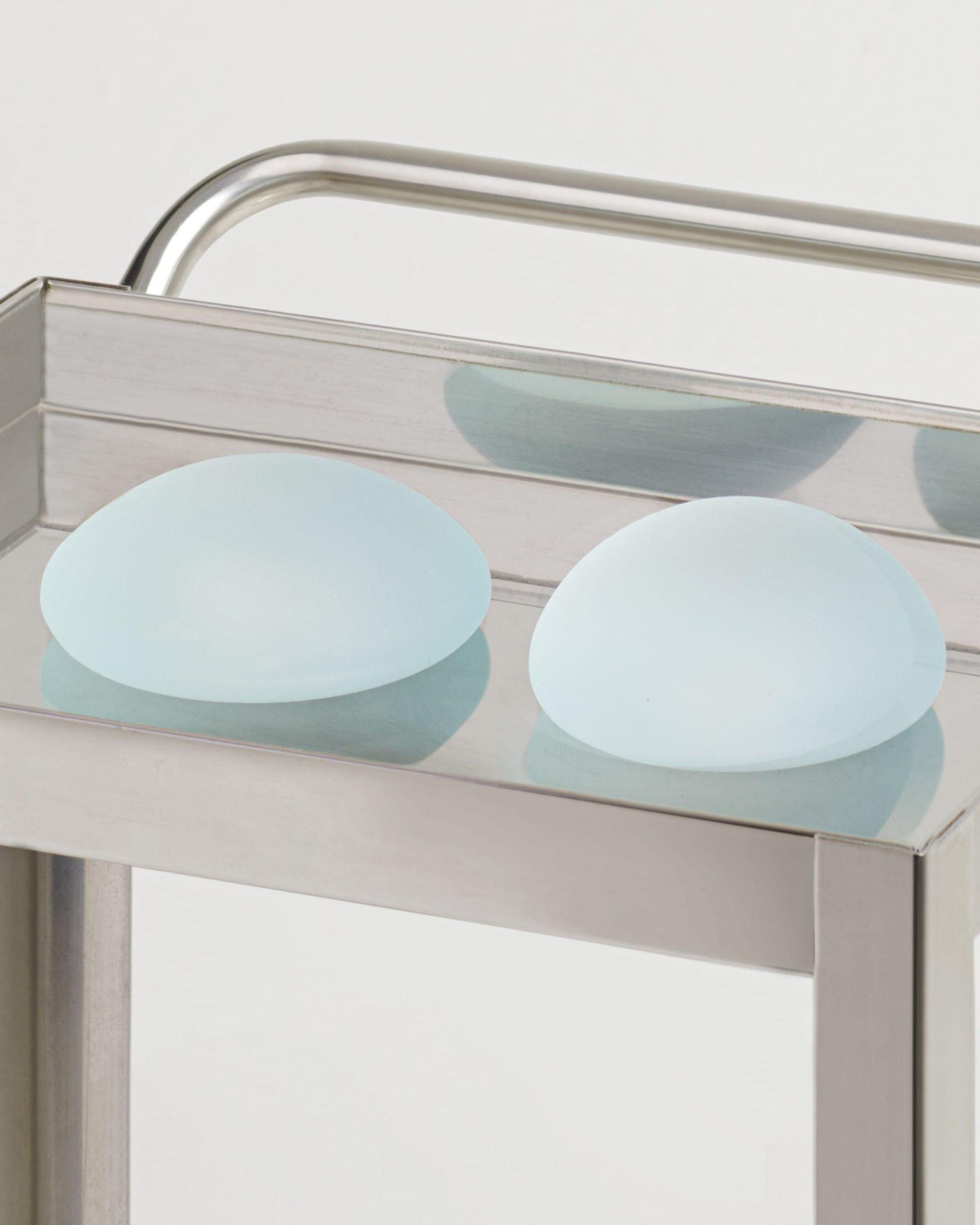
The principle is to create space for the implant through controlled tissue dilation, limiting dissection and respecting the breast's supporting structures. Instead of extensively undermining planes to create the pocket, we work progressively, asking the tissues to adapt to the volume they will host using a special inflatable balloon that progressively expands the pocket where the implant will be inserted.
Unlike submuscular or dual plane techniques, the implant is positioned above the pectoral muscle, preserving it. Access remains contained in the inframammary fold and the scar is less visible, while the implants I use in this technique are characterized by high softness and flexibility, qualities that make them more tolerant of a conservatively constructed pocket.
Muscle preservation, the pocket obtained by tissue "expansion", and the insertion of a more elastic and soft implant through a special system that also avoids contamination are the reasons why this approach is less painful, routinely feasible under local anesthesia, and with faster recovery. The pectoral remains intact, not detached or traversed, and the patient feels less of that deep tension that accompanies the first days after retromuscular placement.
On the placement plane, the literature is less partisan than sector marketing would have us believe.
A meta-analysis published in Aesthetic Plastic Surgery compared the subpectoral and prepectoral planes and found different complication profiles instead of a winner, because subpectoral is associated with fewer capsular contractures and fewer hematomas, while prepectoral shows fewer animation deformities and fewer implant dislocations, with no appreciable differences in rippling and infections. The authors conclude that both planes have merits and defects, and it is a conclusion I share in daily practice.
What distinguishes Preservé, reduced to its essential elements, lies in four technical choices:
- Controlled tissue dilation, which creates the implant pocket progressively instead of creating it with extensive undermining.
- Limited dissection, which reduces surgical trauma and the tissue surface involved in healing.
- The prepectoral plane, which leaves the pectoral muscle intact and preserves its function.
- The incision in the inframammary fold, hidden by the breast's natural crease and distant from the areola with insertion of the implant using a special system that allows minimal trauma to both the implant and the wound
Implant above or below the muscle: what changes
The question I receive most often in consultation concerns the plane, because many patients arrive having read that the implant goes under the muscle and are surprised when I propose otherwise. The three available planes respond to different anatomies, and the choice depends largely on how much tissue there is above the implant.
Plane | Where the implant is positioned | When I prefer it |
Prepectoral, as in Preservé | Above the pectoral muscle, in the dilated pocket | Sufficient breast tissue and subcutaneous tissue to cover and support the implant |
Dual plane | Partly under the muscle, partly under the gland | Initial glandular descent or upper pole to fill, with intermediate tissues |
Submuscular | Completely under the pectoral muscle | Thin tissues, where the muscle masks the implant edges |
Submuscular placement remains the reference choice in thin patients with little breast tissue, where the muscle performs work that no implant can do alone, namely masking the contours and preventing the edge from becoming visible or palpable. It is a position I have supported for years and continue to support in those cases.
The limitation of retromuscular is the other side of the same advantage. The muscle covering the implant moves it, and in women with trained pectoral muscles this produces animation deformity, that visible breast movement during contraction that becomes annoying in the gym or in water. Postoperative pain is also more pronounced because the surgical plane traverses a muscle.
Dual plane was born as a compromise between the two and works well in intermediate situations, particularly when the gland has begun to descend, a perfect technique for young postpartum patients.
For whom it is indicated, and for whom it is not
The ideal candidate desires a proportionate augmentation and has adequate tissues to cover and support the implant. In consultation this is measured with hands before any instrument, evaluating subcutaneous thickness with a pinch test at the upper pole, together with skin elasticity and its ability to retract.
The project also matters. An increase of one or two sizes on an already represented breast is a request that the prepectoral plane supports well, while a volume much greater than the patient's anatomical base places pocket and skin under tension that I prefer to distribute differently.
Then there are cases where the answer is another procedure. The ptotic breast is not corrected with an implant, and insisting means obtaining a larger but still descended breast, because the implant adds volume and does not lift. In those situations the path is mastopexy, possibly combined with an implant or adipose tissue transfer.
It is not a technique for everyone. In very thin patients, with a thin pinch test and poorly represented skin, the risk of perceiving the implant edge is concrete, and in those cases I return to the submuscular plane without hesitation. The same applies to those arriving with a problematic capsule from a previous procedure or with tissue compromised by radiotherapy.
The choice remains clinical and individual. After consultation it is the surgeon who evaluates which procedure and which implants are most suitable for the anatomy, tissue quality, and patient's objectives, and it is a step I do not delegate to a technique preference.
Pain and recovery after surgery
Pain after breast augmentation arrives in the first hours and reaches its peak between the first and second day, when the effect of local anesthesia infiltrated in the operating room is exhausted. With the prepectoral plane that phase is generally more contained, because the muscle has not been traversed, and the predominant sensation is tension rather than true pain.
In augmentation procedures I generally do not use drains. It is a choice born from attention to tissue trauma and careful hemostasis control, and brings concrete advantages for the course, because the absence of external devices reduces discomfort and entry points for bacteria.
Recovery with preserve technique is objectively faster and follows fairly predictable phases, useful to know before entering the operating room:
- First day of rest, with moderate pain controlled by analgesics
- Shower and driving allowed from the second day after check-up with gradual return to daily activities and sedentary work, with supportive bra worn day and night for one week.
- From the second week resumption of light sports activity and no clothing limitations
- From the third week complete resumption while breast settling continues to refine until the third month
Implant duration, monitoring and tissue quality

Modern breast implants have an average duration of fifteen to twenty years, and many patients maintain them long-term without problems, but it is correct to know from the beginning that they are not devices designed to last forever. Annual monitoring serves to verify their integrity and position, and replacement should be considered when changes in shape or consistency, persistent pain, or progressive asymmetries appear.
Capsular contracture remains the complication that most affects the long-term result. The body surrounds every implant with a fibrous capsule, and in a minority of cases this capsule contracts, stiffening the breast and modifying its shape. The prepectoral plane, as the cited meta-analysis shows, does not offer an advantage on this front, and precisely for this reason tissue quality and pocket precision matter even more.
There is one point on which regenerative medicine has changed my way of working. Autologous adipose tissue processed with Lipogems® can accompany the implant to soften edges, correct small asymmetries and improve skin and subcutaneous quality, and I use it especially in revisions and situations where coverage needs improvement. I discussed this more thoroughly regarding regenerative aesthetic breast surgery.
However, it remains a complement and not an alternative to the implant, extremely useful for small asymmetries and when the objective is not significant volume increase but breast modeling with the possibility of also increasing specific areas and correcting minor ptosis. Regenerative lipofilling alone works on limited quantities and confusing it with significant breast augmentation leads to expectations that remain unsatisfied. Conversely from classic lipofilling it has the enormous advantage of minimal reabsorption and consistency that remains very stable and natural.
Enthusiasm for a technique must however always be accompanied by the rigor with which we define its indication. Preservé has expanded the possibilities I can offer the right patients, and my work consists in recognizing which they are.
Prof. Carlo Tremolada, scientific director of IMAGE REGENERATIVE.

Frequently asked questions
When does pain arrive after breast augmentation?
Pain appears in the first hours, when the local anesthesia infiltrated during surgery is exhausted, and reaches its peak between the first and second day. It gradually subsides during the first week and remains controllable with prescribed analgesics. With placement above the muscle the acute phase is generally shorter, because the pectoral is not traversed.
How long does breast augmentation surgery take?
The surgery requires less than forty minutes and can also be performed under local anesthesia with sedation. Duration varies with the chosen technique, with the placement plane, and with possible association of other procedures, such as adipose tissue grafting or mastopexy.
What not to do after breast augmentation?
In the first three weeks intense physical activity, weight lifting, sauna, and steam bath should be avoided. Smoking must be suspended because it interferes with healing, while sleeping on the stomach resumes after four weeks. The supportive bra is worn day and night for the first week.
How much does breast augmentation with Preservé technique cost?
The cost depends on the type of implant, case complexity, possible association with other procedures, and the location where surgery is performed. Updated fees can be consulted in the clinic's price list, while the estimate is formulated after consultation, when the surgical plan is established.
Content reviewed by the medical-scientific committee of IMAGE REGENERATIVE. The information provided is for informational purposes and does not replace specialist consultation.
Related Articles
 beauty
Reduce Thigh Circumference: How to Lose Centimeters?
Reduce thigh circumference with advanced techniques at IMAGE REGENERATIVE. Discover effective treatments for slimmer, more toned legs.
 beauty
Sagging Skin Under the Chin: What Can Be Done? Solutions and Remedies
Combat sagging skin under the chin with effective and safe solutions. Discover regenerative treatments for a younger, more toned appearance.
 beauty
Hair Loss? The Effectiveness of Hair Filler: Reviews and Opinions
At IMAGE REGENERATIVE, we believe that the health of your hair begins with a vital and well-nourished scalp.
Want More Info?
If you need more information, call us at +39 02 76280736, message us on WhatsApp, email us at info.milano@imageregenerative.com, or use the form below.