Regenerative Medicine
CoolSculpting: Required Sessions and Treatable Areas
There are fat deposits that resist months of diet and training, always in the same spots. This is why cryolipolysis is so sought after, and also why it's worth understanding it well before booking.
At IMAGE REGENERATIVE, in Milano and St. Moritz, cryolipolysis with CoolSculpting is one of the most requested body contouring treatments, and delivers results within a fairly precise perimeter.
Let's examine how cold acts on adipose cells, how many sessions are really needed, which areas can be treated, and where the method honestly shows its limitations.
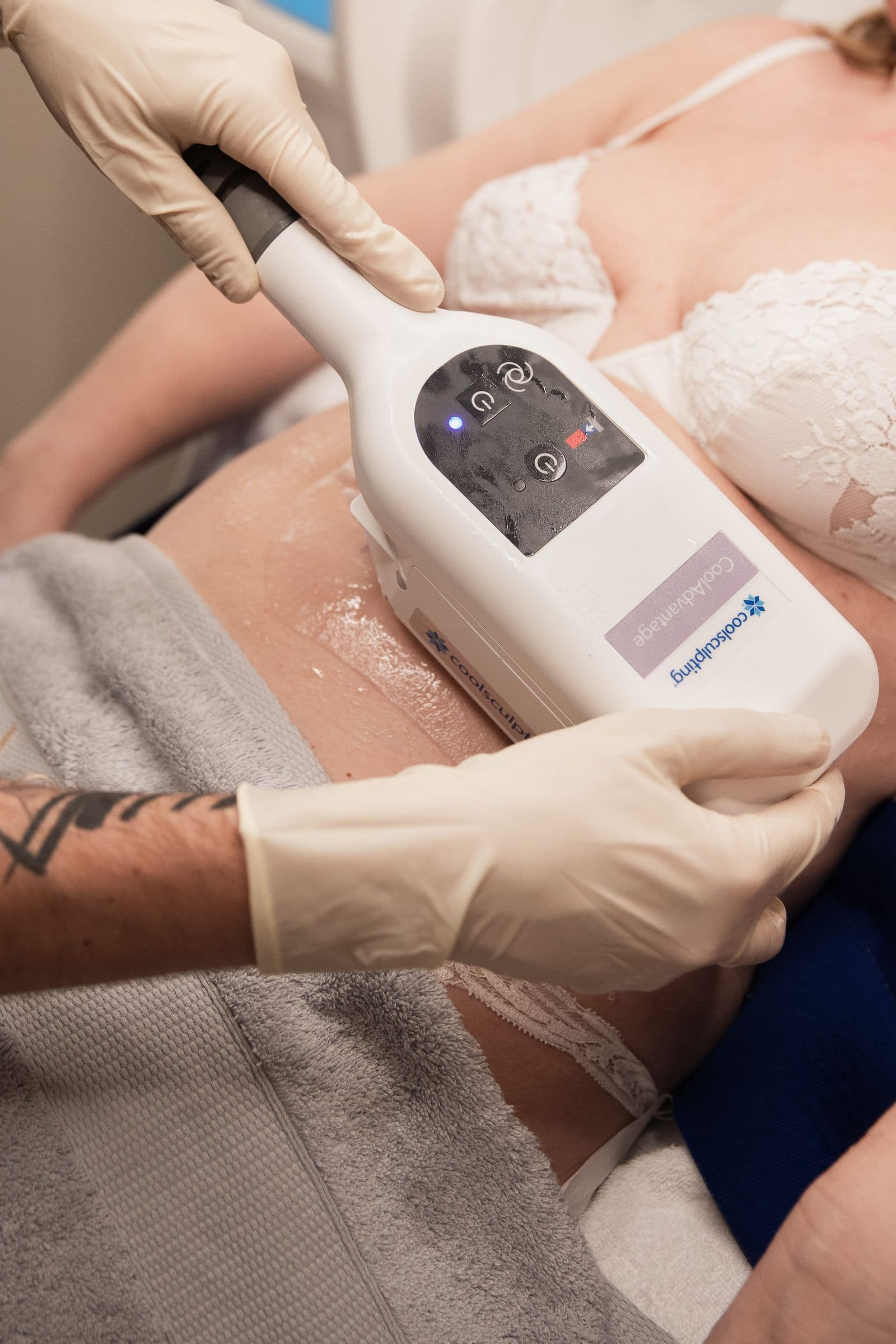
What is CoolSculpting (cryolipolysis) and how does it work
Cryolipolysis exploits a physical characteristic of adipose cells, which are more sensitive to cold than skin, nerves, and muscle tissue. A handpiece aspirates the skin fold and brings it to a controlled temperature, indicatively between eleven and thirteen degrees below zero, maintaining it for the time necessary to activate apoptosis of adipocytes, that is, programmed cell death.
What follows is a slow biological process. The damaged cells are recognized by the immune system, removed by macrophages, and eliminated through the lymphatic system over weeks. This is why the result is not visible when leaving the office and matures progressively, with a curve that studies describe fairly consistently.
On the safety profile, there is established literature. A systematic review published in Plastic and Reconstructive Surgery, which analyzed nineteen clinical studies, reports mild and short-lived undesirable effects such as redness, swelling, and local pain, without alterations in blood lipid values or liver enzymes. The authors report one case of paradoxical adipose hyperplasia and observe that it remains to be clarified whether post-session massage and repeated treatments on the same area actually improve outcomes.
How many sessions are needed to see results
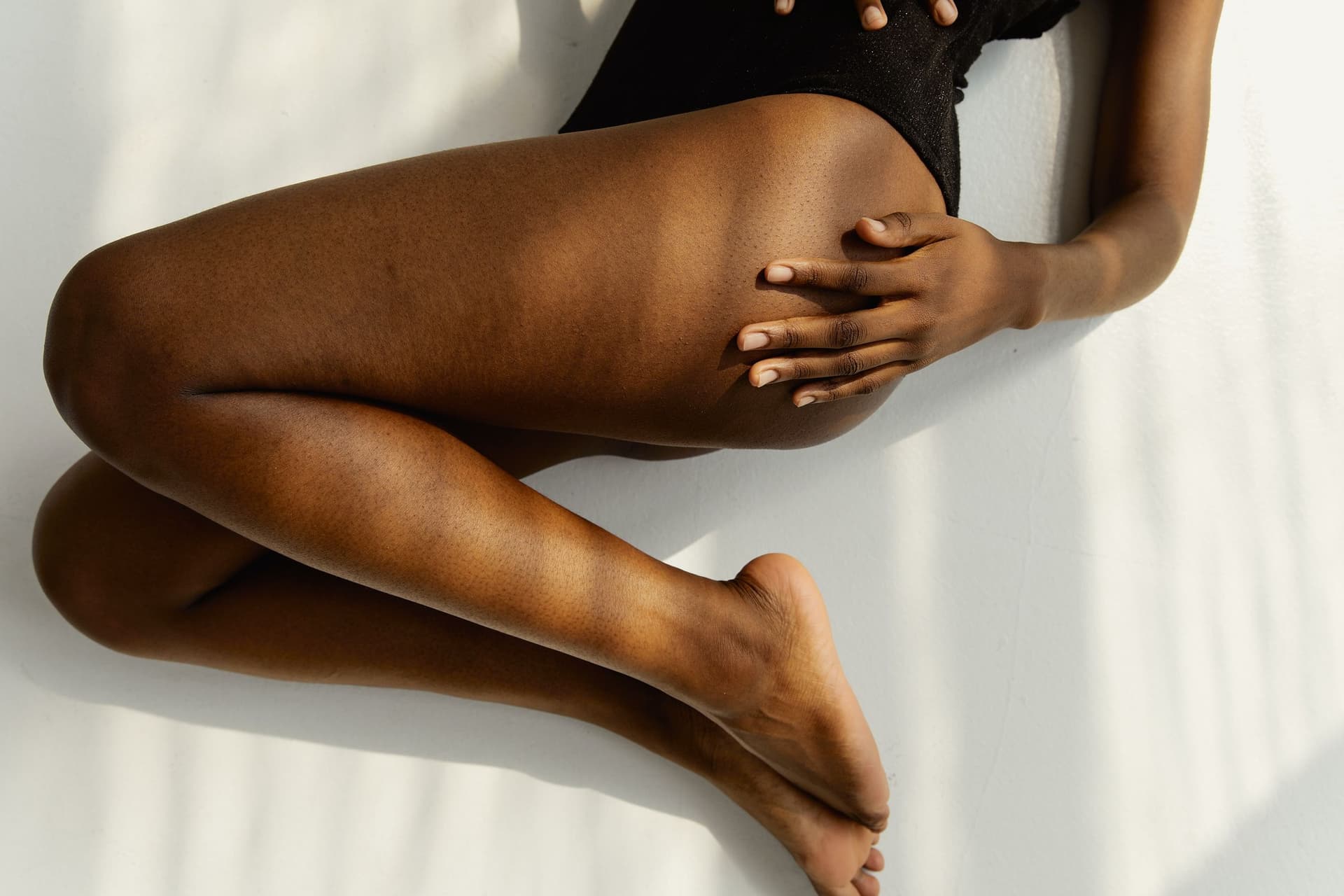
The honest answer is that it depends on the thickness of the fold and the objective. For a contained and well-localized deposit, a single application per area may suffice, while for more substantial deposits, two or three sessions on the same area are scheduled, spaced six to eight weeks apart. The interval is not arbitrary, as it serves to allow the elimination process to complete before evaluating whether to continue.
The point that generates the most misunderstandings concerns timing, so it's worth establishing the sequence by which the result develops:
- In the first two weeks, almost nothing is observed, while local swelling and numbness of the area may persist.
- Around the third or fourth week, the first visible changes in profile appear, usually perceived in clothing fit before being noticed in the mirror.
- Between the second and third month, the result becomes defined, as the elimination of treated cells reaches completion.
- Beyond three months, the picture stabilizes, and this is the correct moment to decide with the physician whether a second session on the same area makes sense.
In our team's experience, the three-month evaluation is the step that avoids unnecessary sessions, because many people ask to repeat the treatment when the result of the first application is still maturing.
Treatable areas: abdomen, flanks, thighs and arms
The treatable areas are those where the fat is subcutaneous and pinchable, a condition that allows the handpiece to properly aspirate the tissue. The abdomen and flanks remain the most frequent requests, followed by the thighs and submental region.
Area | Indicative duration | When indicated |
Abdomen | 35-60 minutes per application | Pinchable subcutaneous deposit, stable weight |
Flanks | 35-45 minutes per side | Symmetrical deposits resistant to diet |
Thighs, inner and outer | 35-45 minutes per area | Localized adiposity with good skin elasticity |
Arms | 30-35 minutes per arm | Contained fold, without marked laxity |
Submental | 30-45 minutes | Submental fat with toned skin |
Back and knees | 30-45 minutes | Circumscribed deposits, often in combination |
However, there is a boundary to respect. Visceral fat, which surrounds abdominal organs and characterizes many prominent abdomens, remains beyond the reach of cryolipolysis, because the handpiece only acts on the superficial layer. Similarly, when the dominant component is excess skin and not fat, the appropriate route is different and requires surgical evaluation. It often happens that a person arrives convinced of having an abdominal fat problem and the examination instead reveals diastasis of the rectus muscles, a condition that no external treatment can correct.
How much does CoolSculpting cost
The cost depends on three variables: the number of areas treated, the size of the necessary handpiece, and the number of applications planned. Treatment of a single circumscribed area has a different economic commitment than a program that includes abdomen and flanks in multiple sessions.
For this reason, an indicative figure communicated by telephone is almost always misleading. The estimate is built after the consultation, when the physician has evaluated the thickness of the fold, the quality of the skin, and the distribution of the deposit, and can say how many applications are needed to achieve the objective. Updated rates for individual treatments are available in the price list of the clinic.
A useful criterion for orientation is the relationship between cost and objective. When the deposit is large and diffuse, cryolipolysis requires many sessions and the economic comparison with liposuction surgery changes direction, beyond changing in terms of expected result. This is an evaluation we prefer to make explicitly during the consultation.
Results: before and after treatment
The result of cryolipolysis is a change in profile, not a change in weight. The scale moves little or nothing, because the amount of tissue removed in a single area has a marginal impact on overall body mass, while the silhouette changes noticeably.
Comparison photographs should be read with some caution. To be informative, they must be taken in the same position, with the same lighting and at the same distance, and must refer to body weight that has remained stable between the two moments. A variation of a few kilos in the meantime renders the comparison unusable as a measure of the treatment's effect.
There remains a point that conditions duration over time. The treated adipose cells are eliminated by the body, but those present in surrounding areas retain the ability to increase in volume if the caloric balance changes. The result is therefore maintained as long as weight remains stable, and this condition is as much part of the treatment as the session itself.
For this reason, cryolipolysis yields more when inserted into an already-started pathway, with established nutrition and regular physical activity, rather than being used as an isolated intervention. Those who arrive at treatment after stabilizing their optimal weight obtain a more predictable result and maintain it longer over time.
Does CoolSculpting really work? Opinions and limitations
Cryolipolysis has a solid scientific basis and a documented safety profile, and available data show a measurable reduction in the thickness of the adipose layer in treated areas. The negative opinions read online almost always arise from a misalignment between what the method can deliver and what was imagined.
It is therefore advisable to declare the perimeter with precision. Here is what falls within and what remains outside.
- Within scope is the reduction of localized and pinchable deposits in normal-weight people or those with slight overweight, with a more harmonious body profile as the objective.
- Within scope is treatment of small areas difficult to target with training, such as the submental or flank fold.
- Outside scope is weight loss, because cryolipolysis reshapes a district and does not act on body weight.
- Outside scope is correction of skin laxity, which in some cases may become more evident when the underlying volume is reduced.
- Outside scope is visceral fat, which requires a metabolic and nutritional pathway and not local treatment.
In our practice, candidate selection matters more than technology. A person with stable weight, well-defined deposit, and elastic skin obtains satisfactory results, while those seeking a shortcut to a weight loss pathway are almost always disappointed, and this must be stated before and not after.
Contraindications and side effects
The most common undesirable effects are local and transient, and include redness, swelling, bruising, numbness of the treated area, and altered sensitivity that may last a few weeks. During the application, a pulling sensation of the tissue and intense cold are felt in the first minutes, after which local sensitivity decreases. At the end of the session, the area appears red and firm in consistency, and returns to its usual appearance within a few hours.
The rare event to be aware of is paradoxical adipose hyperplasia, an increase in volume of the treated area instead of the expected reduction. It is an infrequent phenomenon, described in literature, that requires specialist evaluation and different management. It must be named in the informed consent, because an informed patient recognizes it immediately and comes back to be seen.
Treatment is excluded in the presence of cryoglobulinemia, paroxysmal cold hemoglobinuria, and cold urticaria, conditions in which cold exposure is dangerous. Pregnancy and breastfeeding, hernias of the abdominal wall in the application area, peripheral sensitivity disorders, and the presence of active skin lesions in the area require evaluation. The medical access consultation serves precisely to verify these points, and for us it remains an access requirement.
Frequently asked questions
How many sessions are needed on average?
For a localized and contained deposit, a single application per area is often sufficient. For more substantial deposits, two or three sessions on the same area are scheduled, spaced six to eight weeks apart. The total number is established after evaluation of the fold and is reviewed at the three-month check-up.
Does the fat come back after CoolSculpting?
The treated adipose cells are eliminated by the body, but those in nearby areas can increase in volume if weight increases. The result is maintained with stable weight, while significant weight gain modifies it, though tending to redistribute differently than the starting situation.
Is the treatment painful?
In the first minutes, a firm pulling sensation and intense cold are felt, then the area becomes numb and the session becomes tolerable to the point that many people read or work. In the following hours, tingling and soreness may appear, which resolve spontaneously within a few days.
Related Articles
 regenerative-medicine
Décolleté Rejuvenation: How to Care for Neck and Chest
Décolleté rejuvenation: how to care for neck and chest, from neck wrinkles to Venus rings. Treatments, fillers and biostimulation for the skin.
 regenerative-medicine
 regenerative-medicine
Oxygen Ozone Therapy: What Is It? What Are the Benefits?
Oxygen ozone therapy: what it is, what it's for, and what benefits it offers for herniated discs and back pain. How it works, costs, coverage, and contraindications.
Want More Info?
If you need more information, call us at +39 02 76280736, message us on WhatsApp, email us at info.milano@imageregenerative.com, or use the form below.