
Regenerative Medicine
Breast Ptosis: Degrees, Causes and When to Have a Mastopexy
One centimeter is all it takes. When the nipple descends to the level of the inframammary fold, or just beyond, the sagging already has a clinical name, ptosis, and a measurement that guides every subsequent choice.
At IMAGE REGENERATIVE, in Milano and St. Moritz, regenerative breast lift always starts from this measurement, because the term sagging breasts describes very different conditions.
Understanding which degree you are at, what caused it and which procedure corrects it is the safest way to arrive at the consultation with the right expectations.
What is breast ptosis (sagging breasts)
Breast ptosis is the descent of the gland and the areola-nipple complex from their natural position on the chest. The reference point is the inframammary fold, the crease that marks the base of the breast, and ptosis is defined by comparing the height of the nipple with that fold.
It is an aesthetic condition and not a disease, but for many women it affects how they dress and how they feel. As the StatPearls clinical entry on breast ptosis notes, sagging can appear at any age and with any breast volume, and is mainly linked to aging, very large breasts, weight loss, pregnancy and hormonal changes. The same entry indicates the effect on emotional well-being as one of the aspects to consider.
The process begins with skin stretching and relaxation of the ligaments that support the gland. If the internal volume increases, those structures stop holding it, and if it decreases, as after significant weight loss, the skin remains in excess relative to what it must contain. Two women with the same appearance in the mirror may therefore have opposite problems, one with tissues that have sagged under weight, the other with an envelope that has remained too large.
There is also a condition often confused with true ptosis, pseudoptosis. Here the nipple remains in place, while the volume slides toward the lower part of the breast, and the distinction completely changes the indication.
Degrees of breast ptosis
The most commonly used classification in plastic surgery measures the distance between the nipple and the inframammary fold and distinguishes four situations:
- Pseudoptosis, with the nipple above the fold and volume gathered in the lower pole.
- First-degree ptosis, with the nipple at the level of the inframammary fold.
- Second-degree ptosis, with the nipple one to three centimeters below the fold.
- Third-degree ptosis, with the nipple more than three centimeters below the fold and often pointing downward.
During consultation the measurement is taken standing, with arms at the sides, and is combined with other elements. The distance between the jugulum and the nipple, the quality and thickness of the skin, the amount of gland remaining and any asymmetry between the two sides, common after pregnancy or weight loss, all matter. The degree alone indicates how much the breast has descended, while these elements indicate what is needed to bring it back up and with what volume.
The degree mainly guides the technique. In mild forms the incision is limited and sometimes the skin to be removed is minimal, while in more severe forms the surgeon must shorten the skin envelope, and each additional centimeter of descent translates into a slightly longer scar.
Causes of sagging breasts
Time is almost always the underlying factor. Over the years the skin loses collagen and elastin, the supporting ligaments stretch and the gland, especially after menopause, gives way to softer adipose tissue. It is a physiological evolution that skin quality, partly hereditary, makes faster or slower from person to person.
Pregnancy is the second major factor. The gland increases in volume under hormonal stimulation and the skin stretches to accommodate it, then after weaning the volume decreases and the container remains larger than the contents. The case of deflated breasts after breastfeeding has a dedicated discussion, and here it is enough to remember that the change begins already during pregnancy.
Weight fluctuations also matter, because each cycle of gain and loss subjects the skin to stretching that does not always recover. Breast volume has a direct impact, as gravity acts with more force on a large breast and ptosis appears earlier, sometimes already at a young age. Chest exercises strengthen the pectoral muscle, which lies beneath the gland, and therefore improve posture without lifting the breast.
What is mastopexy (breast lift)
Mastopexy is the procedure that restores the breast to its position. The surgeon removes excess skin, lifts the areola-nipple complex and reshapes the breast cone, in a procedure that lasts on average between sixty and ninety minutes.
The incision depends on the degree. For mild ptosis an incision around the areola is sufficient, hidden in the skin color transition. Moderate ptosis requires a vertical incision, from the areola to the fold, while severe forms add a segment along the inframammary fold, with an inverted T scar. With intradermal suturing and careful care in the following months, in most patients the scar becomes barely visible between the first year and the eighteenth month.
The regenerative version integrates the Lipogems® method, developed by Prof. Carlo Tremolada, into the procedure. Adipose tissue harvested from the abdomen or flanks is processed and reinserted where needed. It restores fullness to the upper pole, helps correct asymmetries and improves the quality of the overlying skin, with benefits also for scarring. Thus mastopexy also works on the tissues, beyond the shape.
Mastopexy with or without implants
The choice depends on two distinct questions: how much the breast has descended and how much volume remains. Mastopexy corrects the position, while volume is restored with an implant or with the patient's adipose tissue, and in many cases the right answer combines the two.
Solution | When to consider | What it does | What to know |
Mastopexy without implants | Volume is sufficient and the problem is position | Removes excess skin and lifts gland and nipple | Upper pole fullness depends on remaining gland |
Mastopexy with implants | Breast has descended and lost significant volume | Lifts breast and increases volume in same procedure | Single recovery instead of two separate procedures |
Mastopexy with Lipogems® | Upper fullness needed and skin quality to improve | Repositions breast and reinserts patient's fat | Pseudoptosis and first degree can be treated with Lipogems® alone |
In practice the implant addresses a volume problem and mastopexy addresses a position problem, and when both problems coexist the procedure addresses them together. When instead the gland is still abundant, removing skin and lifting the breast is enough to achieve a full and proportionate shape, without introducing an implant.
Between implant and adipose tissue the choice concerns how much volume is needed, how much the feel matters and how much the patient wants to avoid a foreign body. It is a decision made together during consultation, with measurements in hand.
When to have a mastopexy
In our team's experience the procedure gives the most stable result when certain conditions are met:
- At least six months from the end of breastfeeding, the time needed for hormonal balance to stabilize.
- Stable weight for at least six months, with body mass index ideally below 25.
- No pregnancy planned, because a new pregnancy would again modify gland and skin.
- Good skin quality, which affects result duration more than chronological age.
There is no true age limit. Rather the moment in life matters, and a woman considering another pregnancy does well to wait, even if the sagging bothers her, because a procedure performed too early would need to be partly redone.
Those who can choose often prefer the cold months, when the scar remains covered and away from the sun and the support garment to wear after the procedure is less uncomfortable than in midsummer.
Results: before and after
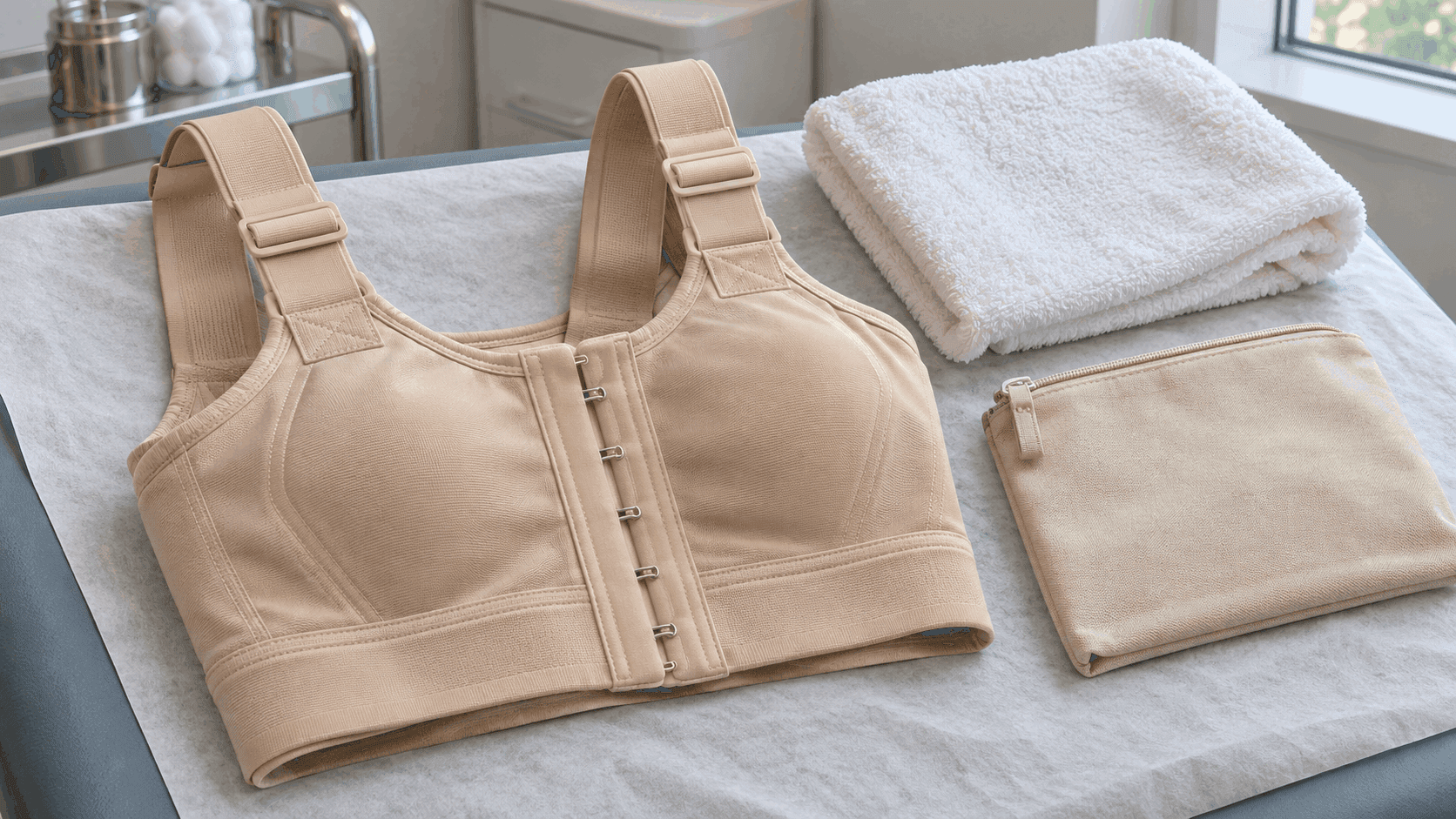
Recovery follows fairly predictable stages. In the first three days pain is moderate and controlled with oral analgesics, along with a sensation of tension that is normal. After one week showers resume, avoiding sudden arm movements, and between the second and fourth week scar massage and light activities begin. Shape settles between the second and third month, while the result stabilizes between six and twelve months, when scars are also mature.
In most cases the breast remains in position for ten to fifteen years. Aging continues, but starts from a higher point, and the relaxation that appears after eight or ten years remains far from the starting situation. Results last longer for those who maintain stable weight, wear a support bra and protect skin from the sun, and in the regenerative version a touch-up with Lipogems® after five to seven years helps preserve volume.
Before and after photographs help understand what to expect, provided they are viewed correctly. Comparison makes sense with the same lighting, same posture and at least six months after the procedure, and the elements to observe are nipple height relative to the fold, upper pole fullness and scar appearance. More than the best images, however, assessment of one's own case matters, because each breast starts from different degree, volume and skin.
Frequently asked questions
How long does it take to recover from a mastopexy?
Light activities resume between the second and fourth week, when scar massage also begins. Shape settles between the second and third month and the result stabilizes between six and twelve months, when scars are mature. In the first days pain is moderate and controlled with oral analgesics.
Can mastopexy be done without implants?
Yes, when breast volume is sufficient and the problem mainly concerns position. In that case the procedure removes excess skin and lifts gland and nipple. If more upper pole fullness is needed, instead of an implant the patient's adipose tissue processed with the Lipogems® method can be used.
How long does a mastopexy result last?
In most cases between ten and fifteen years. The breast continues aging starting from a higher position, and duration depends on skin quality, weight stability, support and sun protection. A new pregnancy or significant weight loss can modify the result.
Are mastopexy scars visible?
They depend on the degree of ptosis. Mild forms require an incision around the areola, more severe ones a vertical segment and, in severe cases, one along the fold. With intradermal suturing and dedicated care, in most patients scars become barely noticeable after twelve to eighteen months.
Content reviewed by the medical-scientific committee of IMAGE REGENERATIVE. The information provided is for educational purposes and does not replace specialist consultation.
Related Articles
 regenerative-medicine
Red Touch Laser: collagen awakened by light
Red Touch Laser at 675 nm: how it stimulates collagen without needles, what it can improve on fine lines and texture, how many sessions are needed and why energy must be dosed carefully.
 regenerative-medicine
When a Therapy is Promising but Not Yet Proven
When a therapy is promising but not yet proven: what scientific evidence means, the phases of clinical research, and how to navigate with caution.
 regenerative-medicine
PRP: What It Is, When It Works, and Where Science Has Gone Beyond
PRP, platelet-rich plasma: what it is, how it's prepared, which indications have evidence, its limitations, and what micro-fragmented adipose tissue adds.
Want More Info?
If you need more information, call us at +39 02 76280736, message us on WhatsApp, email us at info.milano@imageregenerative.com, or use the form below.