
Regenerative Medicine
When a Therapy is Promising but Not Yet Proven
"I read it in an article, does it really work?" This is one of the questions we hear most often during consultations, almost always about a new therapy, described with enthusiasm and still seeking solid evidence.
At IMAGE REGENERATIVE, in our Milano and St. Moritz locations, longevity medicine is the field where this question arises most frequently, because it's where research moves faster than confirmations.
Responding honestly means explaining where a therapy stands in its verification process, what we already know, and what remains to be proven.
Promising Therapies and Proven Therapies: The Difference
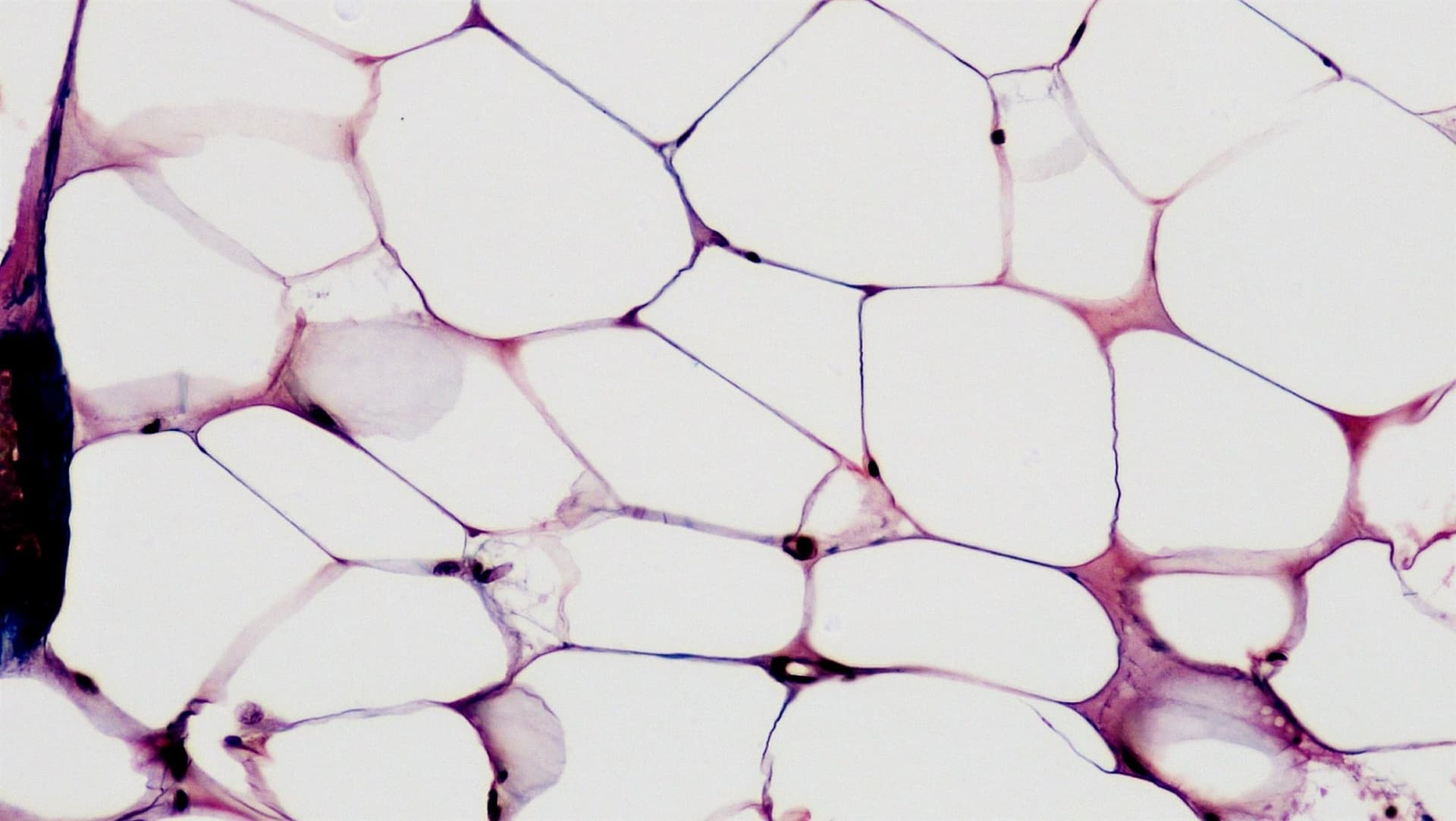
A therapy is promising when initial results are encouraging, but come from laboratory studies, animal models, or small patient groups, often without a control group. It becomes proven when those results withstand the test of controlled studies, with adequate numbers, repeated by independent researchers, and evaluated by health authorities.
The transition from one condition to the other is anything but certain. A study published in JAMA re-examined the most cited clinical research published between 1990 and 2003 in major medical journals. Of the 45 studies that declared an intervention effective, twenty were confirmed, but seven were refuted by subsequent research and seven others had found stronger effects than those that emerged later. Among studies without randomization, the situation was even more pronounced, with five out of six studies refuted or downsized.
The same work offers a useful interpretation. Among randomized studies, those later refuted or downsized were on average smaller than those confirmed, despite having received comparable attention. With few patients, chance weighs more heavily, and a favorable result may depend on participant selection or a statistical fluctuation that disappears with larger numbers.
Aspect | Promising Therapy | Proven Therapy |
Type of Studies | Laboratory, animal models, small patient groups | Controlled and randomized clinical trials |
Number of Patients | Few, often selected | Hundreds or thousands, as in phase 3 studies |
Comparison | Often absent | With placebo or standard therapy |
Replication | Single research group | Results confirmed by independent groups |
Authorization | Experimental use within approved protocols | Authorized for specific indication |
Observation Time | Weeks or months | Months or years, with post-approval surveillance |
The most brilliant initial result, in short, tends to be downsized when the study expands. A promising therapy deserves attention and research, and it is precisely the way it is verified that decides whether it will become a cure.
What Scientific Evidence Means
Scientific evidence refers to the body of proof supporting a health claim, and that proof carries different weight depending on how it was collected. The experience of a single physician or the account of a patient is the lowest level, useful for formulating hypotheses. Case series and observational studies follow, which describe what happens in a group of people without being able to demonstrate a cause-and-effect relationship.
At the top are controlled and randomized studies, in which participants are assigned by lottery to therapy or comparison, and systematic reviews that combine them. The lottery is decisive because it makes the groups similar at the start, so that the final difference can be attributed to the treatment.
What is measured also matters. Many new therapies show they modify a laboratory value, a blood marker, or a biological age index, and this is an initial signal. However, it only proves that value changes. To speak of benefit requires demonstrating that something the patient notices improves, such as function, pain, quality of life, or years lived in health. In the field of longevity, the distance between these two levels is often wide, and this is where many premature promises are concentrated.
There is also a distinction that readers of health news tend to miss. The absence of evidence for a therapy means it has not been studied enough, and leaves open both the possibility that it works and that it is useless or harmful. This is why a therapy without evidence should be considered unknown, rather than promising or ineffective.
The Phases of Clinical Research

The path by which a drug reaches patients is precisely described by the Italian Medicines Agency page on clinical trials. In phase 1, the active ingredient is tested for the first time in humans, usually on a limited number of healthy volunteers, to assess safety and tolerability. In serious diseases, the study may involve patients from the start.
Phase 2 investigates therapeutic activity and seeks the best dose, in people who have the disease, with groups at different doses and, when ethically possible, a placebo. It usually lasts a couple of years. In phase 3, patients number in the hundreds or thousands and the study, controlled and randomized, measures efficacy, advantages over already available drugs, and the balance between risks and benefits, with monitoring that in some cases extends to three or five years.
After approval, phase 4 begins, surveillance of the drug on the market, which also collects the rarest adverse reactions, those that could not emerge in studies. In Italy, each phase requires AIFA authorization and the opinion of the ethics committees of the facilities where the study takes place.
Some therapies stop along this path, when results observed in few patients must be confirmed on larger numbers or when adverse effects emerge. This is why research timelines are measured in years.
The Risks of Rushing the Timeline
Using a therapy before it has completed its path exposes to concrete risks:
- Adverse effects still unknown, which did not have the opportunity to emerge in smaller studies.
- Overestimated benefits, because initial results tend to be more favorable than those that come later.
- The postponement of an effective cure, when the novelty is chosen instead of a treatment with solid evidence.
- Costs often borne by the patient for treatments that could prove useless.
The risk is particularly concrete in regenerative medicine and longevity, two fields where research continuously produces interesting results and the market tends to transform them into offerings ahead of time. For those who want to establish a path on solid foundations, we have compiled criteria for choosing an evidence-based longevity medicine path.
There is also a less visible cost, which concerns trust. Every broken promise makes it more difficult, next time, to believe in a therapy that actually works.
How to Read an Innovative Therapy
When faced with news about a new therapy, five questions help understand where it stands:
- What phase of research it is in, and whether the data comes from humans, animals, or the laboratory.
- How many people it has been tested on, and whether the results were compared with a control group.
- Whether the studies have been published in scientific journals and confirmed by independent research groups.
- What indication it is authorized for, since an approval is valid for a specific use.
- Who is proposing it, and whether it is offered within a study approved by an ethics committee.
The answers should be asked of the physician, who has the duty to provide them clearly. Some signs suggest caution even earlier, such as promises of cure, testimonials used instead of data, or the rush to start.
Particular attention should be paid to headlines announcing a cure based on an animal or cell study. These are important steps in research, but years and several verifications away from a treatment for humans, and faced with those headlines the right question concerns the step where the therapy really stands.
Caution and Hope: How to Navigate
Hope is legitimate and research also lives on that. Many therapies we consider normal today were, for years, promising therapies, and their history teaches that verification time is part of progress. Giving up caution, on the contrary, ends up exposing patients to precisely the risks from which research should protect them.
For those who wish to access a therapy still under study, the safest path is an authorized clinical trial, where the treatment is administered according to a protocol, with defined controls and the possibility to withdraw. Outside that context, the same therapy becomes a gamble without a safety net.
In practice, the situations we encounter most often are three. A therapy still under study is addressed, if the case justifies it, through an authorized clinical trial. A drug already approved for another indication has a known safety profile, while its efficacy in the new use remains to be verified and should be discussed case by case with the physician. A therapy sold outside any study, with broad promises and scarce evidence, is the one that requires the most caution.
In our clinical experience, the criterion is simple to state and demanding to respect. When we propose a treatment we explain what is proven, what is reasonable to expect, and what remains to be clarified, and safety comes before any novelty. It is the same logic with which Prof. Carlo Tremolada has accompanied the Lipogems® method from research to clinical practice, with studies published in scientific journals. An informed patient chooses better, and a valid therapy has everything to gain from comparison with evidence.
Frequently Asked Questions
What does it mean that a cure is experimental?
It means it is still being studied in humans, within a clinical trial with an approved protocol, and for that indication it does not yet have authorization from health authorities. In Italy, drug studies are authorized by AIFA and evaluated by ethics committees of the facilities where they take place.
How can I tell if a therapy is supported by evidence?
It is advisable to ask what phase of research it is in, how many patients it has been tested on, whether there was a comparison group, and whether the results have been published and confirmed by independent researchers. Testimonials and single cases may suggest a hypothesis, while evidence comes from controlled studies.
Who authorizes a clinical trial in Italy?
AIFA authorizes drug studies of all phases, the National Institute of Health expresses a consultative opinion on phase 1 studies, and ethics committees provide the opinion on merit in the facilities where the study takes place.
Can a promising therapy become a proven therapy?
Yes, when larger and controlled studies confirm its results. This is an outcome that is anything but automatic, because some initial results are downsized or refuted by subsequent research, and this is precisely why verification takes time.
Content reviewed by the medical-scientific committee of IMAGE REGENERATIVE. The information provided is for educational purposes and does not replace specialist consultation.
Related Articles
 regenerative-medicine
Red Touch Laser: collagen awakened by light
Red Touch Laser at 675 nm: how it stimulates collagen without needles, what it can improve on fine lines and texture, how many sessions are needed and why energy must be dosed carefully.
 regenerative-medicine
Breast Ptosis: Degrees, Causes and When to Have a Mastopexy
Breast ptosis (sagging breasts): degrees, causes and when to have a mastopexy. Difference between breast lift with and without implants and before and after results.
 regenerative-medicine
PRP: What It Is, When It Works, and Where Science Has Gone Beyond
PRP, platelet-rich plasma: what it is, how it's prepared, which indications have evidence, its limitations, and what micro-fragmented adipose tissue adds.
Want More Info?
If you need more information, call us at +39 02 76280736, message us on WhatsApp, email us at info.milano@imageregenerative.com, or use the form below.