Regenerative Medicine
Intravenous NAD+ Therapy: What It Is and What It's For
NAD+ has moved in just a few years from the pages of biochemistry textbooks to longevity conversations, with an enthusiasm that sometimes runs faster than the data.
At IMAGE REGENERATIVE, in Milano and St. Moritz, intravenous NAD+ therapy has been part of longevity pathways for several years, and this continuity allows us to distinguish with considerable precision what the molecule can deliver from what is attributed to it.
Let's see what NAD+ is, why its levels decline with age, how a session actually works, and in which situations the intravenous route offers a real advantage over a supplement.
What NAD+ Is and Why It Matters
NAD+, short for nicotinamide adenine dinucleotide, is a coenzyme present in every cell of the body. Its main task involves electron transport in reactions that produce energy: without NAD+, glycolysis, the Krebs cycle, and the mitochondrial respiratory chain simply stop. In practical terms, it's the molecule that allows the body to convert what you eat into usable energy.
Alongside this metabolic role exists a second, equally relevant one. NAD+ is the obligate cofactor of two enzyme families. Sirtuins, also called longevity genes, regulate cellular metabolism, mitochondrial function, and gene expression. PARPs intervene in damaged DNA repair, work that every cell performs continuously.
NAD+ levels progressively decline with age, and the mechanism has an almost paradoxical logic. The more molecular damage accumulates, the more PARPs activate to repair it, and the more NAD+ is consumed in that process. The result is a decreasing amount available for sirtuins, precisely the enzymes that support mitochondrial function and cellular maintenance processes. It's from this spiral that the interest in restoring levels arises.
What Intravenous NAD+ Therapy Is For
The goal of the therapy is to increase NAD+ availability in tissues, overcoming the bottleneck represented by absorption and endogenous synthesis. In clinical practice, the treatment is proposed in fairly defined situations.
The first is persistent fatigue associated with a decline in vitality, particularly when basic examinations are normal and the condition has developed over a prolonged period of overload. The second is recovery, whether from a period of intense stress, convalescence after illness, or a phase of high athletic load. The third concerns cognitive function support, with particular reference to mental clarity and the ability to sustain attention over time. The fourth is inclusion within a broader longevity pathway, as a tool alongside nutrition, exercise, and sleep management.
It's worth defining the perimeter clearly, because communication around this therapy tends to expand it. Intravenous NAD+ therapy is a support treatment within a structured pathway, not a cure for a specific pathology. When fatigue has an identifiable cause, the priority remains treating that cause.
Benefits: Energy, Brain, and Anti-Aging
On the energy level, the rationale is the most straightforward of the three. Restoring coenzyme availability supports mitochondrial function, and treated individuals frequently report improved fatigue resistance and faster recovery after exertion, generally starting from sessions following the first.
On the cognitive front, the most reported benefit concerns mental clarity and the ability to maintain prolonged concentration. The hypothesized mechanism involves supporting neuronal energy metabolism, a particularly demanding tissue in mitochondrial terms, and containing cerebral oxidative stress.
The area defined as anti-aging is the most scientifically interesting and at the same time the most delicate in communication terms. Sirtuin activation, DNA repair process support, and inflammatory marker modulation are documented mechanisms, and they sit at the center of research on cellular aging. The broader picture of the relationship between NAD and longevity is covered in a dedicated in-depth article.
However, a clarification that is too often omitted is needed. Most mechanism studies are preclinical, the human literature is growing but still heterogeneous in protocols and dosages, and the benefits reported by patients remain largely subjective. This is why, in our approach, therapy is accompanied by biomarker measurement before and after the cycle, rather than being evaluated on perception alone.
How an Intravenous NAD+ Session Works
The pathway begins before the session. The access evaluation includes medical history, review of current therapies, renal and hepatic function tests, and a reported electrocardiogram, which in our practice is a requirement, not an option.
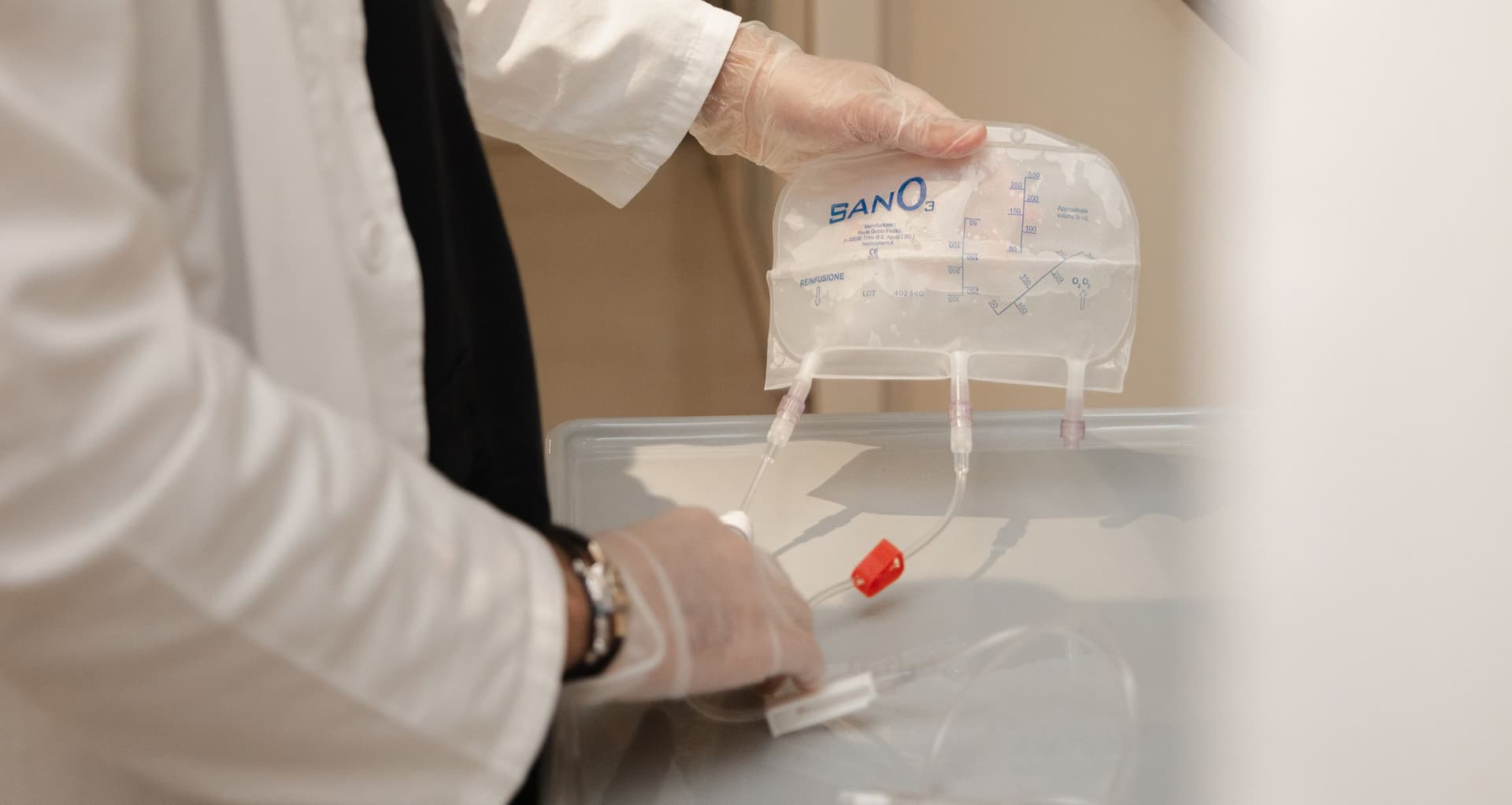
The session takes place in a chair, in a dedicated environment. After venous access placement, the infusion proceeds slowly and lasts between one hour and one and a half hours. Slowness is a precise technical choice, because flow rate determines the appearance of transient symptoms, so staff progressively adjusts it and adapts it to individual tolerance. During the infusion, you can read, work, or rest.
At the end, a brief observation period is provided, after which you return to normal activities without particular restrictions. The reference protocol includes an initial cycle of three or four weekly sessions, followed by monthly maintenance calibrated to individual goals and parameter progression.
The therapy can be combined with other treatments in the same pathway, from intravenous glutathione to vitamin IV therapies, with a sequence established during the planning phase.
Intravenous or Supplement: The Differences
The recurring question is whether it makes sense to resort to an infusion when NAD+ precursor supplements are commercially available. The answer requires distinguishing two levels.
Oral supplements generally contain nicotinamide riboside or nicotinamide mononucleotide, precursors that the body must convert, because the whole molecule is poorly absorbed through the digestive route. Passage through the gastrointestinal tract and liver reduces and makes variable the portion that actually reaches tissues. The intravenous route bypasses this pathway and allows administering a known quantity at a controlled rate.
Aspect | Intravenous Therapy | Oral Supplement |
Molecule Administered | NAD+ in direct form | Precursors to be converted in the body |
Bioavailability | Immediate, without gastrointestinal and hepatic passage | Variable, conditioned by absorption and metabolism |
Dose Control | Precise, with rate regulated by medical staff | Approximate, linked to adherence and formulation |
Context | Medical facility, with access medical evaluation | Home use, continuous over time |
The comparison, however, must be properly framed, since the two routes respond to different needs and in practice are integrated. The intravenous cycle acts in a targeted and supervised manner, while oral supplementation supports maintenance between cycles, with a convenience that infusion does not have.
Side Effects and Contraindications
The adverse effects of intravenous NAD+ therapy are largely related to infusion speed and baseline conditions, and knowing them is part of genuine informed consent:
· Nausea, hot flashes, and chest tightness during infusion, which diminish by slowing the flow and are the reason why administration is slow.
· Transient headache and fatigue in the hours following, reported especially after the first session of the cycle.
· Pregnancy and breastfeeding, conditions in which treatment is excluded due to insufficient safety data.
· Unstabilized heart conditions, which is why a reported electrocardiogram is required before starting.
· Significant renal or hepatic insufficiency and acute infections in progress, situations that postpone treatment to a later time.
To these are added case-by-case evaluations. Some ongoing pharmacological therapies require discussion with the treating physician before proceeding, and oncological history must be discussed openly during history taking. Local discomfort may appear at the venipuncture site, which resolves spontaneously. Medical supervision throughout the infusion remains the condition that makes all these aspects manageable.
Who Is NAD+ Therapy Indicated For

The profile that derives the most evident benefit is those coming from a prolonged period of excessive load and reporting fatigue that rest does not resolve, with basic examinations substantially normal. Alongside this are athletes who want to support recovery times, professionals with high and continuous cognitive demand, and those emerging from illness or surgery seeking support for the recovery phase.
A second group is represented by those who have already undertaken a longevity pathway and use the therapy as one of the components of a broader plan, together with nutrition, strength training, and sleep management. In this context, the treatment yields more, because it acts on already prepared ground.
It's also worth stating where the therapy makes little sense. When fatigue depends on an identifiable cause, whether it's iron deficiency, thyroid dysfunction, sleep apnea, or a mood disorder, the clinical priority is that diagnosis. NAD+ does not replace sleep, nutrition, and movement, and proposing it as a shortcut to those three pillars means shifting expenditure without shifting results. This is why the correct starting point remains an evaluation that establishes where the symptom comes from.
Frequently Asked Questions
How long does an intravenous NAD+ session last?
The infusion lasts between one hour and one and a half hours, plus preparation and a brief observation period at the end. The duration depends on the administration rate, which is adjusted to individual tolerance and kept deliberately slow.
How many sessions are needed?
The reference protocol includes an initial cycle of three or four weekly sessions, followed by monthly maintenance. The actual number is established by the physician based on goals, observed response, and monitored parameter progression.
Is it better than oral supplement?
The two routes respond to different needs. Infusion allows administering a known quantity with immediate bioavailability under medical control; oral supplementation is practical and suitable for long-term maintenance. In most pathways they are used sequentially, not alternatively.
Is an electrocardiogram needed before treatment?
Yes. A reported electrocardiogram is a requirement for accessing the first session, together with renal and hepatic function assessment and review of current therapies. It serves to exclude cardiovascular conditions that represent a contraindication.
Related Articles
 regenerative-medicine
Deflated Breasts After Breastfeeding: Causes and Solutions
Deflated breasts after breastfeeding: causes and solutions, from exercises to firm the breasts to medical solutions like mastopexy and lipofilling. Complete guide.
 regenerative-medicine
Longevity, Anti-Aging and Biohacking: What They Really Mean
Longevity, anti-aging and biohacking: what they really mean and how they differ, between longevity medicine and optimization of body and mind.
 regenerative-medicine
Lipogems and Private Insurance: costs and reimbursements
Lipogems and private insurance: how much it costs, whether it's covered by the NHS, and how reimbursement works. Requirements, documentation, and cost comparisons.
Want More Info?
If you need more information, call us at +39 02 76280736, message us on WhatsApp, email us at info.milano@imageregenerative.com, or use the form below.