
Regenerative Medicine
Lipogems and Private Insurance: costs and reimbursements
The question about costs almost always comes right after the first one: first people ask if the treatment works, then how much it weighs. And it's a legitimate question, because regenerative medicine today occupies a zone where public coverage remains limited and private coverage changes from policy to policy.
This in-depth analysis sets out what the public service covers, what a procedure's cost depends on, which insurance companies intervene, and what documents are needed to obtain a reimbursement.
Is Lipogems covered by the National Health Service?
The short answer is no. Therapies based on micro-fragmented autologous adipose tissue are not currently systematically included in the Essential Levels of Assistance and do not have a dedicated national tariff, so provision within the public system depends on regional and corporate evaluations that vary from area to area.
The picture is shifting. In some regions, individual healthcare facilities have begun to introduce biological therapies into the treatment pathway for osteoarthritis, generally within specific programs and with restricted access criteria. These are limited experiences that coexist with a national landscape that is still uneven.
There is also a distinction that generates considerable confusion and is worth clarifying. When the regenerative procedure is associated with a surgical intervention provided by the public service, for example an arthroscopy, it may happen that the surgical part is covered while the device and the regenerative component remain the patient's responsibility. The provision regime depends on the type of facility, any accreditation, and the pathway activated.
For this reason, the right question to ask, before any other, concerns the regime under which the service is provided, whether public, accredited, or private. Everything else follows from that answer, including the possibility of activating a policy. In a private facility like ours, treatment is provided on a solvency basis, with the possible intervention of insurance according to the methods we will see.
How much does a Lipogems treatment cost
A single price valid for all cases simply does not exist, and mistrusting those who indicate one without having seen the person is a good orientation criterion. The cost of a Lipogems procedure is made up of items that change depending on the clinical picture.
First of all, the anatomical site and the number of districts to be treated matter, because infiltrating a single joint is different from treating multiple sites in the same session, even if the adipose tissue sampling is unique. The procedure regime also matters, because depending on the complexity, one operates in a surgical outpatient clinic or in an operating room, with local anesthesia or with sedation. The cost includes the patented kit, which is a single-use device and represents a fixed, non-compressible component, the ultrasound or fluoroscopic guidance necessary for precise infiltration, and team time.
Beyond the procedure itself, a correct estimate also includes what surrounds it, namely the initial specialist visit, preoperative examinations, imaging interpretation, follow-up checks, and any associated rehabilitation plan. An estimate that only indicates the session tells half the story.
A note should be added on comparisons between different centers, because estimate differences almost always have a technical explanation. On the market there are adipose tissue processing systems that do not coincide with the patented technology, with different characteristics and costs, and there are very different levels of experience in performing an ultrasound-guided infiltration. A lower estimate may reflect a different device, absent image guidance, or a reduced control pathway, and asking what exactly the indicated figure includes is the simplest way to compare comparable offers.
The quickest way to get a concrete reference is the initial consultation, in which the indication is made and the estimate formulated on the real case. Private insurance and Lipogems reimbursement
This is the chapter where the situation has changed most in recent years. Lipogems treatment is now recognized and reimbursed by the main private healthcare companies when it is prescribed for orthopedic or rehabilitation purposes, that is, when there is documented pathology and the procedure is part of a treatment pathway.
The access methods are two and it is worth distinguishing them well. In direct assistance, the facility is paid by the company after authorization from the fund, and the patient only has any deductibles or co-payments provided for in the contract. In indirect assistance, the patient advances the amount and subsequently submits the reimbursement request to their company, which settles according to policy conditions.
In our facilities, direct access is active with Allianz and with MyAssistance, while for aesthetic surgery procedures it is possible to activate a dedicated policy at the clinic at the end of the surgical visit. Supplementary occupational health funds also intervene on this type of service, normally coding them within orthopedic procedures and applying their own ceiling, which can differ significantly from fund to fund.
When calling your company, it is advisable to come prepared, because the formulation of the question changes the answer. The information to ask for is few and precise, namely whether the service falls under the orthopedic guarantee or that for outpatient procedures, what remaining annual ceiling is available, which deductibles or co-payments apply, whether the facility is contracted in direct form, and what documents the company requires for authorization. Writing down the operator's name and case number avoids having to repeat the verification from scratch.
The criterion that applies to almost all coverage is the purpose of the service. Procedures performed with a predominantly aesthetic purpose, or in the absence of an established pathological condition, are excluded from most policies and funds, and this is why the formulation of the diagnosis in the prescription has a concrete weight on the outcome of the practice.
How reimbursement works: documentation and requirements

Beyond differences between companies, the reimbursement practice almost always rests on the same five elements:
● The prescription from a specialist doctor, with explicit diagnosis and indication of the requested procedure.
● The company's prior authorization, essential for direct access and to be requested before the date set for treatment.
● The invoice made out to the patient, with complete tax details.
● The clinical report of the procedure performed, documenting the treated site, technique used, and materials employed.
● Supporting diagnostic documentation, generally the MRI or ultrasound that motivated the indication.
Contractual conditions are grafted onto these elements, which are worth reading before and not after. Waiting periods prevent access to services in the first months after policy activation. Exclusions for pre-existing conditions prior to subscription are common in individual coverage, and the annual ceiling may be shared with other services already used in the same year. Settlement times in indirect assistance are normally between thirty and sixty days from complete submission of the practice.
Lipogems and traditional infiltrations: cost comparison
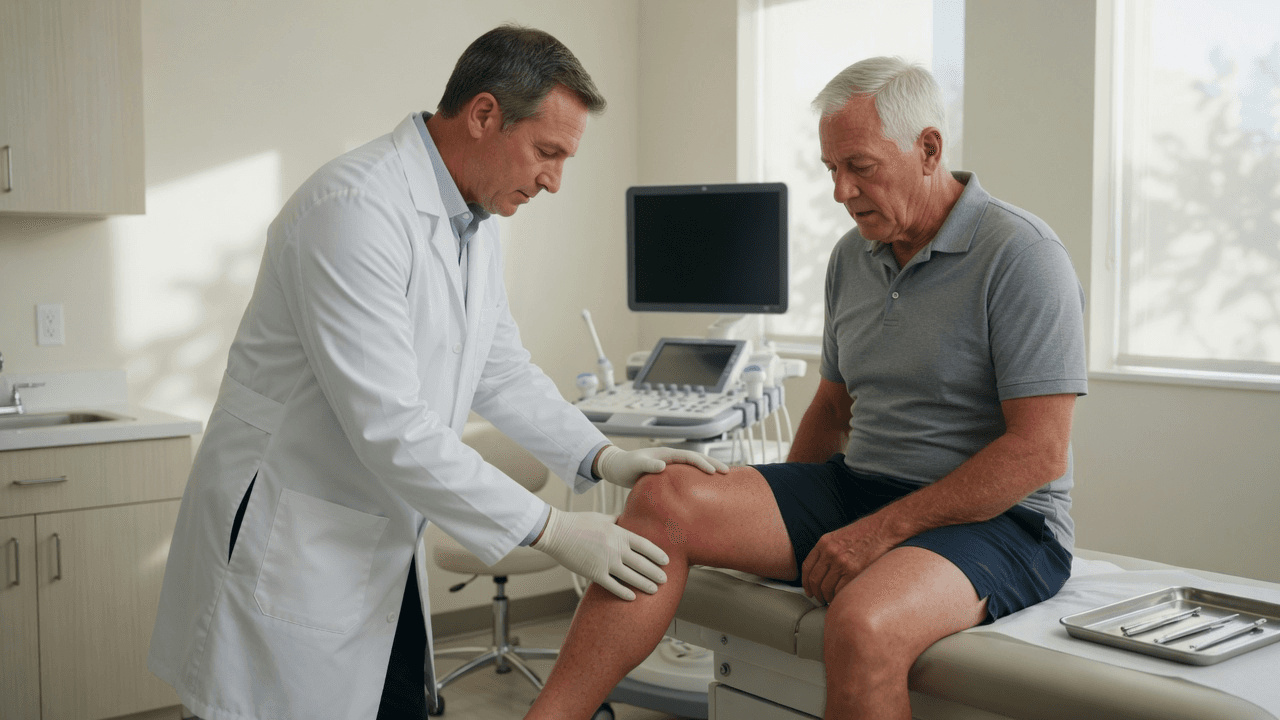
The most common economic comparison is also the least useful. Placing side by side the price of a Lipogems session and that of a single hyaluronic acid infiltration produces a number that says nothing, because the two treatments have different time horizons. The correct parameter is the cost per year of benefit, together with what the person spends around the procedure.
Hyaluronic acid infiltrations have a contained unit cost, but are administered in cycles of three or five sessions that must be repeated at six or twelve-month intervals, and each cycle involves outpatient visits, time, and travel. Cortisone costs even less, with an effect measured in weeks and a limit to the number of administrations repeatable on the same site, because tendon tissue is affected. At the opposite extreme, prosthetic surgery concentrates a high expense and adds hospitalization, prolonged rehabilitation, and weeks of absence from work.
Lipogems is positioned in between, with an expense structure concentrated in a single outpatient session and a horizon measured in years. The point, however, goes beyond arithmetic. While traditional infiltration acts on the symptom and therefore must be repeated, the regenerative approach intervenes on the biological environment of the joint using the patient's own tissue, with the aim of modifying the course rather than accompanying it. The data on safety and efficacy of knee treatment restore the order of magnitude of this time horizon.
Item | Traditional infiltrations | Lipogems |
Expense structure | Contained unit cost, repeated with each cycle | Cost concentrated in a single session |
Frequency | Cycles to be repeated every six or twelve months | Repeatable after years, if the situation requires it |
Indirect costs | Repeated outpatient visits over the years | One visit, with return home the same day |
Insurance coverage | Variable, often within outpatient services | Recognized by various policies and funds for orthopedic purposes |
Frequently asked questions about costs and reimbursements
Is Lipogems covered by the National Health Service?
At the moment no, if we mean systematic and uniform coverage across the national territory. Some healthcare facilities have initiated local programs that include biological therapies for osteoarthritis, but these are limited experiences. In private facilities, treatment is provided on a solvency basis, with the possible intervention of insurance.
Which insurance companies reimburse Lipogems?
The main private healthcare companies recognize the treatment when it is prescribed for orthopedic or rehabilitation purposes. In our facilities, direct access is active with Allianz and through MyAssistance; with other companies we proceed in indirect form, advancing the expense and then submitting the reimbursement request.
Is prior authorization from the company required?
Yes, every time you access in direct form, and it must be requested before the date set for the procedure. In indirect assistance, prior authorization is not necessary, but it is still advisable to obtain written confirmation that the service is covered.
Is a Lipogems treatment for aesthetic purposes reimbursable?
Normally no. The vast majority of policies and funds exclude services performed with a predominantly aesthetic purpose or in the absence of an established pathological condition. Specific coverage for aesthetic surgery is an exception, which follows its own rules and must be activated separately.
Related Articles
 regenerative-medicine
Intravenous NAD+ Therapy: What It Is and What It's For
Intravenous NAD+ therapy: what it is, what it's for, and the benefits for energy and anti-aging. How the session works, differences with supplements, and side effects.
 regenerative-medicine
Deflated Breasts After Breastfeeding: Causes and Solutions
Deflated breasts after breastfeeding: causes and solutions, from exercises to firm the breasts to medical solutions like mastopexy and lipofilling. Complete guide.
 regenerative-medicine
Longevity, Anti-Aging and Biohacking: What They Really Mean
Longevity, anti-aging and biohacking: what they really mean and how they differ, between longevity medicine and optimization of body and mind.
Want More Info?
If you need more information, call us at +39 02 76280736, message us on WhatsApp, email us at info.milano@imageregenerative.com, or use the form below.