Regenerative Medicine
Knee Tendinopathy: Causes, Symptoms and Remedies
At IMAGE REGENERATIVE we offer a different approach to treating knee tendinopathy, based on regenerative medicine and the patented Lipogems® orthopedic technology by Professor Carlo Tremolada.
When knee pain becomes chronic and limits quality of life, our clinic in Milano (also located in St. Moritz) proposes a pathway that acts on the biological cause of the problem, going beyond simple symptom management.
For those practicing competitive sports or wishing to return to movement without compromise, post-injury recovery with regenerative techniques represents a viable and clinically validated path.
What is knee tendinopathy?
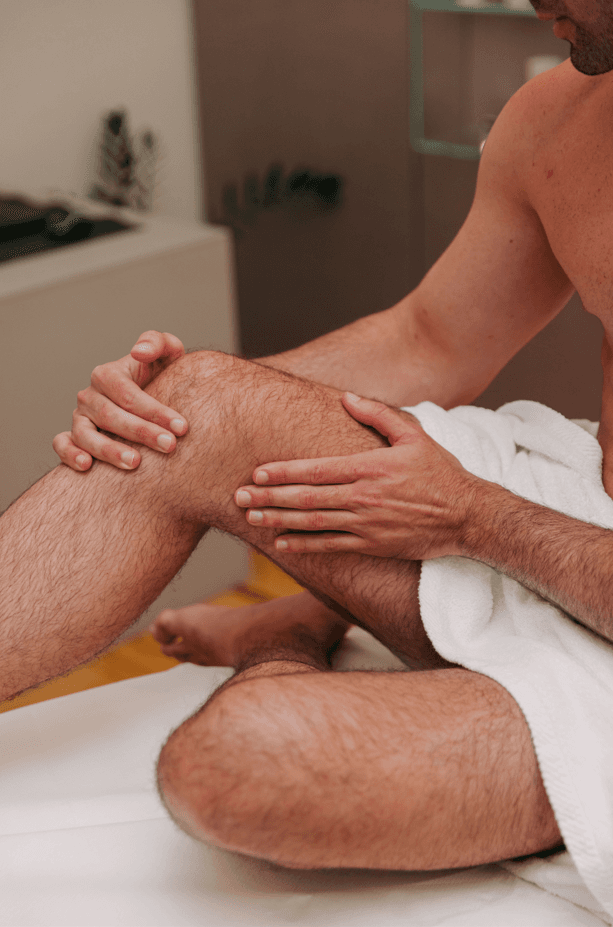
Knee tendinopathy is an overload pathology affecting the tendinous structures of the joint, particularly the patellar tendon and quadriceps tendon. The medical term has progressively replaced the older term tendinitis, because scientific research has shown that the process is often not purely inflammatory, but rather a chronic degeneration of the tendon's collagen matrix. This condition is commonly known as jumper's knee, a definition that recalls the high incidence in those practicing disciplines such as volleyball, basketball and athletics.
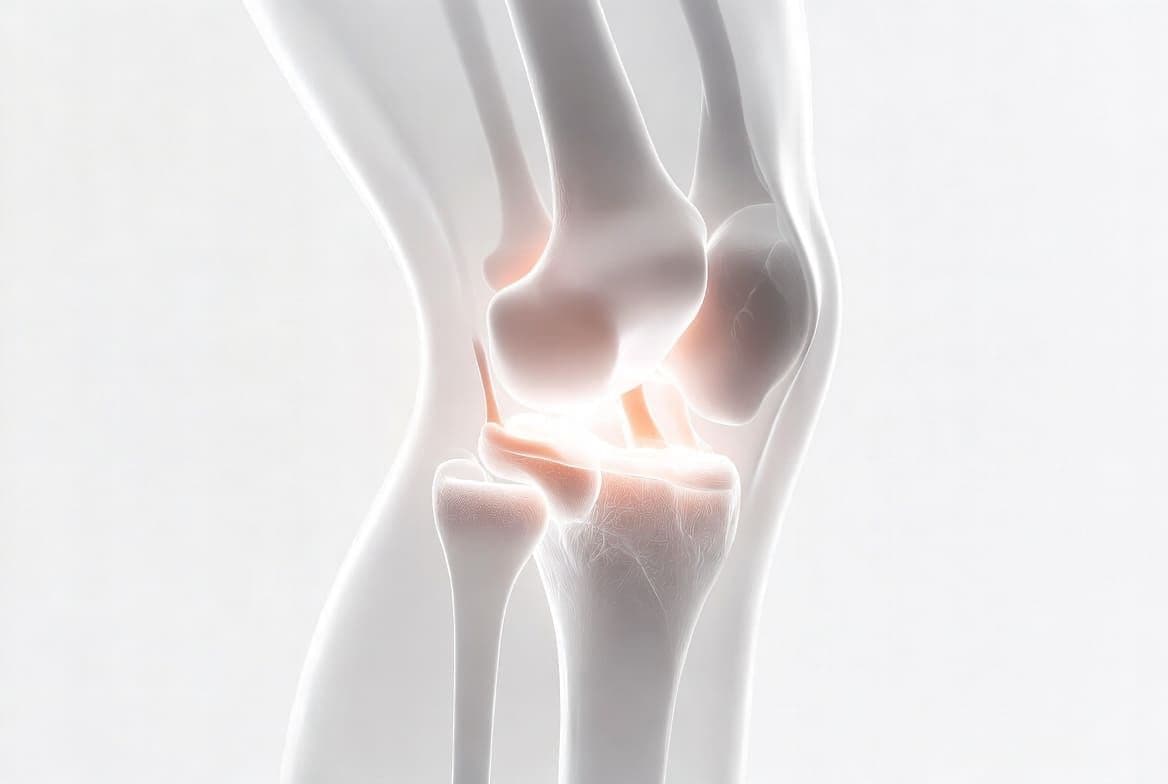
The patellar tendon connects the patella to the tibia and transmits the force generated by the quadriceps during leg extension. When this structure is subjected to repeated loads without adequate recovery, microlesions are triggered that the tissue struggles to repair autonomously. This generates a vicious circle of progressive degeneration, anomalous neoangiogenesis and sensitization of local nerve endings.
Common causes of knee tendinitis
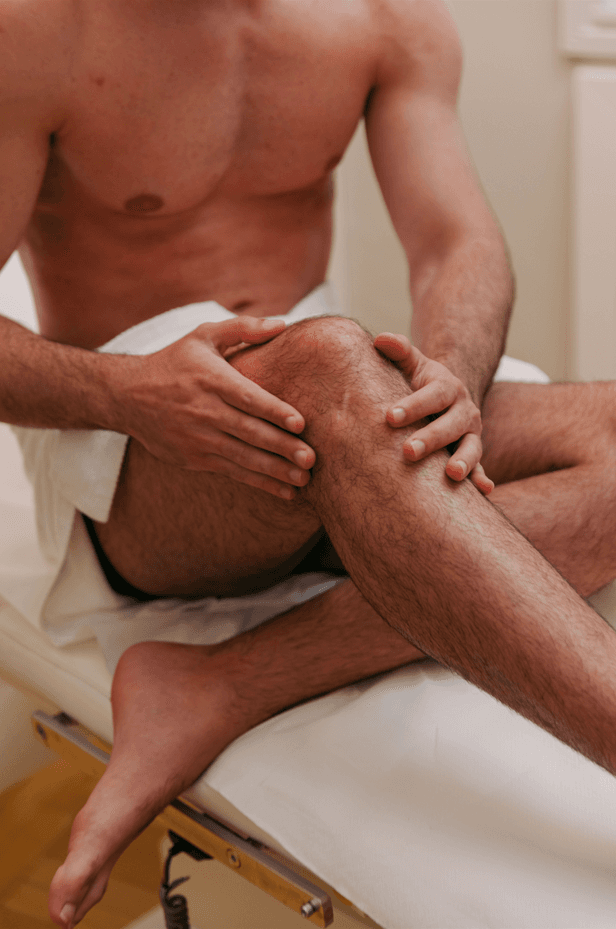
The origin of patellar tendinopathy is almost always multifactorial. Functional overload remains the main cause, particularly in those practicing sports involving jumping, acceleration and abrupt changes of direction. Runners, cyclists and skiers also frequently manifest this problem, especially when training volume increases suddenly without gradual progression.
Other predisposing factors include biomechanical imbalances such as lower limb length discrepancy, valgus or varus knee, pronated foot and weakness of hip stabilizer muscles. Age affects tendon collagen quality, while metabolic factors such as diabetes, hypercholesterolemia and thyroid dysfunctions compromise tendon physiology. Prolonged use of certain drugs, such as fluoroquinolones and systemic corticosteroids, can also weaken tendinous structures. Poor posture, inadequate footwear and excessively rigid training surfaces complete the picture of triggering factors.
Typical symptoms of knee tendinopathy
The cardinal symptom is localized pain in the anterior region of the knee, typically below the patella, at the tendon insertion site. In the initial phases, pain appears only after physical activity, but with disease progression it also manifests during exertion and, in the most advanced cases, during normal daily activities such as climbing stairs or rising from a chair.
The inflamed tendon is painful to palpation and sometimes slightly thickened. Patients report morning stiffness, sensation of tension during the first steps and progressive reduction in athletic performance. In some cases, crepitus or a snapping sensation appears, signaling structural alterations of the tissue. Symptoms tend to worsen with positions that stress the tendon, such as deep squatting or prolonged sitting with flexed knees, a phenomenon known as the theater sign.
Diagnosis of knee tendinopathy
Diagnosis begins with an accurate clinical evaluation conducted by the specialist physician, who collects the sports history, assesses global posture and analyzes movement biomechanics. The physical examination includes specific tests to reproduce pain and identify the exact site of the tendon lesion.
Imaging is fundamental to confirm clinical suspicion and stage the pathology. Musculoskeletal ultrasound represents the first-choice examination, as it allows real-time evaluation of tendon thickness, presence of hypoechoic degenerative areas and anomalous vascularization. Magnetic resonance imaging is used in complex cases or when associated lesions are suspected, such as cartilage or meniscal problems. In some particular situations, computerized biomechanical analysis may also be indicated to identify functional imbalances underlying the overload.
Conventional treatments for knee tendinopathy
The traditional approach to knee tendinopathy has historically been based on rest, non-steroidal anti-inflammatory drugs, physiotherapy and infiltrations of cortisone or hyaluronic acid. While these remedies can offer initial pain relief, their long-term effectiveness remains limited and the patient often finds themselves repeating the therapeutic cycle multiple times throughout the year.
Hyaluronic acid infiltrations, for example, have a predominantly lubricating and viscoelastic function, with an effect that typically lasts three to six months. Cortisone acts powerfully on acute inflammatory phenomena, but if used repeatedly can further weaken the tendon structure, paradoxically increasing the risk of rupture. Physiotherapy is fundamental as support, but in highly chronic conditions may require an integrated approach. Extracorporeal shock wave therapy represents a useful option in specific contexts, although therapeutic response may vary from patient to patient. Surgery, finally, is reserved for refractory forms that do not respond to conservative treatments, and involves normal recovery times and risks associated with an invasive procedure.
Treatment | Type of action | Average duration of benefits | Invasiveness |
Oral anti-inflammatories | Symptomatic | Weeks | Low |
Cortisone infiltration | Local anti-inflammatory | 1-3 months | Medium |
Hyaluronic acid | Viscoelastic | 3-6 months | Medium |
Shock wave therapy | Mechanical stimulation | Variable | Low |
Lipogems® orthopedic | Biological regenerative | 3-5 years | Minimally invasive |
Traditional surgery | Structural | Variable (invasive approach) | High |
Innovations in regenerative medicine for knee tendinopathy
The paradigmatic breakthrough in treating knee tendinopathy comes with regenerative medicine and in particular with the Lipogems® methodology, patented by Professor Carlo Tremolada. Unlike the conventional pharmacological approach, whose primary objective is temporary management of pain symptoms, the regenerative approach acts on the biology of the tendon itself, stimulating natural tissue repair processes.
The principle is simple and elegant. The patient's adipose tissue, harvested through mini-liposuction under local anesthesia, is processed with a patented system that micro-fragments it while preserving the perivascular niche rich in mesenchymal cells and growth factors. The tissue thus obtained is infiltrated under ultrasound guidance at the site of the tendon lesion, where it exerts a powerful anti-inflammatory, immunomodulatory and regenerative action. The mesenchymal cells release bioactive molecules that reduce chronic inflammation, stimulate neoformation of type I collagen and promote physiological revascularization of the tendon.
The procedure is outpatient, lasts approximately 45-60 minutes and allows the patient to return home the same day. Scientific evidence, supported by over 175 peer-reviewed publications, indicates that clinical benefits can be maintained up to three to five years after treatment, reporting significant pain reduction in the vast majority of clinical cases documented in scientific literature. For professional and amateur athletes, the Lipogems® sport protocol allows accelerated return to activity and counteracts recurrences, while for those living with persistent pain, pain therapy with Lipogems® offers an integrated pathway that acts on the deep causes of chronicity.
While hyaluronic acid and cortisone have a predominantly symptomatic or temporary anti-inflammatory action, at IMAGE REGENERATIVE we have chosen the Lipogems® regenerative approach because it intervenes on the diseased tissue and stimulates its repair, with more stable results over time and a completely natural procedure, also in line with anti-doping regulations for competitive athletes.
Frequently asked questions
What are the symptoms of knee tendinopathy?
The main symptoms include localized pain below the patella, morning stiffness, sensation of tension during first movements and difficulty climbing stairs or squatting. Pain tends to worsen with sports activity and in advanced cases also appears at rest. Mild swelling, tenderness to palpation and occasional crepitus during movement may occur.
What are the causes of snapping knee tendon?
Tendon snapping at the knee is generally related to a combination of factors, including repeated functional overload, biomechanical alterations such as valgus or varus knee, weakness of stabilizing muscles and structural degeneration of tendon collagen. Metabolic factors, age and prolonged use of certain drugs can also contribute to the phenomenon.
How to treat knee tendinopathy?
Effective treatment requires a personalized approach starting with accurate diagnosis. Traditional treatments mainly aim at managing the acute phase and pain, while regenerative medicine with Lipogems® orthopedic aims to intervene on the biological component of the pathology, stimulating tendon tissue regeneration through cells contained in the patient's own adipose tissue.
How do you recover from tendinopathy?
Recovery from tendinopathy requires time and an integrated pathway combining targeted rehabilitation, possible modification of loading habits and, in chronic cases, advanced regenerative treatments. The Lipogems® methodology has demonstrated in clinical studies lasting results that can extend up to 3-5 years, counteracting chronic inflammation and promoting physiological tissue repair.
Related Articles
 regenerative-medicine
Intravenous NAD+ Therapy: What It Is and What It's For
Intravenous NAD+ therapy: what it is, what it's for, and the benefits for energy and anti-aging. How the session works, differences with supplements, and side effects.
 regenerative-medicine
Deflated Breasts After Breastfeeding: Causes and Solutions
Deflated breasts after breastfeeding: causes and solutions, from exercises to firm the breasts to medical solutions like mastopexy and lipofilling. Complete guide.
 regenerative-medicine
Longevity, Anti-Aging and Biohacking: What They Really Mean
Longevity, anti-aging and biohacking: what they really mean and how they differ, between longevity medicine and optimization of body and mind.
Want More Info?
If you need more information, call us at +39 02 76280736, message us on WhatsApp, email us at info.milano@imageregenerative.com, or use the form below.