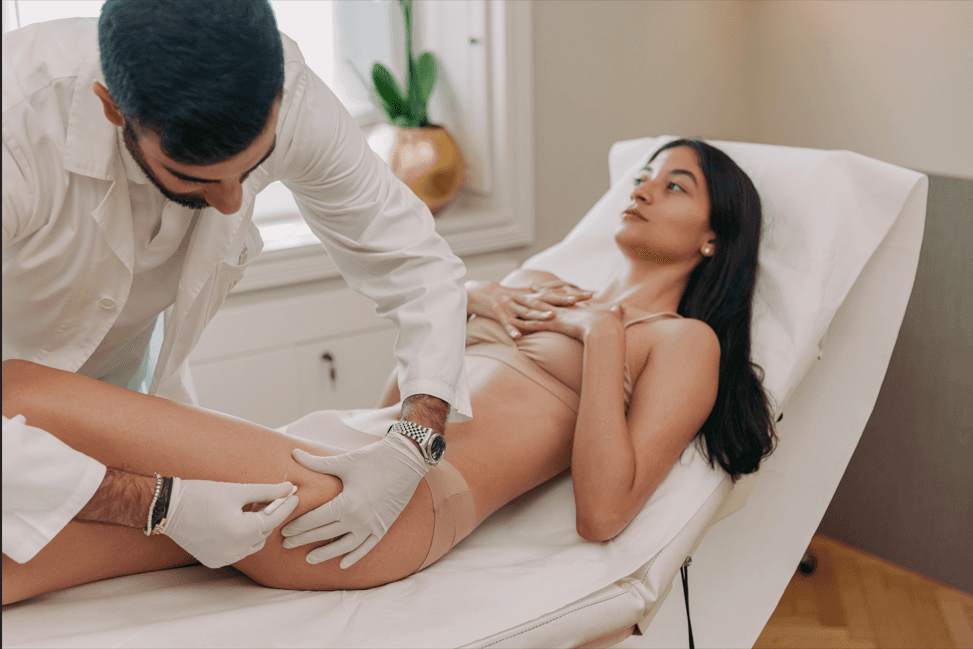
Regenerative Medicine
Stretch Marks: Can They Be Eliminated? Here's the Truth
At IMAGE REGENERATIVE, we meet people every day who live with stretch marks and seek more uniform, compact and radiant skin.
In this guide you'll find clear and realistic information about what striae distensae really are, why they appear and which remedies offer concrete results, within an approach based on regenerative aesthetic medicine and technologies that stimulate the natural renewal of the dermis.
Understanding the biological mechanism that leads to their formation is the first useful step, because that's exactly where the most effective therapies intervene, including the regenerative treatment that improves skin quality using cells from one's own adipose tissue.
What Are Stretch Marks and Why Do They Appear
Stretch marks, medically known as striae distensae, are atrophic scars that form in the dermis, the middle layer of skin where the collagen and elastin fibers responsible for tone and elasticity reside.
When the skin is subjected to rapid and intense stretching, these fibers thin and break, leaving a linear mark that reflects the damage to the underlying connective tissue. This is not simply a superficial imperfection, but a structural modification of the dermis.
Two main factors are at the origin, often combining. The first is mechanical: rapid body growth such as during puberty, sudden weight gain or loss, pregnancy or rapid muscle development typical of hypertrophic training put the dermis under tension.
The second is hormonal: high levels of cortisol and prolonged use of cortisone reduce fibroblast activity and collagen synthesis, making the skin more fragile and predisposed to striae formation. Family history also plays an important role, because the quality and resistance of connective tissue have a strong genetic component. Understanding this combination helps to choose the correct remedies and establish targeted prevention.
Red and White Stretch Marks: The Differences
The distinction between red and white stretch marks is not just chromatic, it reflects two different evolutionary phases of the same process.
Red stretch marks, called striae rubrae, represent the initial and inflammatory stage: the mark appears pink or purplish because the dermis is still vascularized and the underlying vessels are visible through the thinned skin. This is the phase in which the skin retains greater response capacity, which is why intervening early offers the widest margins for improvement.
Over the months the stretch mark enters the mature phase and becomes white or pearly, taking the name striae albae. At this stage the inflammation has subsided, vascularization has reduced and the mark becomes atrophic, often slightly depressed compared to the surrounding skin.
Striae albae are more stable over time and respond more slowly to treatments, although they can be visibly attenuated.
Recognizing the phase is crucial for the therapeutic strategy: on red stretch marks the focus is on modulating inflammation and stimulating collagen, while on white ones the goal is to remodel the tissue and improve texture and color uniformity. This is why the initial skin assessment represents an essential step.
Stretch Marks During Pregnancy: Prevention and Remedies
Pregnancy is one of the times when stretch marks appear most frequently, generally between the second and third trimester, when the abdomen stretches rapidly and the breasts increase in volume. The most affected areas are indeed the belly, breasts and hips. In addition to mechanical stretching, the hormonal changes of this phase contribute, and once again, genetic predisposition, which explains why some women develop them and others don't under the same conditions.
In terms of prevention, keeping the skin well hydrated and nourished helps preserve its elasticity and comfort. The consistent application of emollients and specific oils, combined with good hydration from within and gradual weight gain, supports the skin barrier during the months of greatest tension. It's important to remember that no cream can eliminate the risk, because the hereditary component remains predominant.
During pregnancy and breastfeeding many active treatments, such as topical retinoids and various medical procedures, are postponed as a precaution. The postpartum period is instead the ideal window to address residual marks with targeted protocols, when red stretch marks tend to stabilize; this is the ideal time to intervene with treatments that accelerate and maximize their attenuation.
Stretch Marks on Breasts, Buttocks and Thighs: Critical Areas
Some areas of the body are more exposed to the appearance of striae because they combine mechanical stretching, volume variations and specific skin characteristics. The breasts are among the most delicate areas: they grow during puberty, pregnancy and breastfeeding, and the thin skin of the region tends to mark easily. Buttocks and thighs are mainly affected during rapid adolescent development and in the presence of weight fluctuations, as well as in intense training that rapidly increases muscle mass.
Hips, abdomen and lower back are also among the frequent sites, particularly among younger people. The common characteristic is always the same: when the dermis extends faster than its ability to adapt, the collagen and elastin fibers give way and the mark forms.
Since these are often extensive areas, the most sensible approach involves a personalized assessment that takes into account the area, the phase of stretch marks and the skin type, so as to build a realistic path consistent with each person's expectations.
Can Stretch Marks Really Be Eliminated?
Here's the truth, without unrealistic promises: a mature stretch mark is a dermal scar and, as such, does not disappear completely. It's therefore correct to speak of attenuation and visible improvement rather than total removal. This doesn't mean having to passively accept the imperfection, as concrete and tangible results are now widely within reach of available technologies.
The factor that most affects the outcome is timeliness. On red stretch marks, still in the active phase, treatments can modulate inflammation, stimulate the production of new collagen and appreciably reduce the visibility of the mark. On white stretch marks the margins exist equally, but the work is longer and focuses on tissue remodeling and surface uniformity.
The strategy that offers the best results is almost always combined and personalized: combining multiple technologies and multiple sessions allows to act on the structural cause, that is on the quality of the dermis, rather than on the external appearance alone. This is the principle that distinguishes a regenerative approach from a purely cosmetic remedy.
Effective Treatments: Laser, Microneedling and Creams
The range of remedies for stretch marks includes very different solutions in terms of mechanism and depth of action, and knowing their limitations is as useful as knowing their strengths.
Creams and cosmetics represent the first level. Products based on moisturizing substances, centella asiatica, hyaluronic acid or retinoids can support elasticity and intervene on initial red stretch marks, but their action remains predominantly superficial and symptomatic: they improve the comfort and appearance of the skin without deeply remodeling the scar tissue.
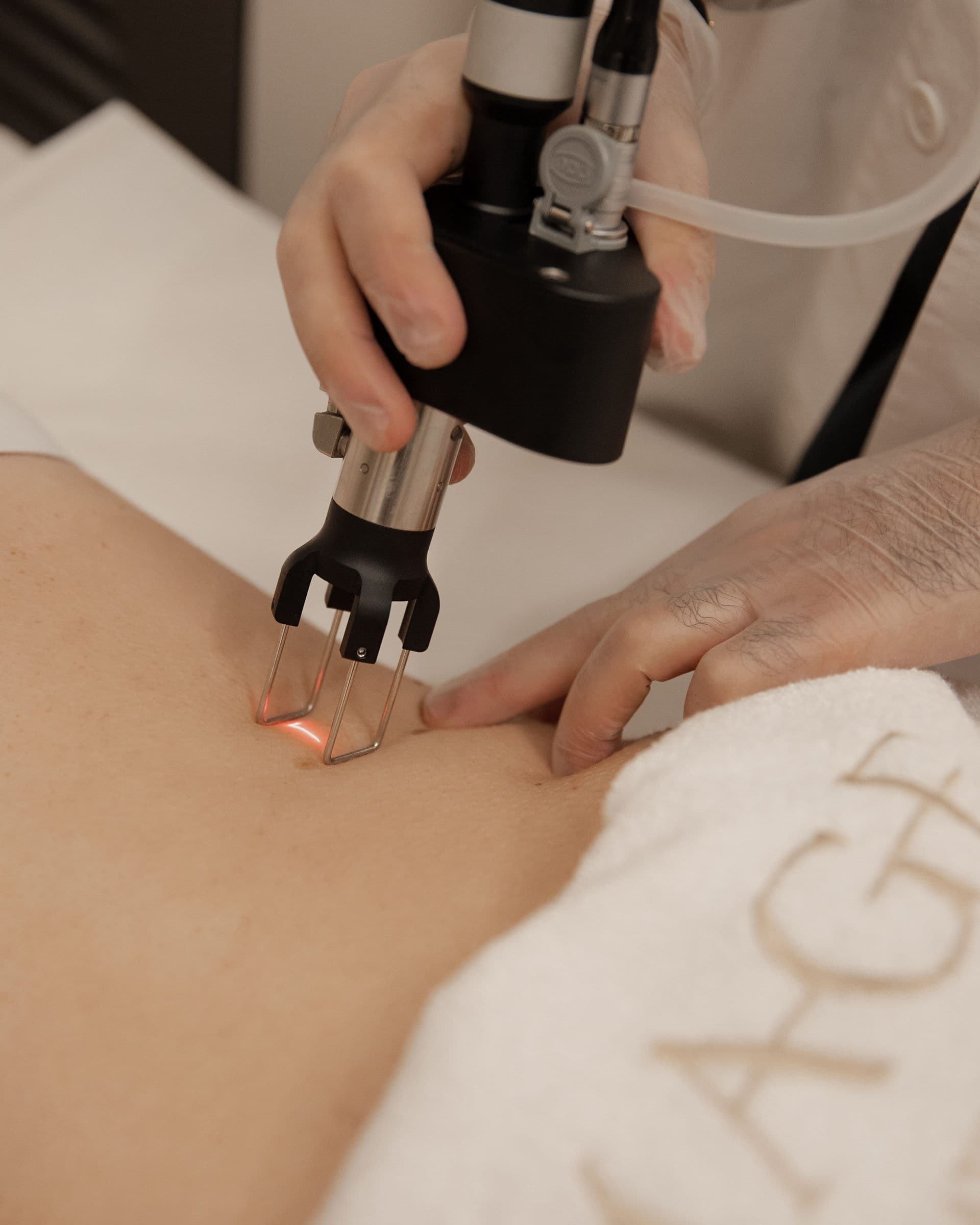
Fractional laser acts at a deeper level, stimulating collagen remodeling and evening out texture and color. It allows visible attenuation of the mark and is suitable for both red and white striae, in cycles of multiple sessions.
Radiofrequency with microneedles represents today one of the most complete options. This technology combines the mechanical stimulus of microneedling with the thermal energy of radiofrequency, activating the neosynthesis of collagen and elastin in the superficial and deep layers of the dermis, with contained recovery times.
This is where IMAGE REGENERATIVE's regenerative approach comes into play. While cosmetics act on the symptom, regenerative medicine works on the quality of the dermis itself: the Lipogems® methodology uses the patient's adipose tissue, rich in mesenchymal cells, to improve skin density and elasticity. At our Milano and St. Moritz locations, protocols are combined and calibrated on the individual person, integrating technologies and regenerative medicine for progressive and natural improvement.
Approach | How It Works | Most Suitable Phase | Expected Results |
Creams and cosmetics | Hydrate and support the skin barrier, with predominantly superficial action | Prevention and initial red stretch marks | Slight improvement in hydration and elasticity |
Fractional laser | Stimulates collagen remodeling and evens out texture and color | Red and white stretch marks | Visible attenuation of mark and color |
Radiofrequency with microneedles | Combines microneedling and thermal energy to regenerate superficial and deep dermis | Red and white stretch marks | More compact skin, less visible marks |
Lipogems regenerative medicine | Uses patient's adipose tissue to improve dermal quality and elasticity | Skin with laxity and diffuse marks | Progressive improvement of skin quality |
How to Prevent the Appearance of Stretch Marks
Prevention remains the most effective strategy, because acting before the fibers give way is simpler than intervening on an already formed mark. The first ally is hydration, both external, with emollients and oils that maintain skin elasticity, and internal, drinking sufficiently to support tissue turgor.
Gradual management of body weight also matters greatly, to avoid sudden stretching of the dermis during phases of increase or weight loss. A balanced diet, rich in proteins, vitamin C, zinc and antioxidants, provides the necessary building blocks for collagen and elastin synthesis and promotes connective tissue resistance.
During at-risk periods, such as puberty, pregnancy or an intense sports program, dedicating constant attention to the skin helps limit the appearance of marks. Intervening promptly on the first red stretch marks finally allows to exploit the phase in which the skin responds better, significantly improving the results obtainable over time.
Frequently Asked Questions
Can white stretch marks be eliminated?
White stretch marks are mature and stable scars, so they don't completely disappear. However, they can be visibly attenuated with fractional laser, radiofrequency with microneedles and regenerative protocols that remodel the dermis and improve skin uniformity.
Does laser eliminate stretch marks?
Laser doesn't make stretch marks disappear, but makes them less visible by stimulating collagen production and evening out texture and color. Effectiveness is greater on red stretch marks, still in the active phase, and generally requires a cycle of multiple sessions.
Do stretch marks during pregnancy disappear after childbirth?
After childbirth stretch marks tend to transition from the red phase to the white phase and to spontaneously attenuate in the following months, but they rarely disappear on their own. Postpartum treatments help improve their appearance more quickly and markedly.
How long does it take to see results on stretch marks?
It depends on the type of treatment and the phase of the mark. With laser and radiofrequency with microneedles, several sessions and a few weeks are usually needed to appreciate the improvement, while regenerative pathways show progressive results over the course of months.
Related Articles
 regenerative-medicine
Intravenous NAD+ Therapy: What It Is and What It's For
Intravenous NAD+ therapy: what it is, what it's for, and the benefits for energy and anti-aging. How the session works, differences with supplements, and side effects.
 regenerative-medicine
Deflated Breasts After Breastfeeding: Causes and Solutions
Deflated breasts after breastfeeding: causes and solutions, from exercises to firm the breasts to medical solutions like mastopexy and lipofilling. Complete guide.
 regenerative-medicine
Longevity, Anti-Aging and Biohacking: What They Really Mean
Longevity, anti-aging and biohacking: what they really mean and how they differ, between longevity medicine and optimization of body and mind.
Want More Info?
If you need more information, call us at +39 02 76280736, message us on WhatsApp, email us at info.milano@imageregenerative.com, or use the form below.