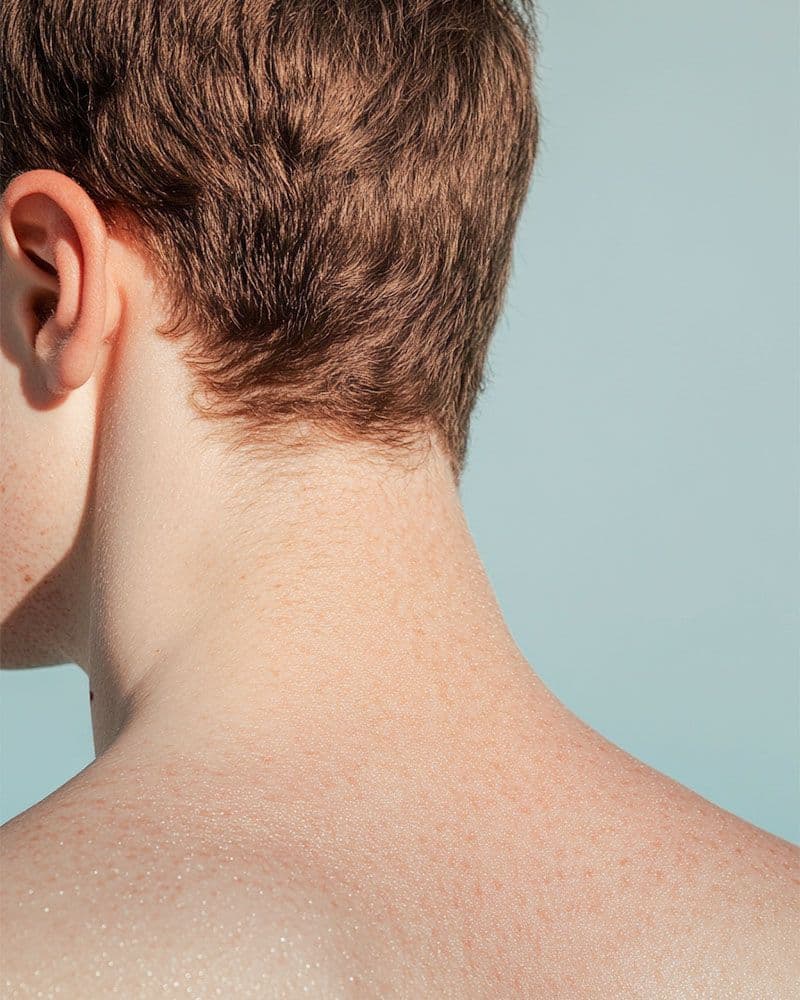
Regenerative Medicine
Otoplasty: How to Correct Protruding Ears?
Protruding ears are one of the facial aesthetic concerns that most affect self-esteem, especially during childhood and adolescence.
At Image Regenerative, a regenerative medicine clinic with locations in Milano and St. Moritz, otoplasty is approached with a method that combines the precision of regenerative aesthetic surgery with Lipogems® technology developed by Professor Carlo Tremolada.
The goal is to correct the aesthetic concern of the auricle while respecting the natural proportions of the face, with minimal incisions and contained recovery times. In this guide we will see what otoplasty is, how the procedure is performed, what alternatives without surgery truly exist, and what to expect from the post-operative recovery.
What is otoplasty and what is it for
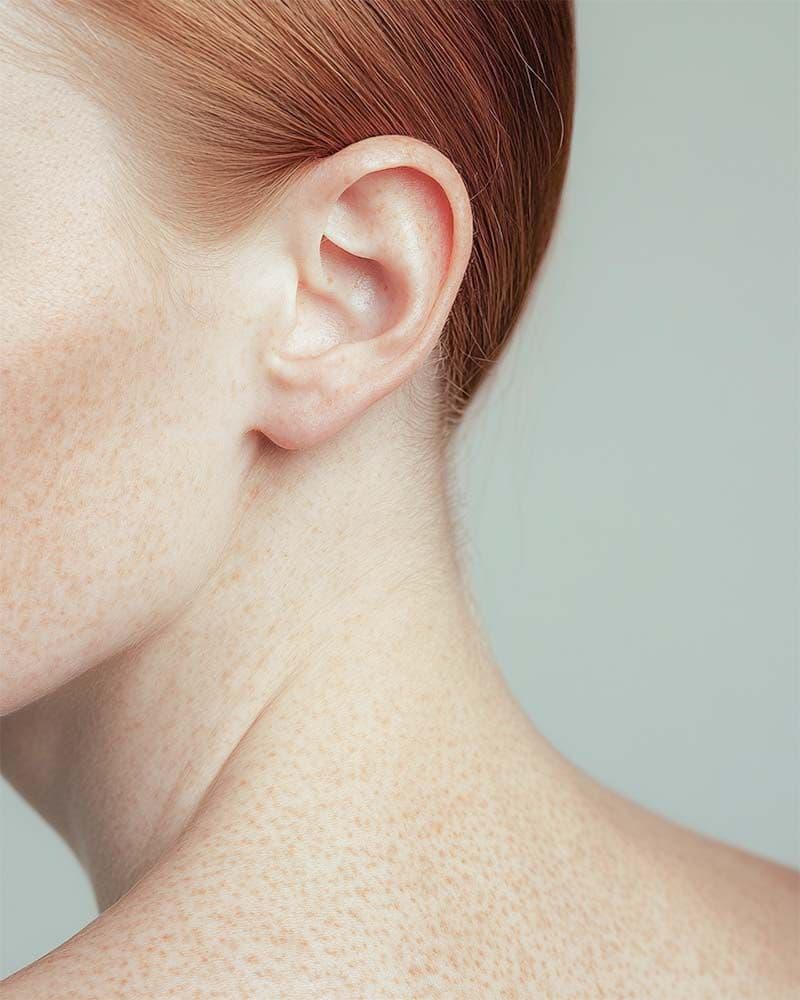
Otoplasty is the aesthetic ear surgery that reshapes the form, position or dimensions of the auricle. It serves to correct protruding ears, commonly called bat ears, but is also indicated for elongated or torn lobes, oversized ears, asymmetries and small congenital malformations or trauma outcomes.
From a technical standpoint, the surgeon acts on the auricular cartilage to redefine its natural folds and bring the ear closer to the head when the angle between auricle and skull is too open. It is a delicate procedure that requires deep knowledge of ear anatomy to obtain a symmetrical and harmonious result.
At Image Regenerative the procedure integrates the principles of regenerative medicine: the patient's micro-fragmented adipose tissue, obtained with the Lipogems® method, promotes optimal healing and contributes to the quality of treated tissues.
Protruding ears: causes and when to intervene
Protruding ears almost always depend on a congenital anatomical characteristic, often transmitted on a familial basis. The most frequent causes are insufficient formation of the antihelical fold, the fold that should curve the upper edge of the ear, or excessive amplitude of the concha, the central and deepest portion of the auricle, which pushes the ear outward. In many cases the two factors coexist and determine the protruding appearance, with an angle between ear and head wider than average.
It should be clarified that protruding ears do not represent a health problem, as hearing remains completely normal. The discomfort is of an aesthetic and psychological nature: this concern often becomes a source of insecurity already at school age, when children are more exposed to peers' comments.
Although the insecurity often arises at school age, it is essential to approach the procedure when the patient has reached adequate anatomical and psychological maturity to undertake the journey with awareness. The right time to intervene varies from person to person.
On one hand, the anatomical development of the ear counts, on the other hand, personal motivation and psychological wellbeing weigh in. A specialist consultation allows evaluation of the concern as a whole and establishment of the most suitable path, without forcing the timing.
How the otoplasty procedure is performed
The otoplasty procedure is performed under local anesthesia and generally lasts between twenty and forty minutes, with a total stay in the clinic of about two hours. In most cases the incisions are hidden in the fold behind the ear or in the natural anatomical contours, so that the scars are virtually invisible once healed. The surgeon reshapes the cartilage to recreate the correct folds and bring the auricle to a position closer to the head.
At Image Regenerative the reshaping can utilize the Pink Needle Otoplastic, a minimally invasive technique presented at congress level by Professor Carlo Tremolada. Thanks to the use of special needles, the Pink Needle allows repositioning and shaping of the cartilage while reducing tissue trauma, without resorting to more extensive surgical incisions.
Its feasibility is always verified case by case based on the patient's anatomical characteristics.
Completing the picture is the regenerative approach: the integration of autologous adipose tissue processed with Lipogems® stimulates natural healing processes and reduces post-operative swelling, contributing to a natural-looking result.
Characteristic | Detail |
Treated area | Auricle and lobes |
Objective | Correct protruding ears, elongated lobes and asymmetries |
Anesthesia | Local |
Procedure duration | 20-40 minutes |
Available techniques | Surgical otoplasty and minimally invasive Pink Needle |
Regenerative approach | Integration of adipose tissue with Lipogems® |
Social recovery | A few days |
Protective band | Recommended, especially at night, for the period indicated by the surgeon |
Recommended age at Image Regenerative | From 16 years |
Correctors and patches: remedying without surgery
Those seeking a solution without the scalpel often encounter correctors and patches for protruding ears. It is useful to clarify how they truly work, to avoid incorrect expectations. Silicone correctors and molding supports act on the cartilage only in the very first months of life, when the tissue is still soft due to residual maternal hormones and can assume a new shape in a stable manner. In this very early window they represent a valid and non-invasive option, to be evaluated with the pediatrician.
In older children and adults, however, the cartilage is now mature and rigid. The adhesive patches that bring the ear toward the head offer in these cases only a temporary effect, visible while they are worn, without modifying the underlying structure. They attenuate the aesthetic concern on specific occasions, but do not produce lasting correction.
While the patch merely masks the symptom for a few hours, at Image Regenerative we have chosen the regenerative approach because it intervenes on the anatomical cause and maintains the result over time, with a real reshaping of the cartilage and rapid recovery.
How much does otoplasty cost
The cost of otoplasty is not a single value, because it depends on various clinical variables. Factors affecting the estimate include the complexity of the case, correction of one or both ears, the technique chosen between traditional surgery and Pink Needle, possible treatment of the lobes, and the type of anesthesia. The degree of asymmetry to correct and the team's experience also contribute to defining the final figure.
For this reason a reliable estimate can only be formulated after a consultation, during which the surgeon evaluates the aesthetic concern and defines the personalized treatment plan. At Image Regenerative it is possible to request an initial consultation, also via video call, to receive a transparent estimate and understand which technique best responds to one's needs.
Since each ear has unique characteristics and requires a tailored approach, Image Regenerative does not adopt standardized pricing. We believe that medical excellence requires a highly personalized treatment plan, definable only through a dedicated specialist evaluation.
Otoplasty in children and adults: at what age to have it
The auricle completes much of its development very early, around five or six years of age. From a purely anatomical standpoint the correction could therefore be considered already at school age, and it is for this reason that in general practice pediatric otoplasty is sometimes proposed starting from six or seven years, when the first discomforts related to group life often emerge.
While in general practice otoplasty is sometimes proposed at pediatric age, the medical philosophy of Image Regenerative favors an approach based on the patient's total awareness.
For this reason, our protocol provides for the procedure starting from sixteen years of age, performed under local anesthesia. At this age range the patient participates consciously in the decision and actively collaborates in the post-operative journey, an important element for success.
In adults, however, there is no upper limit: otoplasty can be performed at any age, as long as general health allows it. In any case it is the specialist consultation that establishes the most appropriate time, taking into account both tissue development and the person's expectations.
Post-operative recovery and results
Recovery after otoplasty is generally rapid. Most patients resume normal daily activities within a few days, while to protect the treated area and promote reshaping it is recommended to wear a band, especially at night, for the period indicated by the surgeon.
In the days following the procedure a follow-up visit is scheduled, and it is advisable to avoid smoking for about two weeks to support good healing.
Slight swelling or sensitivity of the area are normal in the initial phase and progressively reduce. Thanks to the integration of regenerative medicine, the autologous adipose tissue helps to contain inflammation and improve the quality of the ear skin, with discreet scars and a natural appearance. The result is appreciated in an increasingly defined way over the weeks: ears repositioned harmoniously, proportionate to the face and stable over time.
It is precisely this combination of surgical precision and tissue regeneration that makes the result balanced and lasting, enhancing the entire expression of the face.
Frequently asked questions
Does otoplasty leave visible scars?
No, in most cases the incisions are positioned in the fold behind the ear or in the natural contours of the auricle. Once fully healed the scars are discreet and difficult to perceive, even with hair pulled back.
Is otoplasty painful?
The procedure is performed under local anesthesia, so no pain is felt during the operation. In the following days mild discomfort or a sensation of tension may appear, easily manageable with the therapy indicated by the surgeon.
How long do otoplasty results last?
The cartilage reshaping is stable and the results are maintained over time. Unlike patches, which offer only a temporary effect, otoplasty corrects the ear structure in a lasting manner.
Does otoplasty only correct protruding ears?
No. In addition to protruding ears, otoplasty allows treatment of elongated or damaged lobes, asymmetries between the two ears, congenital malformations and trauma outcomes, with aesthetic and functional purposes.
Related Articles
 regenerative-medicine
Intravenous NAD+ Therapy: What It Is and What It's For
Intravenous NAD+ therapy: what it is, what it's for, and the benefits for energy and anti-aging. How the session works, differences with supplements, and side effects.
 regenerative-medicine
Deflated Breasts After Breastfeeding: Causes and Solutions
Deflated breasts after breastfeeding: causes and solutions, from exercises to firm the breasts to medical solutions like mastopexy and lipofilling. Complete guide.
 regenerative-medicine
Longevity, Anti-Aging and Biohacking: What They Really Mean
Longevity, anti-aging and biohacking: what they really mean and how they differ, between longevity medicine and optimization of body and mind.
Want More Info?
If you need more information, call us at +39 02 76280736, message us on WhatsApp, email us at info.milano@imageregenerative.com, or use the form below.