Regenerative Medicine
Left or Right Hip Pain: Symptoms, Causes, Diagnosis
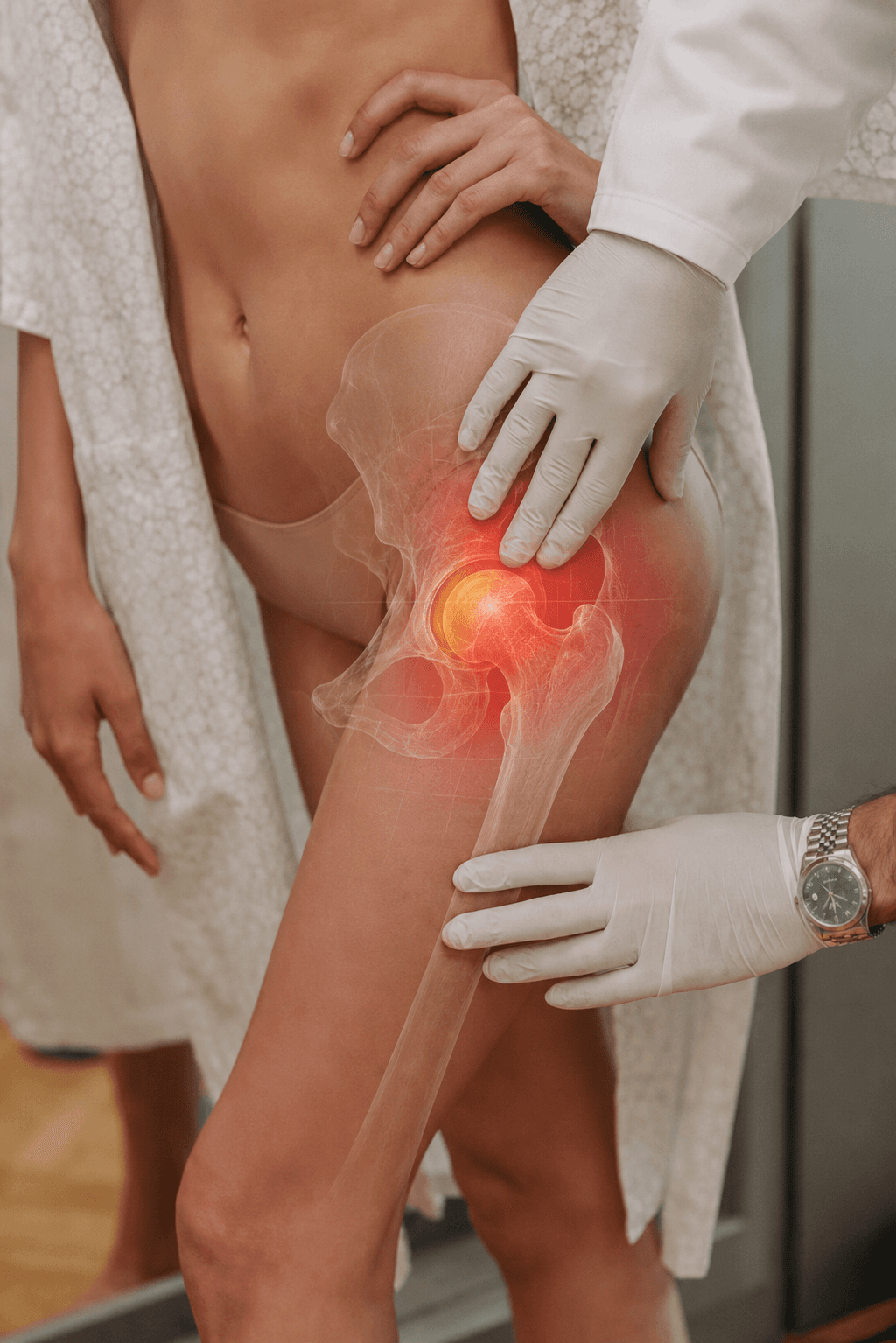
Hip pain represents a widespread disorder affecting millions of people in Italy, manifesting both on the right and left side and significantly impacting daily quality of life. Walking, climbing stairs, getting up from a chair, or resting at night become difficult tasks when the coxofemoral joint suffers.
At IMAGE REGENERATIVE, with locations in Milano and St. Moritz, we address these issues through an integrated approach that emphasizes regenerative medicine and in particular the orthopedic Lipogems® treatment, patented by Professor Carlo Tremolada.
We offer accurate diagnostic pathways and solutions such as pain therapy capable of intervening directly on tissue and inflammation, addressing the disorder at its root and avoiding invasive treatments when possible.
Common causes of left or right hip pain

The hip represents one of the most stressed joints in the human body, supporting a large part of body weight during every movement. The causes of left or right hip pain are multiple and often overlap, requiring thorough clinical evaluation to identify the real origin of the problem.
Coxarthrosis, also known as hip osteoarthritis, constitutes the most frequent cause in adult and elderly subjects. It involves progressive degeneration of the articular cartilage that causes friction between bone surfaces, generating pain and stiffness. Trochanteric bursitis affects the lateral area of the hip, where the synovial bursa becomes inflamed due to overload or repeated trauma.
Among other recurring causes we find gluteus medius tendinopathies, femoroacetabular impingement, acetabular labrum lesions, and iliopsoas tendinitis. Sports injuries, prolonged incorrect postures, and lower limb discrepancies also contribute to fueling the problem. In women of childbearing age and during pregnancy, hormonal changes and pelvic overload can favor the onset of pain localized to one side. The distinction between right and left hip often depends on the dominant side and postural habits, while bilateral pain is frequent in advanced osteoarthritis.
Symptoms associated with hip pain and inflammation
Recognizing the symptoms of an inflamed hip is essential for timely intervention. The clinical picture varies based on the triggering cause, but some signs recur very frequently. Pain can be localized in the groin area, buttock, along the thigh, or on the outer side of the hip, sometimes radiating to the knee. This distribution often confuses the patient, who erroneously attributes the discomfort to other joint structures.
Joint stiffness upon waking, difficulty putting on socks and shoes, limping after long walks, and limitation of internal rotation movements constitute typical warning signs of coxarthrosis. In acute inflammations, night pain appears that disturbs rest, while bursitis causes pinpoint pain when pressing on the lateral part of the pelvis. Joint clicking, sensation of locking, and reduced strength in the affected leg also frequently accompany the symptom picture. When pain persists for more than three months, we speak of chronic pain, a condition requiring specialized care to reduce the risk of chronicity and harmful postural compensations.
Diagnosis of hip muscle pain: what to expect
Diagnosis of hip muscle pain begins with an accurate specialist visit, during which the specialist gathers the patient's medical history, evaluates clinical history, and analyzes pain characteristics. The objective examination includes passive and active mobility tests, specific maneuvers such as the FABER and FADIR tests, and palpation of surrounding musculotendinous structures.
To confirm clinical suspicion, targeted instrumental examinations are prescribed. The following table summarizes the main diagnostic tools used in evaluating painful hip.
Diagnostic examination | What it evaluates | When recommended |
X-ray | Bone condition, joint space, osteophytes | Suspected osteoarthritis or fractures |
MRI | Cartilage, acetabular labrum, bone edema | Tendon injuries or impingement |
Musculotendinous ultrasound | Soft tissues, tendons, synovial bursae | Bursitis, tendinopathies, dynamic assessments |
CT with contrast | Detailed bone anatomy and cartilage | Surgical planning and complex cases |
Blood tests complete the diagnostic pathway when rheumatological or systemic inflammatory pathologies are suspected. The combination of clinical assessment and imaging allows for formulating a precise diagnosis and planning the most suitable therapeutic pathway for the individual patient, avoiding standardized approaches and establishing from the outset a targeted and personalized therapeutic strategy.
Regenerative approaches for hip pain
Traditional conservative approaches offer effective responses in the early stages of the disorder through the use of anti-inflammatories, physiotherapy, and infiltrations of hyaluronic acid or cortisone. Hyaluronic acid infiltrations, in particular, act as a temporary lubricant of the joint, with an effect that generally expires within three to six months. Cortisone, for its part, rapidly reduces inflammation but remains a predominantly symptomatic solution, whose prolonged use over time requires careful specialist evaluation to avoid potential side effects on the joint.
IMAGE REGENERATIVE, at locations in Milano and St. Moritz, has chosen to pursue the path of regenerative medicine by adopting the Lipogems® system, patented by Professor Carlo Tremolada. It is a minimally invasive procedure that uses the patient's autologous adipose tissue, micro-fragmented and rich in precious mesenchymal cells (pericytes), providing a natural scaffold capable of supporting and stimulating tissue repair processes.
The fat is harvested through a small liposuction under local anesthesia, processed with the patented device, and infiltrated under ultrasound guidance directly into the coxofemoral joint.
While hyaluronic acid acts primarily as a lubricant and mechanical shock absorber, the regenerative approach with Lipogems® aims to modulate the chronic inflammatory environment, supporting the natural reparative processes of joint tissues. Several scientific publications dedicated to the method highlight how many patients report prolonged benefits over time, recording significant improvement in pain and mobility in a high percentage of patients.
Lipogems® Sport and Lipogems® Orthopedic allow treatment of both professional and amateur athletes, accelerating post-injury recovery with regenerative techniques and protecting athletic careers. The treatment can represent a valid alternative when one wishes to delay or avoid hip replacement surgery, particularly in younger patients with mild or moderate osteoarthritis.
When to consult a specialist for hip pain
Underestimating hip pain exposes one to the risk of worsening the joint condition and activating compensation mechanisms that involve knees, lumbar spine, and pelvis. It becomes appropriate to consult a specialist when pain persists beyond two weeks despite rest, when visible swelling appears, when mobility is evidently reduced, or when the symptom disturbs night sleep.
The sudden onset of limping, inability to bear weight on the affected limb, or recent trauma also require prompt evaluation. Early diagnosis allows intervention before joint degeneration progresses, expanding therapeutic possibilities and improving long-term prognosis. At IMAGE REGENERATIVE, each patient receives a multidisciplinary evaluation and a personalized pathway, built around their clinical and functional needs.
Frequently Asked Questions
Where does it hurt when you have hip problems?
Hip pain is typically perceived in the groin area, buttock, outer side of the thigh, or along the front of the leg. It often radiates toward the knee, which is why it can be confused with problems in other joints. Precise localization helps the specialist identify the involved anatomical structure and establish the correct diagnosis.
What could be the causes of lateral hip pain?
Lateral hip pain is frequently linked to trochanteric bursitis, gluteus medius tendinopathy, or piriformis syndrome. Sports overload, incorrect postures, and lower limb discrepancies can favor the onset of the disorder. A clinical evaluation with possible ultrasound clarifies the nature of the problem.
What tests should I do to diagnose hip pain?
The most indicated examinations include X-ray, useful for evaluating bone condition and possible presence of osteoarthritis, MRI to analyze cartilage and soft tissues, and musculotendinous ultrasound to study bursae and tendons. In selected cases, CT and blood tests are added to exclude rheumatological components.
What to do to relieve hip pain?
The first step consists of receiving an accurate diagnosis from a specialist. Based on the cause, the pathway may include physiotherapy, targeted drug therapy, modification of postural habits, and regenerative treatments such as Lipogems®, designed to counteract the inflammatory state and promote tissue regeneration, offering benefits that extend over the medium and long term according to scientific literature.
Related Articles
 regenerative-medicine
Décolleté Rejuvenation: How to Care for Neck and Chest
Décolleté rejuvenation: how to care for neck and chest, from neck wrinkles to Venus rings. Treatments, fillers and biostimulation for the skin.
 regenerative-medicine
 regenerative-medicine
Oxygen Ozone Therapy: What Is It? What Are the Benefits?
Oxygen ozone therapy: what it is, what it's for, and what benefits it offers for herniated discs and back pain. How it works, costs, coverage, and contraindications.
Want More Info?
If you need more information, call us at +39 02 76280736, message us on WhatsApp, email us at info.milano@imageregenerative.com, or use the form below.