
Regenerative Medicine
Lipogems: The History and Method of Prof. Tremolada
At the foundation of IMAGE Regenerative's work, at our Milano and St. Moritz locations, lies an idea that took years to establish: adipose tissue is not waste material, but one of the body's most valuable biological resources.
From this insight by Prof. Carlo Tremolada came Lipogems, the method that brought regenerative medicine from orthopedics to aesthetics and which today represents the heart of the clinic's activity.
It's worth reviewing its history and method, because understanding how it works also explains what results can reasonably be expected.
What Lipogems Is: The Regenerative Technology
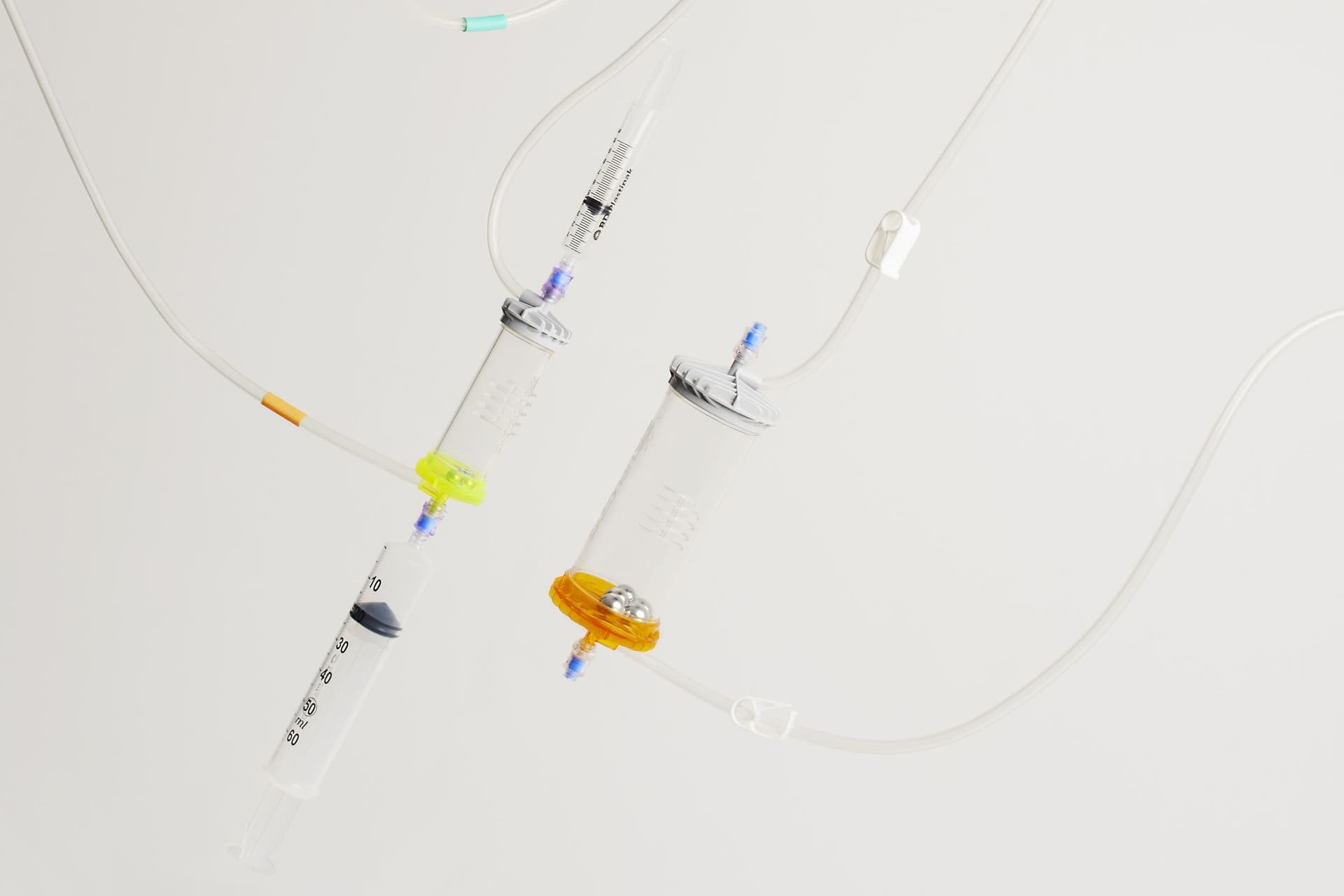
Lipogems is a patented technology that allows harvesting a person's adipose tissue, processing it through micro-fragmentation, and reimplanting it in the same session where tissue repair needs support.
Two characteristics define it. The first is that the material used is autologous, meaning it belongs to the person themselves: nothing foreign is introduced into the body, eliminating compatibility issues. The second is that the tissue is transferred intact in its structure, as complete living tissue, not reduced to a single isolated component.
The difference from traditional medicine lies in the objective. An anti-inflammatory reduces pain by acting on the symptom, and in many situations that's the correct choice. A regenerative approach instead aims to create conditions for tissues to repair themselves, exploiting biological mechanisms the body already possesses. It's a difference of plane, before being one of technique, and explains why response times are different.
The History of Lipogems and Prof. Carlo Tremolada

Prof. Carlo Tremolada is a medical surgeon, specialist in reconstructive and aesthetic plastic surgery and maxillofacial surgery, and serves as scientific director of IMAGE Regenerative Clinic.
The starting point of his research journey was a concrete problem well known to those dealing with grafts: adipose tissue transplantation, a technique long used in surgery, gave inconsistent results. Tissue harvested with traditional methods arrived at the destination damaged and a significant portion was reabsorbed, making outcomes difficult to predict.
From here arose the question that guided the research: how to treat adipose tissue to preserve its vitality and structure, instead of compromising them during processing? The answer took the form of a system patented in 2010, which subjects tissue to micro-fragmentation and purification while respecting its integrity.
International recognition came on two fronts. The technology obtained FDA cleared classification in the United States and was awarded Best New Technology in Sports Medicine. Simultaneously, the method entered scientific literature through peer-reviewed publications documenting applications and results in different fields, from orthopedics to reconstructive surgery.
There's an aspect of this story worth noting, as it says much about how regenerative medicine has grown. Lipogems was born within surgical practice, from repeated observation of an operational limitation, and from there traced back to basic research instead of following the reverse path. This is why the method proved immediately applicable in clinical settings, with tools compatible with daily clinical activity, and was able to spread across very different specialties within a few years.
How the Method Works: From Harvesting to Infiltration
The entire procedure takes place in an outpatient setting, under local anesthesia, and consists of three consecutive phases occurring in the same session.
Phase | What It Involves |
Harvesting | A mini-liposuction from the abdomen or flanks, performed under local anesthesia, harvests a limited amount of adipose tissue |
Processing | The tissue is micro-fragmented and purified with the patented Lipogems system, maintaining its structure |
Infiltration | The treated tissue is infiltrated into the site to be treated, under ultrasound guidance when required |
The overall duration ranges between forty-five and sixty minutes and the person returns home the same day. The absence of general anesthesia and surgical incisions makes the profile of this procedure very different from that of surgery.
The technically relevant detail is that everything happens in a single session. The tissue is not stored, cultured, or transported elsewhere: it's harvested, processed, and repositioned within minutes, always remaining within the same person's pathway. This characteristic simplifies the procedural framework and contributes to making the method repeatable in different clinical contexts.
Adipose Tissue as a Regenerative Source
To understand why fat specifically, one must abandon the idea of a simple energy reserve depot. Adipose tissue is an organ in its own right, metabolically active and extraordinarily rich in mesenchymal stem cells.
These cells have a capability that makes them interesting in regenerative medicine: they support tissue repair, modulate inflammation, and favor the formation of new blood vessels, thus improving vascularization of the treated area. The benefit doesn't derive from a single action, but from the set of signals that the transferred tissue can produce in the environment where it's placed.
Compared to other sources of stem cells, adipose tissue presents considerable practical advantages. It's abundant, harvesting is minimally invasive and repeatable, and the cellular concentration it offers is high. The comparison with bone marrow harvesting makes the difference clear in terms of accessibility and tolerability for the person.
Here the sense of the initial insight becomes clear. What was considered residue to be removed during liposuction proved to be a reservoir of reparative resources, available in sufficient quantity in almost all patients and harvestable with an outpatient procedure.
Clinical Applications: Knee, Joints, and Tendons
Orthopedics is the field where the method has found its broadest and most documented application. The treatment is used in knee, shoulder, and hip injuries, chondropathies, and tendinopathies, with indications covering both chronic joint pain and support for post-surgical recovery.
Knee osteoarthritis represents the most studied field of application: data collected on the large number of treated patients and available scientific literature document the procedure's efficacy and safety in this indication. Details of orthopedic case series and treated conditions are collected on the page dedicated to Lipogems in orthopedics.
For tendons, the rationale is particularly clear. Chronic tendinopathies affect poorly vascularized tissues, and poor blood supply is precisely what makes their spontaneous healing slow and incomplete. Introducing tissue capable of promoting new vessel formation and modulating inflammation addresses the problem at its origin, while traditional anti-inflammatory therapies act on pain leaving unchanged the local conditions that maintain it.
In sports medicine, the method met a specific need: predictable recovery times. It's used both in injury recovery and as support in managing athletes' joint wear, and the fact that it's an outpatient procedure with autologous tissue makes it compatible with tight competitive schedules.
Applications then extend to regenerative aesthetic medicine, where micro-fragmented tissue is used to improve skin quality and support healing after surgery, and to fields like gynecology and coloproctology. One necessary clarification remains valid: the indication must always be determined case by case during consultation, because not all clinical situations benefit equally from a regenerative approach.
Why Lipogems Is a Reference in Regenerative Medicine
The method's positioning is better understood by comparing it with tools commonly proposed for joint pain:
- Hyaluronic acid infiltrations improve joint lubrication with an effect lasting on average between three and six months, requiring repetition: they act on the symptom without modifying tissue condition.
- Cortisone offers rapid inflammation control, valuable in acute phases, but its action remains symptomatic and time-limited.
- Painkillers manage pain perception without intervening on what generates it.
- Physical therapy maintains an irreplaceable role in functional recovery and integrates with any pathway.
- Prosthetic surgery resolves compromised situations, but involves invasiveness and prolonged recovery times.
Lipogems occupies a different space: it intervenes on tissue quality using the person's own material, with an outpatient procedure completed in one session. The relationship with PRP, often presented as an alternative, deserves clarification. The two methods act on distinct planes, because PRP concentrates growth factors contained in platelets while Lipogems transfers intact tissue with its cellular component, and precisely for this reason they can complement each other within the same pathway instead of being mutually exclusive.
What makes this method a reference is ultimately the combination of three elements: a validation path that includes FDA cleared classification and peer-reviewed literature, extensive case series built over more than a decade of clinical application, and the clinic's presence of the person who conceived and patented that technology. It's a wealth of direct experience that guides indications and, equally important, allows recognition of cases where the correct answer is different.
Frequently Asked Questions
Does Lipogems use stem cells?
It uses the person's own adipose tissue, which is naturally rich in mesenchymal stem cells. The difference from other approaches is that the tissue is transferred intact in its structure, with its cellular component within, instead of being reduced to a single isolated element. Everything happens in the same session and with autologous material.
How long do the procedure and recovery take?
The procedure is outpatient, performed under local anesthesia, and lasts overall between forty-five and sixty minutes, including harvesting, processing, and infiltration. Return home occurs the same day. Activity resumption times and benefit appearance vary based on the treated site and starting condition, and are defined during consultation.
Does Lipogems replace knee prosthesis?
No, and this must be stated clearly. In advanced osteoarthritis, with significant structural loss, prosthetic replacement remains the correct indication. The regenerative approach finds space in phases where tissue maintains response capacity, where it can contribute to managing pain and slowing progression. Clinical and imaging evaluation determines which scenario each case belongs to.
What's the difference between Lipogems and PRP?
They act on different planes and are complementary. PRP is obtained from blood and concentrates platelet growth factors, which stimulate reparative processes. Lipogems instead transfers micro-fragmented adipose tissue, thus complete living tissue with its cellular and structural component. In various pathways the two methods are combined, because they support repair through different mechanisms.
Related Articles
 regenerative-medicine
Intravenous NAD+ Therapy: What It Is and What It's For
Intravenous NAD+ therapy: what it is, what it's for, and the benefits for energy and anti-aging. How the session works, differences with supplements, and side effects.
 regenerative-medicine
Deflated Breasts After Breastfeeding: Causes and Solutions
Deflated breasts after breastfeeding: causes and solutions, from exercises to firm the breasts to medical solutions like mastopexy and lipofilling. Complete guide.
 regenerative-medicine
Longevity, Anti-Aging and Biohacking: What They Really Mean
Longevity, anti-aging and biohacking: what they really mean and how they differ, between longevity medicine and optimization of body and mind.
Want More Info?
If you need more information, call us at +39 02 76280736, message us on WhatsApp, email us at info.milano@imageregenerative.com, or use the form below.