
Regenerative Medicine
Why Longevity Medicine is Changing 21st Century Medicine
In Italy, people live longer than almost anywhere else in the world: life expectancy has reached 83.9 years and centenarians exceed twenty-three thousand.
Alongside this extraordinary achievement, however, remains a question that traditional medicine has only partially addressed, concerning the quality of those years.
This is the domain of longevity medicine, the discipline around which IMAGE REGENERATIVE's Longevity pathway revolves, at our Milano and St. Moritz locations. As we explain when discussing the transition from sick longevity to healthy longevity, it is a guided and gradual pathway, far from any shortcuts.
What is longevity medicine
Longevity medicine is the discipline concerned with extending years lived in good health, which is why it is also defined as healthspan medicine.
The fundamental distinction is between lifespan and healthspan. Lifespan measures the overall duration of life, that is, how many years one lives. Healthspan instead measures how many of those years pass in conditions of autonomy and well-being, without frailty and without functional limitations. The gap between these two measures is the problem the discipline aims to address, and in long-lived countries like ours, that gap has grown alongside life expectancy.
The data that makes the magnitude of the change evident concerns precisely the speed at which it occurred: in the last seventy years, Italy has gained over eighteen years of life expectancy. On a collective level, this creates new pressures on healthcare systems, to the extent that projections indicate a ratio between elderly population and working population destined to approach 74 percent by mid-century. On an individual level, the question changes nature: those reaching seventy today ask to be able to continue doing, not simply to endure.
From disease treatment to aging prevention

The paradigm shift lies entirely in the moment when medicine intervenes.
Traditional medicine is reactive by design. It awaits the appearance of symptoms, formulates a diagnosis, and establishes a therapy, with excellent results in acute pathologies and emergencies, where this model remains irreplaceable. The limitation emerges when facing age-related chronic diseases that develop silently for years before manifesting: when the symptom appears, the process is often already advanced.
Longevity medicine adopts a preventive and predictive approach. It intervenes before clinical manifestation, identifying early the risk factors and functional imbalances, and acts on the biological mechanisms of aging rather than on its consequences.
| Traditional medicine | Longevity medicine |
When it intervenes | After the appearance of symptoms | Before clinical manifestation |
What it acts on | On diagnosed disease | On aging mechanisms and risk factors |
Objective | Heal or control pathology | Extend years lived in good health |
Time reference | The disease episode | The entire life span |
Measured outcome | Resolution of clinical picture | Healthspan and functional capacity |
Role of the person | Predominantly receptive | Active and continuous over time |
The practical consequence is that the recipient changes. The patient of traditional medicine is someone who is unwell; the recipient of longevity medicine is someone who is well and intends to remain so, which shifts the center of intervention by years or even decades.
It should be clarified that the two approaches coexist rather than exclude each other. No longevity pathway replaces the diagnosis and treatment of an active pathology, and whoever suggests otherwise confuses two distinct levels. Prevention works on the ground that precedes disease; when disease appears, the reference remains specialist medicine with its protocols. The value of the preventive approach is measured rather in how many times that transition can be postponed, and in what functional conditions the person arrives there.
The technologies that are changing medicine

The growth of this field is documented by research numbers: scientific publications on longevity have increased from just over a thousand in 2000 to over nine thousand in 2025, while those dedicated to applied technologies have grown from a few dozen to over fifteen hundred.
On the level of tools, the most relevant innovation concerns the ability to measure aging rather than merely observe it. Epigenetic analysis allows estimating biological age, which can differ significantly from chronological age, and identifying the factors that influence the process. Epigenetics studies the mechanisms that turn genes on and off without modifying the DNA sequence, and it is precisely their reversibility that opens a space for intervention that genetic reading alone did not offer.
Alongside this are functional and metabolic assessment tools. Advanced ultrasound analyzes body composition with attention to abdominal brown fat, involved in energy regulation. Nutritional screening verifies the status of vitamins, minerals, and antioxidants. Postural analysis studies biomechanics to intercept compensations capable of producing joint damage over time, while stress assessment measures the impact of chronic load on different systems.
These are tools that provide a more articulated picture than that offered by a traditional check-up, with a caveat that must be kept firmly in mind: measuring a lot is useful when it serves to guide decisions, while accumulating data for its own sake adds costs without adding health.
Personalized medicine and patient data

The meaning of all these measurements is understood when they are reassembled into an individual plan.
At IMAGE REGENERATIVE, the pathway begins with an assessment conducted by the Functional Doctor, lasting sixty or ninety minutes, articulated in five phases:
· The initial interview, which reconstructs lifestyle, habits, and personal goals.
· The bodycheck, which evaluates energetic and cellular status to identify critical areas.
· Advanced ultrasound, which analyzes body composition in detail.
· Epigenetic analysis, which maps biological age and the factors influencing it.
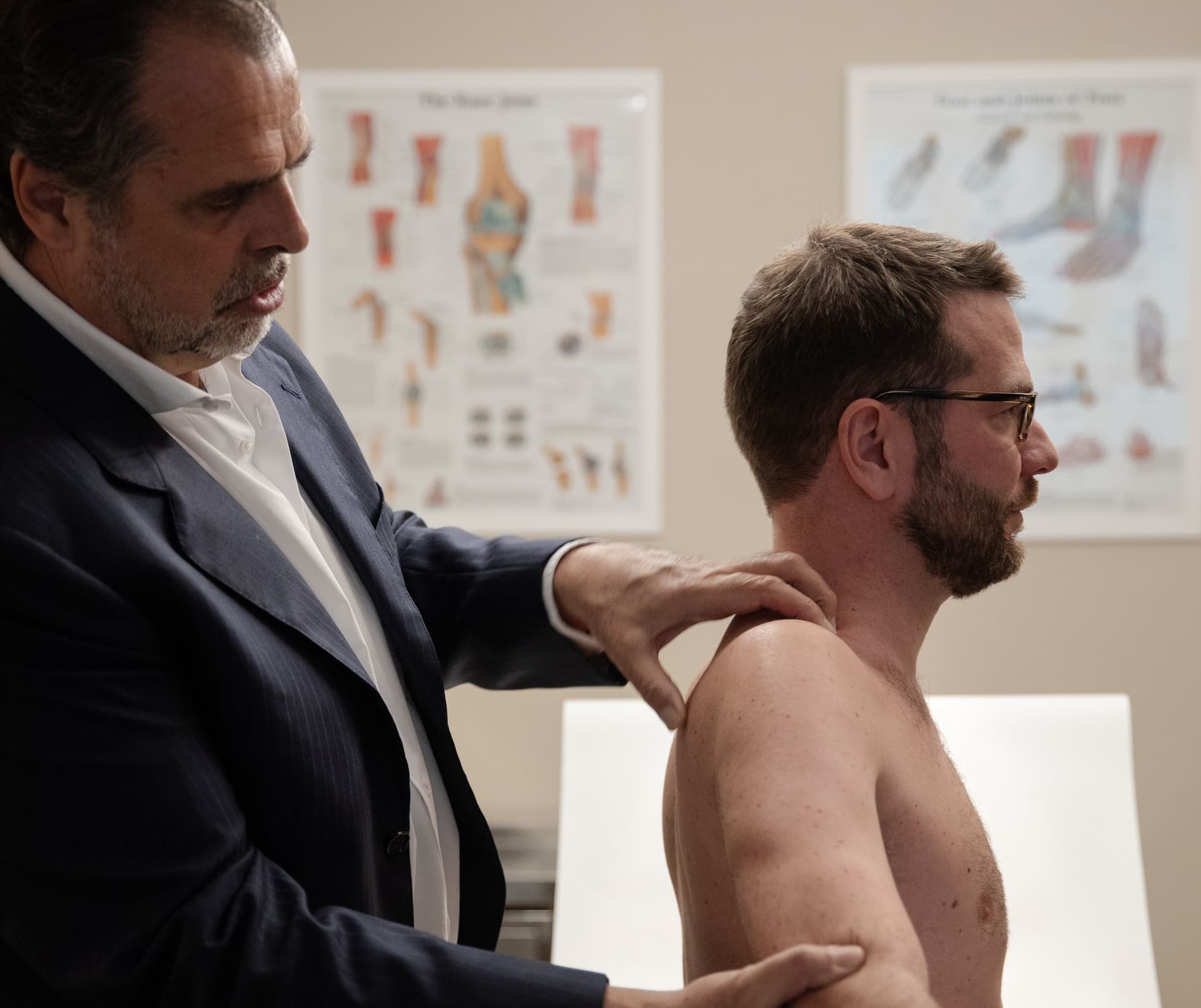
· The osteopathic physiological check-up, which examines musculoskeletal functionality, therefore balance, posture, and mobility.
At the end, the person receives the Longevity Master Plan, a document that synthesizes the results and proposes a specific action plan. It is here that data becomes decisions: without this synthesis step, they would remain isolated reports, and clinical experience teaches that it is precisely at this point that many prevention pathways disperse.
Personalization has a solid basis in available data on longevity. Genetics accounts for between 20 and 25 percent of healthy aging, which means the most substantial part depends on modifiable factors. The eight key behaviors identified by research concern regular physical activity, abstention from smoking, stress management, balanced nutrition, control of binge eating, sleep quality, positive social relationships, and absence of addictions. Translating these general indications into the concrete life of a single person is exactly the work that a personalized plan is called to do.
The role of regenerative medicine
If prevention acts on the factors that accelerate aging, regenerative medicine intervenes on what time has already modified, and this makes it complementary to the preventive pathway.
The principle is to support the reparative capacity of tissues using the person's own biological resources. Lipogems® technology, patented by Prof. Carlo Tremolada in 2010 and FDA cleared, harvests autologous adipose tissue, subjects it to microfragmentation, and reimplants it in the same session where repair support is needed. The mesenchymal stem cells contained in adipose tissue modulate inflammation, promote vascularization, and support reparative processes.
The integration into a longevity logic is direct. Loss of joint function limits movement; movement is the most documented protective factor for healthy aging; a person who stops moving due to joint pain enters a spiral that involves muscle mass, balance, metabolism, and autonomy. Intervening on the cause of that pain means preserving the lever on which all the rest of the pathway rests.
It is also the reason why, in the initial assessment, the part dedicated to strength and balance has a weight that surprises those expecting mainly laboratory tests. The ability to walk at a sustained pace, to rise from sitting without support, and to maintain stability are functional indicators that tell much about the trajectory of the coming years, and they have the advantage of being measurable in the clinic and responding to interventions in short timeframes.
Opportunities and limits of longevity medicine
The opportunity is concrete and well documented: acting earlier allows intercepting processes that are still reversible, and the portion of aging linked to modifiable factors leaves a wide space for action.
The limits, however, must be stated with equal clarity, because this is what distinguishes a medical approach from a commercial operation. Longevity medicine is a young discipline, and several tools it uses have heterogeneous levels of evidence: some are consolidated, others remain in the validation phase. Biological age is an estimate and must be read as such, not as a verdict. No protocol guarantees an outcome, because individual biology retains a margin of unpredictability that no measurement eliminates.
There is also an equity limit concerning access, and a risk of medicalizing daily existence when attention to parameters takes the place of the life those parameters should protect.
In our team's experience, the correct position is one of critical openness. The foundations remain movement, sleep, nutrition, stress management, and relationships, which produce the most substantial part of the result and cost little. Advanced tools add precision to those foundations, while not replacing them. Whoever proposes otherwise is selling something other than medicine.
Frequently asked questions
What is the difference between longevity medicine and anti-aging medicine?
Anti-aging medicine has historically focused on the signs of aging, often with a prevalent attention to appearance. Longevity medicine has a functional objective: extending years lived in good health, acting on the biological mechanisms of aging and on risk factors before they translate into disease. The measure of the result is functional capacity, more than mere appearance.
Is longevity medicine only for those who are young and healthy?
It is more effective when it begins early, because it acts on processes that are still reversible, but it remains useful at any age. In the presence of existing conditions, the objective shifts to slowing progression, preserving autonomy and functional capacity, and improving the quality of subsequent years. The initial assessment serves precisely to establish what margins exist in the individual case.
How much does genetics count in aging?
Less than commonly believed. Available data attribute to genetics a portion between 20 and 25 percent of healthy aging, while the remaining part depends on modifiable factors such as physical activity, nutrition, sleep, stress management, and social relationships. Epigenetics also shows that lifestyle influences gene expression without modifying their sequence.
Where does a longevity pathway begin?
With the assessment. At IMAGE REGENERATIVE, the starting point is a sixty or ninety-minute meeting with the Functional Doctor, articulated in five phases that include interview, bodycheck, advanced ultrasound, epigenetic analysis, and osteopathic check-up. At the end, the Longevity Master Plan is delivered, the document that translates the results into a personalized action plan.
Related Articles
 regenerative-medicine
Intravenous NAD+ Therapy: What It Is and What It's For
Intravenous NAD+ therapy: what it is, what it's for, and the benefits for energy and anti-aging. How the session works, differences with supplements, and side effects.
 regenerative-medicine
Deflated Breasts After Breastfeeding: Causes and Solutions
Deflated breasts after breastfeeding: causes and solutions, from exercises to firm the breasts to medical solutions like mastopexy and lipofilling. Complete guide.
 regenerative-medicine
Longevity, Anti-Aging and Biohacking: What They Really Mean
Longevity, anti-aging and biohacking: what they really mean and how they differ, between longevity medicine and optimization of body and mind.
Want More Info?
If you need more information, call us at +39 02 76280736, message us on WhatsApp, email us at info.milano@imageregenerative.com, or use the form below.