Regenerative Medicine
Melasma: Causes, Symptoms and Effective Treatments
Melasma is one of the conditions that most tests the patience of those who suffer from it and those who treat it, because it tends to return.
At IMAGE REGENERATIVE, at our locations in Milano and St. Moritz, we approach it for what it is: a chronic and recurring condition that is managed over time with a personalized protocol, not an aesthetic imperfection to be resolved in one session.
Our in-depth analysis on melasma and dark spots on the face contains the clinical reasoning that guides this choice. In this article we see how to recognize it, what it depends on and which tools allow it to be attenuated in a lasting way.
What is melasma (or chloasma) and how does it manifest
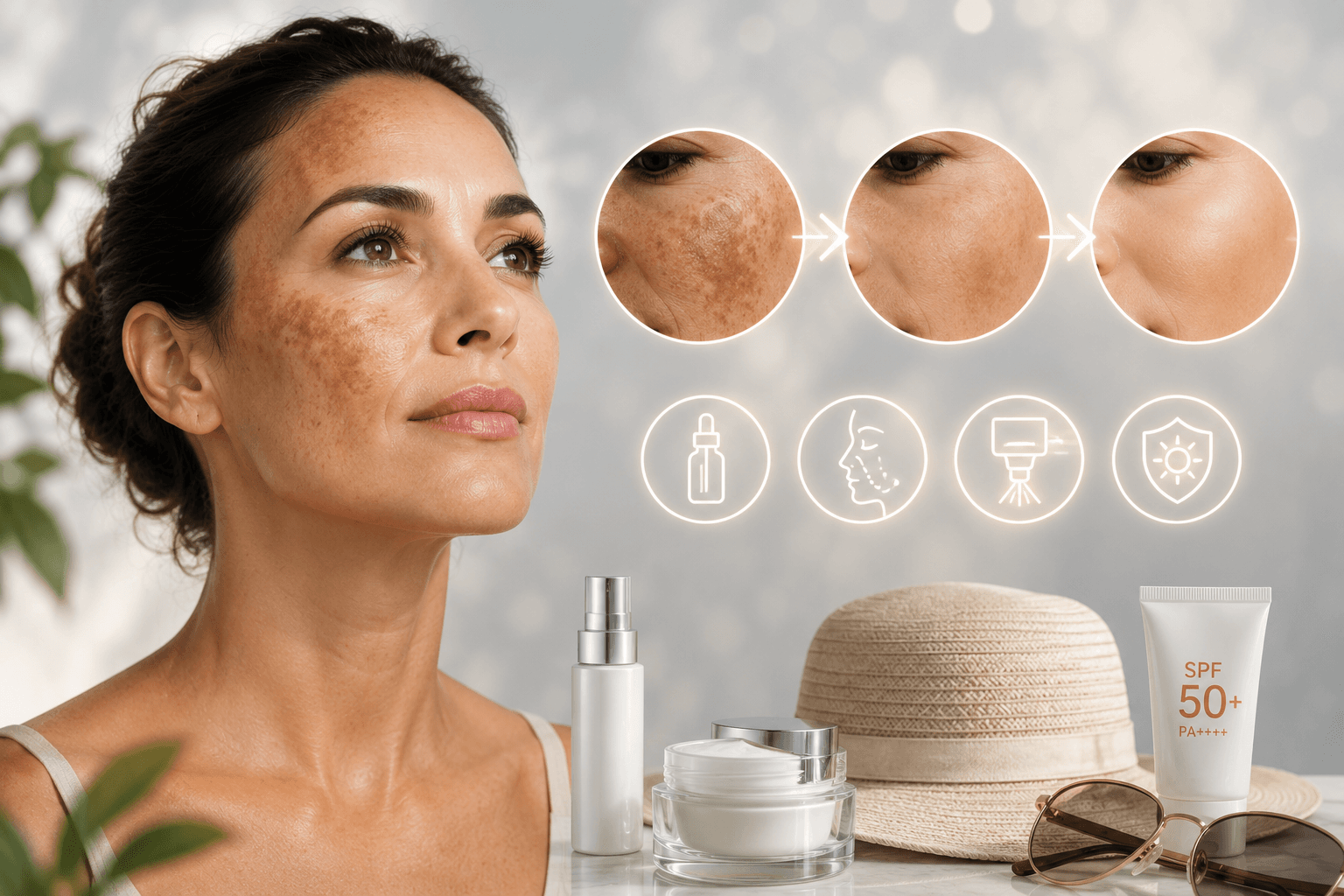
Melasma is an acquired hyperpigmentation of the face, caused by excessive and localized melanin production. It appears as spots of varying color from light brown to dark brown, with irregular borders and a flat surface, remaining at the same level as the surrounding skin.
The characteristic that distinguishes it most is symmetry. The patches appear in a mirror-like fashion on the two halves of the face, and this detail is the first element that guides clinical recognition. Typical locations are the forehead, cheeks, bridge of the nose, upper lip and chin, with three recurring distributions: centrofacial, malar and mandibular.
When it appears during pregnancy it takes the name of chloasma gravidarum, formerly called the mask of pregnancy. The condition affects the vast majority of women, about nine out of ten cases, and is more frequent in skin types from the third to the sixth, therefore also in Mediterranean complexions. It should be said that melasma does not pose health risks, while the impact on quality of life and self-perception is often significant, and this is enough to justify its treatment.
Melasma and dark spots on the face: how to recognize them

On the face coexist dyschromias of different nature that require different approaches, so distinguishing them is the first useful step.
Solar lentigines, commonly called age spots, are single lesions, round in shape and with more defined borders, which concentrate on chronically sun-exposed areas and appear with advancing age. Unlike melasma, they do not have a symmetrical distribution and respond differently to treatments.
Post-inflammatory hyperpigmentation instead follows a specific event, such as an acne lesion, irritation or trauma, and traces the site of that event. Melasma, on the contrary, is arranged in a symmetrical pattern that is independent of any local trauma.
There is also a distinction that guides prognosis more than any other and concerns the depth of the pigment. In epidermal melasma, melanin is concentrated in the superficial layers; in dermal melasma it is located deeper; in the mixed form both situations coexist. Assessment with Wood's lamp helps estimate this depth: superficial forms appear more contrasted under the instrument's light, deeper ones are less defined. The difference is far from theoretical, because dermal forms respond more slowly and require different expectations.
Causes of melasma: sun, hormones and predisposition
Melasma arises from the meeting of three factors, and understanding them explains why management must be continuous.
Exposure to ultraviolet rays is the main triggering and aggravating factor. Radiation stimulates melanocytes to produce pigment and reactivates patches even after months of improvement, which makes photoprotection the non-negotiable pillar of any protocol. High-energy visible light and heat also contribute, which is why ultraviolet protection alone may be partial in the most reactive cases.
The hormonal component explains the clear female prevalence. Fluctuations of estrogen and progesterone influence melanocyte activity, which is why the condition is frequently associated with pregnancy, use of oral contraceptives and hormone replacement therapy.
Genetic predisposition completes the picture: the presence of first-degree relatives with the same condition is a recurring element in medical history. On this individual basis external factors then act, and the result is that two people exposed to the same sun can react in completely different ways.
Alongside these three main factors there are aggravating elements that often emerge during consultation and are worth checking:
· Some medications, which increase skin sensitivity to light and may promote the appearance of patches.
· Direct heat on the face, from work sources to prolonged exposures, which acts as an independent stimulus from ultraviolet rays.
· Overly aggressive cosmetic procedures, because the inflammation they produce can in turn trigger a pigmentary response.
Reconstructing this part of personal history is as useful as identifying the initial triggering factor, because it allows removing obstacles that would otherwise render any protocol ineffective.
Melasma in pregnancy (chloasma gravidarum): what to do
During pregnancy the correct attitude is prudent and expectant, for a precise reason: chloasma gravidarum tends to lighten spontaneously in the months following childbirth, when the hormonal balance is restored.
In this phase the priority is daily photoprotection, to be maintained even on cloudy days and in the city, associated with gentle cleansing and simple skincare. Physical means are useful, so wide-brimmed hat and seeking shade during central hours, because they reduce the amount of radiation reaching the face without any risk.
Active protocols are normally postponed. Several depigmenting active ingredients and several procedures are not indicated during pregnancy and breastfeeding, so any product, even over-the-counter, should be agreed with the treating physician or gynecologist before use. Dermatological reassessment is scheduled after childbirth and, if planned, at the end of breastfeeding: at that point it is observed how much pigment has regressed spontaneously and the path is set on the actual residue, avoiding treatments on a situation still evolving.
Effective treatments: peeling, laser and depigmenting creams
The treatment of melasma is by definition combined, because no single tool covers all fronts. At the clinic the protocol is built on the phototype, the depth of the pigment and the person's history of recurrences.
Home topical therapy is the basis on which everything else rests. It is a formulation prepared on the characteristics of the individual skin, which acts on melanin production continuously and accompanies both the active phase and maintenance.
Medical peels act with controlled exfoliation of the superficial layers and promote cell turnover. They are modular, from gentle versions for sensitive skin to more intensive ones, and available protocols allow applications throughout the year, including the summer period, with appropriate precautions.
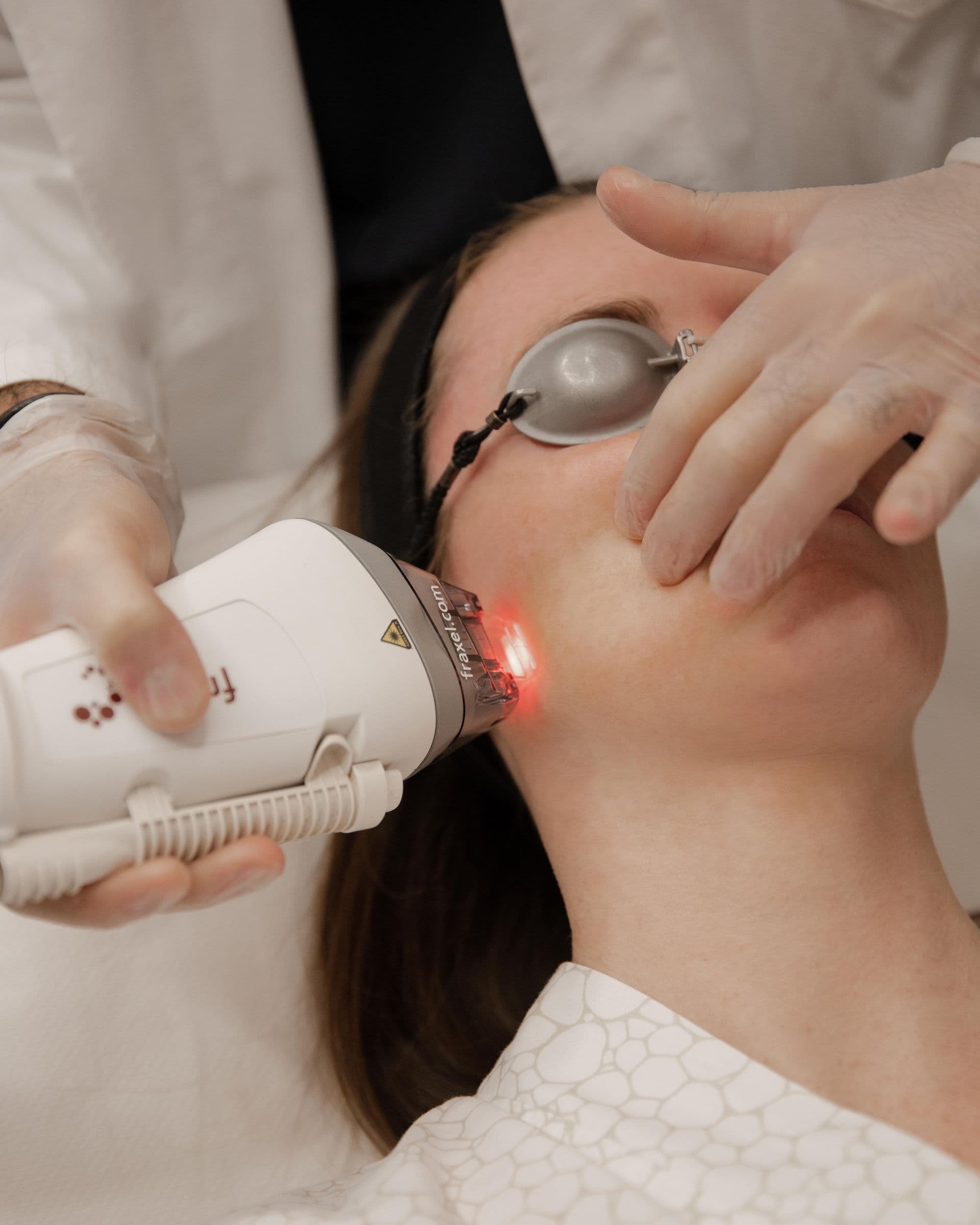
On the technology side, laser Toning with 1064 QSw works at low energy in repeated sessions and is the method we specifically propose for melasma. Fraxel Dual laser acts in depth with a fractional approach and is indicated for more resistant dyschromias and photoaging. Intense pulsed light is used in pigmentary photorejuvenation, while QSw laser is dedicated to senile lentigines, which are different lesions from melasma and should be treated as such.
Tool | How it works | When it is indicated |
Daily photoprotection | Reduces the stimulus that reactivates melanocytes | Always, in every season and every phase |
Personalized topical therapy | Modulates melanin production continuously | Active phase and long-term maintenance |
Medical peels | Controlled exfoliation of superficial layers | Superficial dyschromias, even on sensitive skin |
Laser Toning 1064 QSw | Low energy in repeated sessions on pigment | Melasma, as a dedicated method |
Fraxel Dual Laser | Fractional renewal in depth | Resistant dyschromias and photoaging |
Intense pulsed light | Pigmentary photorejuvenation | Diffuse pigmentary component |
A necessary clarification concerns treatment aggressiveness. On melasma an overly energetic approach can worsen the condition, because inflammation itself stimulates pigmentation. Gradualness here is a technical choice, not a commercial caution.
On expectations it is worth being equally explicit. Improvement is built over multiple sessions and becomes appreciable after several weeks of combined therapy, with longer times in dermal forms, where the pigment is located deeper. The realistic goal is to visibly attenuate the patches and even out the skin tone, then maintaining the result with constant commitment. Setting the path on this promise, instead of the definitive disappearance of the spots, is what allows evaluating progress with correct criteria and not abandoning a protocol that is working.
How to prevent melasma and recurrences
Prevention largely coincides with maintenance, and it is the phase that decides the outcome years later.
Daily photoprotection remains the single most effective action. It should be applied every day and all year round, reapplied during exposure and accompanied by physical screens. On skin that tends to recur, formulations with filters capable of covering visible light are preferable.
The second pillar is continuity of home therapy. Stopping the topical when the skin appears uniform is the error we most often observe in the clinic: the pigment returns, and the path starts again from the beginning.
The third element is scheduling annual maintenance, calibrated to the seasons and individual reactivity, which allows early detection of a recurrence instead of chasing it. In our team's experience, those who accept this logic of continuous management maintain a stable result much longer than those who face melasma in isolated cycles.
Finally, it should be remembered that the appearance of an asymmetric spot, rapidly changing in shape or color, requires dedicated dermatological evaluation, because in that case the priority is diagnostic before aesthetic.
Frequently asked questions
Does melasma go away on its own?
Chloasma that appeared during pregnancy tends to lighten spontaneously in the months following childbirth, when the hormonal balance is restored. Outside of that situation melasma is a chronic condition that rarely regresses on its own and that must be managed with a continuous protocol, based on photoprotection and personalized therapy.
Can melasma treatments be done in summer?
Some yes. Medical peeling protocols are modular and versions applicable throughout the year exist, including the summer period, as long as accompanied by rigorous photoprotection. More energetic procedures are instead scheduled in months of lower exposure, because sun immediately after treatment is the main factor of recurrence.
Can melasma in pregnancy be treated?
During pregnancy the approach is prudent. Priority goes to daily photoprotection and gentle skincare, while active protocols are normally postponed, because several active ingredients and several procedures are not indicated at this stage. Any product should be agreed with the physician, and reassessment is scheduled after childbirth.
Why does melasma return after treatment?
Because treatment acts on pigment already formed, while the melanocytes' predisposition to produce it remains. A new sun exposure or hormonal variation is enough to reactivate the process. This is the reason why maintenance, with constant photoprotection and continuous home therapy, counts as much as the initial phase of the path.
Related Articles
 regenerative-medicine
Intravenous NAD+ Therapy: What It Is and What It's For
Intravenous NAD+ therapy: what it is, what it's for, and the benefits for energy and anti-aging. How the session works, differences with supplements, and side effects.
 regenerative-medicine
Deflated Breasts After Breastfeeding: Causes and Solutions
Deflated breasts after breastfeeding: causes and solutions, from exercises to firm the breasts to medical solutions like mastopexy and lipofilling. Complete guide.
 regenerative-medicine
Longevity, Anti-Aging and Biohacking: What They Really Mean
Longevity, anti-aging and biohacking: what they really mean and how they differ, between longevity medicine and optimization of body and mind.
Want More Info?
If you need more information, call us at +39 02 76280736, message us on WhatsApp, email us at info.milano@imageregenerative.com, or use the form below.