
Regenerative Medicine
Décolleté Rejuvenation: How to Care for Neck and Chest
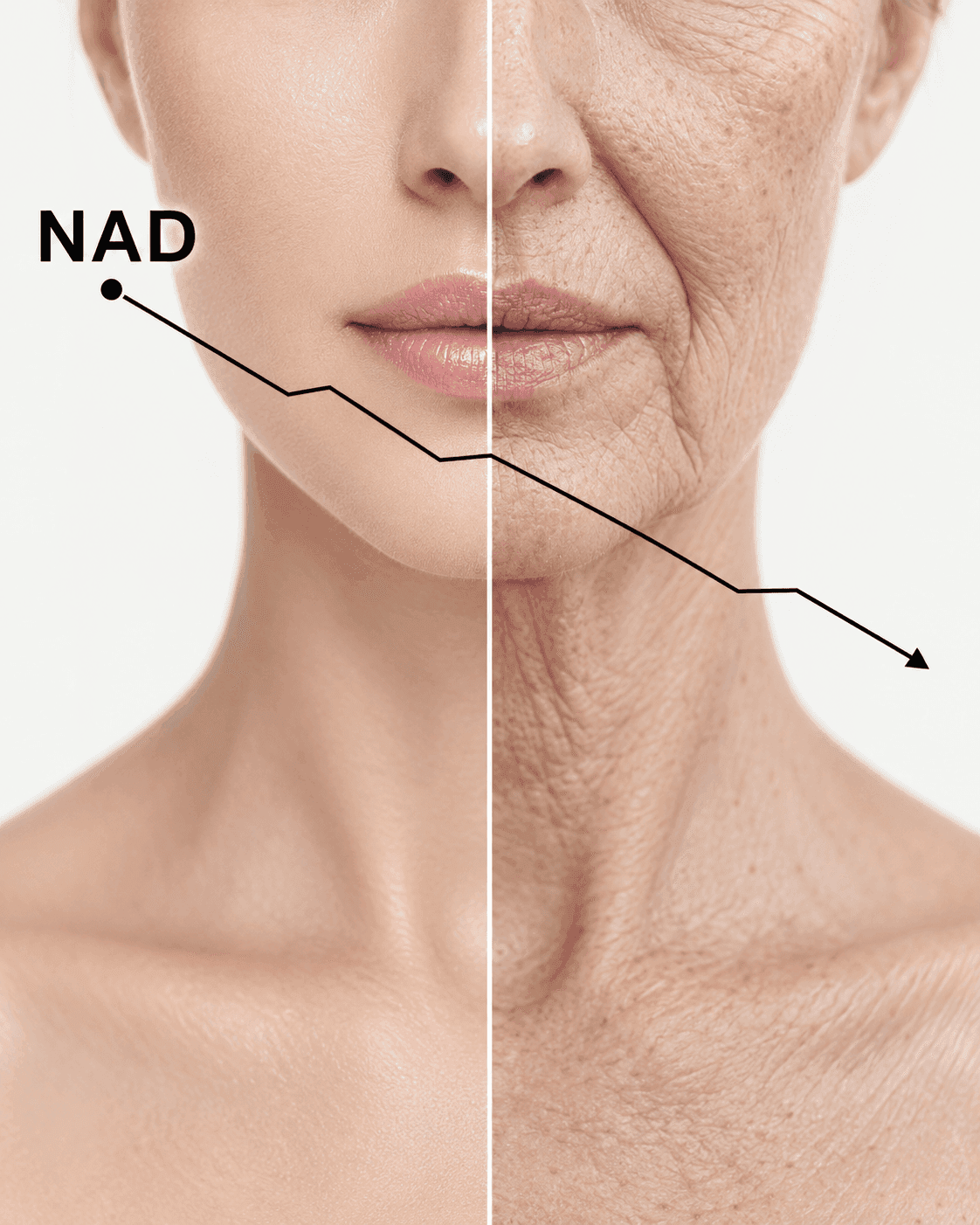
The face receives serums, creams and treatments, while care almost always stops at the jawline. This is one of the reasons why age, when it begins to show, shows first on the neck.
At IMAGE REGENERATIVE, in Milano and St. Moritz, décolleté rejuvenation is treated as a separate pathway, built on the particular fragility of this area.
Let's see why the neck and chest age before the face, how Venus rings form, which treatments really make a difference and what should be done every day.
Neck and Décolleté: Why They Age First

The main reason is anatomical. The skin of the neck and chest is significantly thinner than that of the face, the dermis contains fewer supporting fibers and the sebaceous glands are sparser, so the hydrolipidic film that protects the surface is less efficient. Added to this is poorer vascularization, which slows repair processes.
The second factor is mechanical. The neck moves constantly, in flexion, extension and rotation, and the platysma muscle inserts directly into the skin, transmitting its contraction. Thin skin subjected to constant stress develops folds before thick, stationary skin.
The third factor is sun exposure, often underestimated precisely here. The décolleté receives ultraviolet radiation constantly in warm weather, is rarely protected with the same care as the face and accumulates damage over time. A review published in Photodermatology, Photoimmunology and Photomedicine describes the mechanism precisely, noting that collagen constitutes the dominant component of the cutaneous extracellular matrix, with type I as the largely prevalent portion, and that during photoaging reactive oxygen species and matrix metalloproteases increase, with fragmentation and degradation of collagen reducing the overall available quantity.
Neck Wrinkles and Venus Rings: How They Form
Venus rings are the horizontal folds that cross the neck, and their origin is partly constitutional. Some people present them already in youth, because at those lines the skin adheres to the deep planes and the fold forms at the point of least resistance.
Acquired factors then intervene on this basis, determining their depth over time:
- Repeated downward flexion of the head, linked to prolonged use of smartphones and tablets, which concentrates stress always on the same lines.
- Progressive reduction of collagen and elastin, which removes the dermis's ability to return to the starting position after folding.
- Accumulated actinic damage, which fragments supporting fibers and makes the skin less resilient.
- Habitual sleeping posture, particularly prone position or on one side with chin tucked toward sternum.
- Significant weight variations, which modify subcutaneous volume and leave skin less supported.
On the décolleté the picture is different, because there wrinkles tend to arrange vertically, radiating between the breasts. They form mainly during side sleeping, when skin is compressed for hours, and are the first to respond well to deep hydration intervention, because they arise from loss of turgor rather than structural sagging.
Sagging Neck Skin: Causes and Remedies
Neck sagging has different causes from superficial wrinkles, and distinguishing them is crucial for choosing treatment. The first is loss of dermal elasticity, which renders skin incapable of adapting to underlying volume. The second is platysma relaxation, which over time divides into vertical bands visible when the muscle contracts. The third is variation in submental fat, which can increase and weigh down the cervicomental angle or decrease leaving excess skin.
The fourth cause is bony and almost always neglected. Mandibular resorption modifies the structure on which soft tissues rest, and a profile that loses definition depends as much on skin as on the support missing underneath.
From this distinction follows the therapeutic choice. When skin quality dominates, the path goes through biostimulation and technologies that induce new collagen. When the muscular component dominates, interventions on the platysma make more sense. When sagging is structural and skin excess is marked, no non-surgical treatment corrects it, and saying this clearly during consultation avoids long and disappointing pathways.
In our team's experience, the quickest way to understand which component prevails is a simple two-position examination. The area is observed seated, with head in neutral position, and then supine, because gravity unloads the tissue and shows how much sagging depends on skin and how much on underlying structure.
Treatments to Rejuvenate the Décolleté
The protocols we use on this area almost always combine multiple techniques, because the targets are different and no single treatment covers them all. Deep hydration, collagen stimulation, dyschromia correction and structural support respond to different tools.
Treatment | What It Acts On | Indicative Sessions |
Biorevitalization | Deep hydration, turgor, superficial wrinkles | 3-4, then maintenance |
Radiofrequency microneedling | Collagen remodeling, tone and texture | 3-4 one month apart |
Laser and pulsed light | Dyschromias, sun spots, complexion uniformity | 2-4 depending on condition |
Chemical peels | Surface renewal, skin texture | Seasonal cycles |
Biorevitalizing threads | Tissue firmness and support | Single session, repeatable |
Micro-fragmented adipose tissue | Dermal quality, density and elasticity | Single session |
Sequence matters as much as choice. In our practice we start with correction of actinic damage and dyschromias, because skin with spots appears aged even when tone is good, and continue with collagen stimulation, whose effects mature over two or three months. Deep hydration accompanies the entire pathway and supports its results.
Worth remembering that this area requires more conservative parameters than the face. Thin skin and reduced vascularization make the neck less tolerant of high energies, so protocols provide for lower intensities distributed over more sessions, a choice that lengthens time but significantly reduces the risk of post-inflammatory dyschromias.
Fillers, Biostimulation and Laser for Neck and Chest
Biorevitalization remains the basic treatment, consisting of intradermal administration of non-crosslinked hyaluronic acid, often associated with amino acids and vitamins. The objective is skin turgor and quality, not volume, and the result is appreciated on fine lines and dehydration.
Biostimulators act with a different logic, because they induce fibroblasts to produce new collagen over weeks. Polylactic acid and polynucleotides fall into this category, with a gradual effect that continues to improve after the cycle ends. Radiofrequency microneedling achieves the same objective thermally, delivering energy at controlled depth while respecting the epidermis.
Fillers require an important clarification. Crosslinked filler, the one used to restore facial volumes, has very limited use on the neck, where thin skin makes irregularities visible that would go unnoticed elsewhere. It can find space in correcting single deep folds, with low-density products and superficial technique, but is not the appropriate tool for diffuse sagging.
The regenerative approach with micro-fragmented adipose tissue instead works on dermal quality, providing mesenchymal cells and supporting matrix to an area that structurally has few. It suits conditions where the main problem is skin density rather than its position.
These techniques are almost always associated with each other within the same pathway, with distribution over several months. Alternation allows working on different targets without overloading skin that tolerates high energies poorly, and allows evaluating response before adding the next step.
Prevention and Daily Care of Neck Skin
Prevention in this area has a particularly favorable effort-to-result ratio, because damage accumulates slowly and effective measures are few and simple. The most common error remains forgetfulness, meaning an impeccable facial routine that stops at the jawline. The second error concerns gesture direction, because on such thin skin vigorous rubbing during cleansing and cream application contributes to sagging instead of counteracting it.
The habits that really make a difference over time are these.
- Daily application of sun protection on neck and décolleté, even in the city and in cold months, extending the gesture already done on the face.
- Evening use of a retinoid or active ingredient that stimulates renewal, introduced gradually because this skin irritates more easily.
- Hydration with rich products that compensate for reduced sebaceous production in the area.
- Attention to posture during work and sleep, reducing hours of head flexion and preferring supine position.
A final indication concerns when to start. Maintenance interventions yield much more when structure is still good, so the thirties and forties are the age when a light and consistent pathway produces the best result. Intervening when sagging is already evident remains possible, but tools change and expectations must be calibrated differently.
Frequently Asked Questions
At what age is it advisable to start treating neck and décolleté?
Daily sun protection should be extended to this area immediately, at any age. Biostimulation treatments give the best result when started between thirty and forty years, while skin structure is still sound, because at that stage a light and regular pathway prevents more than what later needs correction.
Do Venus rings fade?
They fade, with a margin that depends on their origin. Folds linked to dehydration and loss of turgor respond well to biorevitalization, while constitutional ones, present since youth, can be softened without disappearing completely. The combination of deep hydration and collagen stimulation remains the most effective approach.
How many sessions are needed to see a result?
It depends on the technique. Biorevitalization generally provides three or four close sessions followed by maintenance, radiofrequency microneedling a cycle of three or four applications one month apart. Results linked to new collagen production mature over two or three months from the end of the cycle.
Is the neck treated like the face?
No, and this is one of the reasons results disappoint when the same protocols are applied. Neck skin is thinner, less vascularized and more prone to post-inflammatory dyschromias, so it requires lower energies, less dense products and a greater number of sessions distributed over time.
Content reviewed by the medical-scientific committee of IMAGE REGENERATIVE. The information provided is for educational purposes and does not replace specialist consultation.
Related Articles
 regenerative-medicine
 regenerative-medicine
Oxygen Ozone Therapy: What Is It? What Are the Benefits?
Oxygen ozone therapy: what it is, what it's for, and what benefits it offers for herniated discs and back pain. How it works, costs, coverage, and contraindications.
 regenerative-medicine
Regenerative medicine: repair, regenerate or prevent?
Regenerative medicine: repair, regenerate or prevent? How stem cells, PRP and autologous therapies work, their applications and what the evidence shows.
Want More Info?
If you need more information, call us at +39 02 76280736, message us on WhatsApp, email us at info.milano@imageregenerative.com, or use the form below.