
Regenerative Medicine
Reading time: 5 minutes
Regenerative Face Medicine with Stem Cells: How Does It Work?
The face tells our story, but time and external agents often leave marks that no longer reflect our inner vitality.
At IMAGE REGENERATIVE, under the scientific guidance of Professor Carlo Tremolada, we have embraced a philosophy that goes beyond the traditional concept of aesthetic correction to achieve true biological regeneration.
The use of adipose tissue and its regenerative properties, supported by our Lipogems® technology, represents the most advanced frontier for those seeking authentic, lasting, and above all, natural rejuvenation.
Regenerative Face Medicine: What to Know?
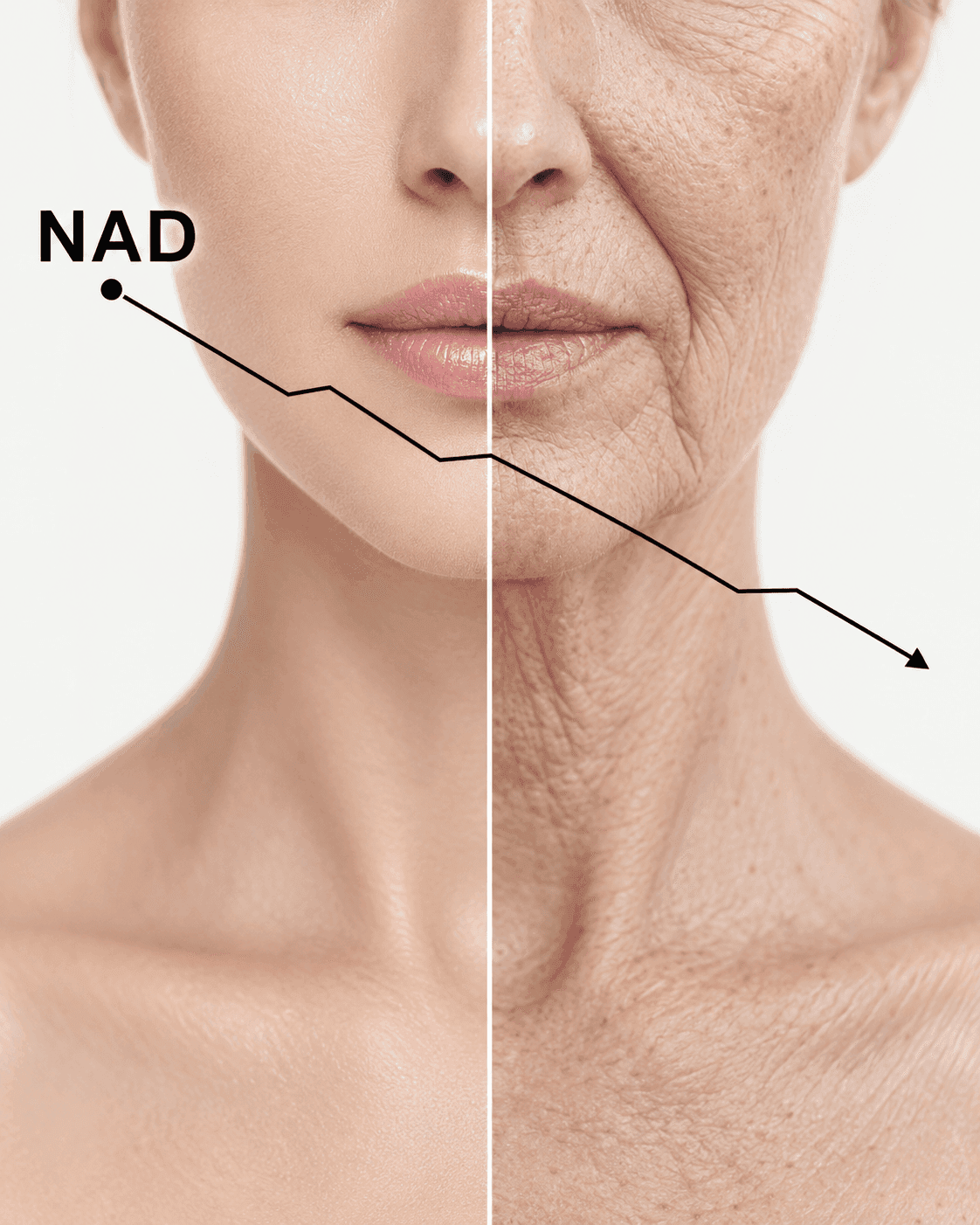
Regenerative medicine applied to the face marks a fundamental paradigm shift in the field of medical aesthetics. While for decades the primary goal has been to "fill" or "tighten" tissues to hide the signs of aging, today science allows us to act directly on the biological causes of skin decay. Aging means witnessing a progressive slowdown in cell turnover, a decrease in vascularization, and a loss of dermal elasticity.
This scientific approach aims to restore the optimal physiological environment of the skin. Intervening with regenerative protocols means stimulating the body to repair itself. It is not about introducing foreign bodies or synthetic substances that simulate lost volume, but rather using autologous resources, belonging to the patient themselves, to revitalize tissues from within. The result is an improvement in skin texture, greater luminosity, and a recovery of compactness that no synthetic filler could replicate with the same naturalness.
The key to this process lies in the ability to harness our body's healing potential. When we talk about facial regeneration, we refer to procedures that improve the quality of the extracellular matrix, increasing the production of new collagen and elastin. It is a path that requires high-level medical expertise and a deep understanding of human anatomy and physiology, elements that constitute the foundations of the method applied daily at our clinic.
What Are Stem Cells and How Are They Used
Mesenchymal stem cells (MSCs) represent the biological engine of regenerative medicine. These "undifferentiated" cells possess the extraordinary ability to transform into different types of specific cells and, even more importantly, to coordinate tissue repair processes. For years, research focused on bone marrow, but recent and thorough studies have shown that adipose tissue (common body fat) is one of the richest and most accessible sources of these precious cells and their precursors, pericytes.
In the context of facial rejuvenation, the use of adipose tissue does not only serve to restore volume. The true innovation lies in the "paracrine" effect: the injected stem cells release growth factors and anti-inflammatory cytokines that communicate with surrounding cells, instructing them to regenerate and produce new blood vessels (angiogenesis). This process improves skin oxygenation and counteracts chronic inflammatory processes linked to aging (inflammaging).
At IMAGE REGENERATIVE we use Lipogems® technology, patented by Professor Tremolada and internationally recognized. This method allows adipose tissue to be processed without the use of enzymes or chemical additives, preserving the intact "vasculo-stromal niche," that is, the natural environment in which stem cells live. Keeping this micro-architecture intact is essential to ensure cell vitality and their effectiveness once reimplanted in the face.
You can explore the applications of this technology further by visiting our page dedicated to Lipogems® technology and regenerative medicine.
Regenerative Treatment Procedure with Stem Cells
The protocol for facial rejuvenation through stem cells from adipose tissue is a safe outpatient procedure, performed in a sterile and controlled environment. The intervention is minimally invasive and is performed under local anesthesia, drastically reducing recovery times compared to traditional surgery. The procedure consists of three distinct phases, each crucial for treatment success.
The first phase consists of harvesting adipose tissue. Through a micro-cannula, the surgeon harvests a modest amount of fat from donor areas where it is usually present in excess, such as the abdomen or inner thigh. This phase is extremely delicate and requires an expert hand to avoid tissue trauma and ensure the quality of the collected biological material.
Subsequently, the harvested fat is immediately processed inside a closed-circuit system. Through a mechanical action of washing and micro-fragmentation, oily residues and inflammatory components are eliminated, obtaining a fluid, yellowish product, extremely rich in regenerative elements: Lipogems®. This step is what differentiates our method from classic lipofilling, since the obtained cell cluster is so fine that it can be injected with very thin needles, ideal for the face.
The final phase involves grafting the preparation into the areas of the face that require treatment. The physician injects the regenerative concentrate into the deep dermis or subcutaneous tissue. Depending on the patient's needs, we can use different densities of the product (for example Micro-Lipogems® or Nano-Lipogems®) to treat fine wrinkles, dark circles, or to redefine cheekbone volumes and the jawline. The patient can return to their social activities very quickly, with only slight swelling that will resolve in a few days.
Benefits of Regenerative Face Medicine
Choosing the path of biological regeneration offers advantages that go far beyond simple immediate aesthetic improvement. The first tangible benefit is the naturalness of the result. Since we use the patient's own tissue, there is no risk of rejection or allergic reactions. Moreover, the micro-fragmented adipose tissue integrates perfectly with host tissues, avoiding the "fake" or puffy effect sometimes seen with excessive use of synthetic volumizing fillers.
The regenerative action manifests progressively in the weeks and months following treatment. Patients notice a marked improvement in skin texture: the skin appears thicker, hydrated and luminous, with a visible reduction in enlarged pores and discoloration. This occurs thanks to neo-angiogenesis and the restructuring of collagen fibers, which restore the face's natural framework.
Beyond the anti-aging effect, this method proves extremely effective also in treating scars, including those from acne, and in improving tissues damaged by burns or trauma. The anti-inflammatory capacity of mesenchymal cells acts on fibrotic tissues, softening them and making them more similar to surrounding healthy skin. It is an investment in your skin's health that continues to bear fruit over time.
Comparison with Other Facial Rejuvenation Techniques
Navigating the different aesthetic medicine options can be complex. To fully understand the value of regenerative medicine, it is useful to compare it with other widespread methods such as resorbable fillers or traditional plastic surgery. While fillers act as temporary fillers and surgical lifting works on the mechanical tension of the skin, regenerative medicine works on the biological quality of tissue.
The following table illustrates the substantial differences between these procedures, highlighting how the regenerative approach positions itself as a unique solution for those seeking long-term structural improvements.
Feature | Regenerative Medicine (Lipogems®/Nanofat) | Hyaluronic Acid Fillers | Traditional Surgical Lifting |
Mechanism of Action | Biological stimulation, tissue repair and autologous volumetric restoration. | Mechanical volumetric filling through synthetic gel that retains water. | Removal of excess skin and mechanical traction of tissues. |
Material Used | Autologous adipose tissue (patient's own) rich in stem cells. | Synthetic or biosynthetic substances (e.g. cross-linked hyaluronic acid). | No filling material (except combinations), only repositioning. |
Invasiveness | Minimally invasive (local anesthesia, micro-incisions). | Non-invasive (outpatient injections). | Invasive (operating room, general anesthesia or deep sedation). |
Aesthetic Result | Natural, progressive, improvement in skin quality and luminosity. | Immediate, but sometimes perceptible to touch or visually "puffy" if excessive. | Immediate structural change, requires long healing times. |
Duration of Effect | Years (the grafted tissue follows the patient's natural aging). | Temporary (4-12 months depending on product and metabolism). | Long term (5-10 years), but does not stop skin aging. |

This comparison highlights how regenerative medicine offers an optimal balance between lasting results, naturalness and low invasiveness, positioning itself as the treatment of choice for those who wish to "turn back the hands" of the biological clock rather than mask its effects.
FAQ - Frequently Asked Questions
What are stem cells used for in the face?
Stem cells harvested from adipose tissue and used in the face primarily serve to regenerate aged or damaged tissues. Their function is twofold: on one hand they restore lost volumes naturally, on the other they stimulate the production of new collagen and new blood vessels. This process improves skin elasticity, luminosity and compactness, correcting wrinkles, dark circles and scars from within.
How long does the effect of stem cells last?
Unlike resorbable fillers that fade in a few months, regenerative adipose tissue grafting offers long-term results. Once the grafted tissue has "taken" and integrated (a process that stabilizes in about 3 months), it becomes an integral part of the face. The result is considered permanent in the sense that the acquired volume and improvement in skin quality persist for years, then following the natural and physiological aging process of the patient.
How many years do stem cells last?
Stem cells themselves do not have an "expiration date" like a drug, but are subject to the life cycle of the organism. Once transplanted, they live and function like the other cells in our body. The rejuvenation effect obtained with the Lipogems® technique can last many years, since we have biologically brought the tissues back to a younger condition. However, since aging is a continuous process, maintenance or supplementary treatments years later may be recommended to preserve optimal results.
What is the best treatment to rejuvenate the face?
There is no universal treatment, but regenerative medicine is considered today the best choice for those seeking a natural result and an improvement in skin health, not just its appearance. While lifting is ideal for severe skin laxity and fillers for small quick volumetric corrections, stem cell treatment (Lipogems®) is superior for improving the biological quality of tissues and achieving harmonious rejuvenation. Often, the combination of these techniques, evaluated during a specialist visit, offers the most complete aesthetic result.
Related Articles
 regenerative-medicine
Décolleté Rejuvenation: How to Care for Neck and Chest
Décolleté rejuvenation: how to care for neck and chest, from neck wrinkles to Venus rings. Treatments, fillers and biostimulation for the skin.
 regenerative-medicine
 regenerative-medicine
Oxygen Ozone Therapy: What Is It? What Are the Benefits?
Oxygen ozone therapy: what it is, what it's for, and what benefits it offers for herniated discs and back pain. How it works, costs, coverage, and contraindications.
Want More Info?
If you need more information, call us at +39 02 76280736, message us on WhatsApp, email us at info.milano@imageregenerative.com, or use the form below.