Regenerative Medicine
Rotator Cuff: Symptoms and Treatments with Lipogems
A shoulder that hurts at night, wakes you when you turn on your side, and makes it difficult to fasten a bra or reach for an object on a high shelf: this is almost always how rotator cuff suffering presents itself.
At IMAGE REGENERATIVE, in our Milano and St. Moritz locations, Lipogems orthopedic treatment represents the regenerative answer to a problem that for years has had only two possible paths: living with the pain or surgery.
Between these two extremes, there is now an intermediate ground, built on the ability of tissues to repair themselves when they receive the right biological signals. Let's see what the rotator cuff is, how to recognize an injury, what rehabilitation can really do, and in which cases the regenerative approach changes the course.
What is the rotator cuff and what is it for
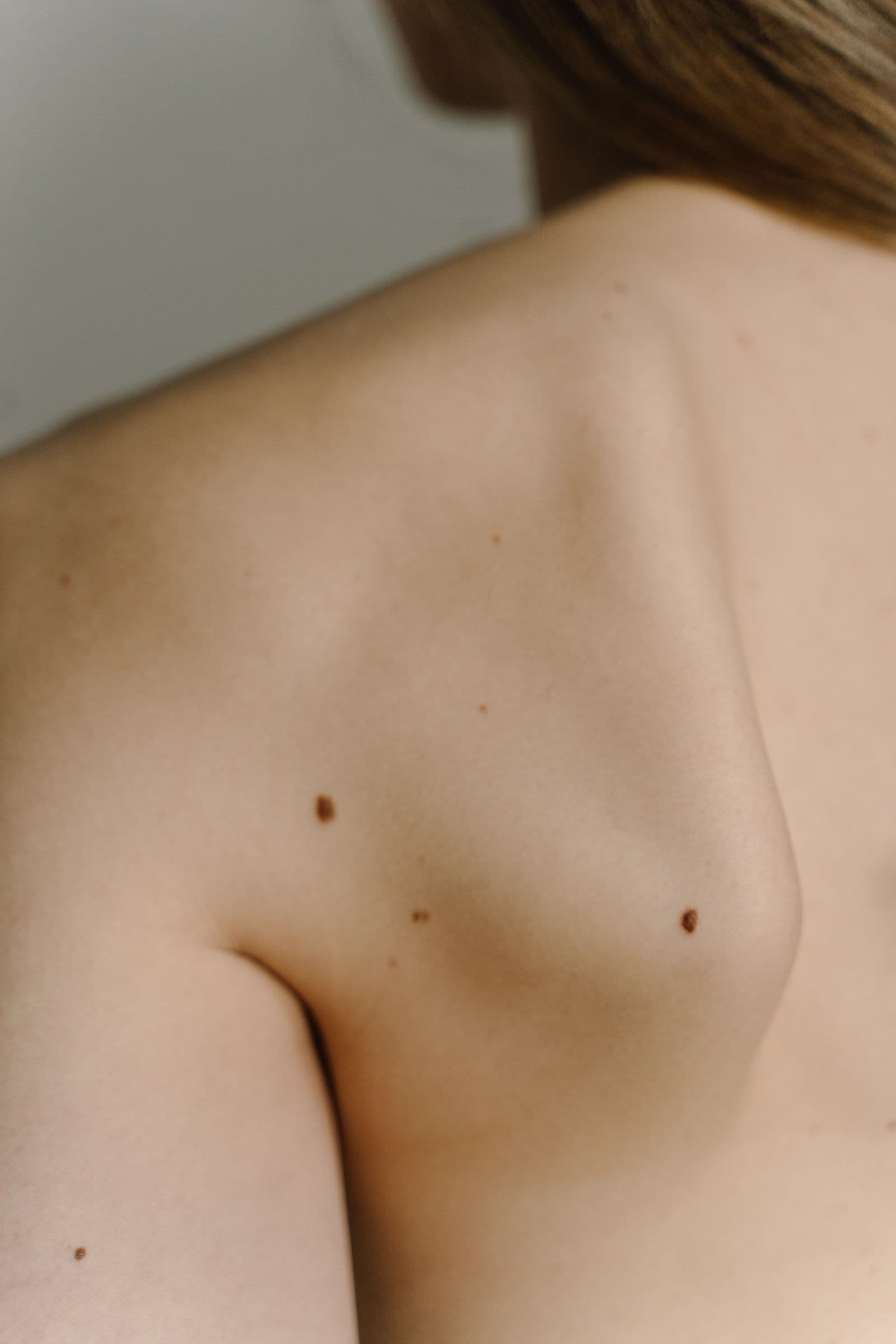
The shoulder pays in stability what it gains in mobility, because the humeral head is much larger than the glenoid surface on which it rests, and keeping it centered during every movement is the job of a sleeve of four tendons that wraps around the joint. These are the muscles that make up the rotator cuff:
· The supraspinatus, which runs in the narrow space between the humeral head and acromion and initiates arm elevation, is the most exposed and most frequently involved in injuries.
· The infraspinatus, located posteriorly, governs external rotation and stabilizes the humeral head during overhead movements.
· The teres minor, the smallest of the four, collaborates in external rotation and keeps the joint centered during forceful movements.
· The subscapularis, the only one positioned anteriorly, is responsible for internal rotation and balances the traction exerted by the other three.
Their work is silent and continuous, and while the deltoid produces the broad movement, the cuff prevents the humeral head from rising. When even one of these tendons loses continuity, the balance of the entire complex is altered, the subacromial space is reduced, and mechanical conflict accelerates the degeneration of the remaining tendons. This is why a neglected injury tends to widen over time instead of stabilizing.
Rotator cuff injury: symptoms and causes
The symptom that guides more than any other is night pain. Those with rotator cuff suffering describe it as deep, poorly localized, radiating toward the lateral side of the arm, and report waking up as soon as they rest on the affected side. During the day, the discomfort is concentrated in the arc of movement between sixty and one hundred twenty degrees of elevation, the interval where the tendon is compressed against the acromion.
Alongside the pain component is loss of strength, which the patient recognizes first in overhead movements and then in daily activities. In extensive injuries, the most characteristic sign appears: the arm gives way when released after being passively raised.
Causes are divided into two categories that often coexist. Degenerative injuries mature slowly, from tendon wear, reduced vascularization with age, and repeated microtrauma, and are most frequent after fifty, in professions requiring overhead work, and in throwing or racquet sports. Traumatic injuries derive from a fall on an extended arm or a sudden pulling movement, and can affect even young shoulders in good condition. Smoking, diabetes, and lipid profile alterations worsen tendon tissue quality and slow its healing capacity.
Tendinopathy and supraspinatus injury
Between tendinopathy and injury there is a substantial difference that guides all subsequent choices. In tendinopathy, the tendon is suffering but continuous, because the collagen matrix becomes disorganized, areas of degeneration appear, and the tissue loses elasticity, while the structure remains intact. In injury, continuity is interrupted, partially when it concerns only a portion of the thickness, completely when it crosses the tendon from side to side.
The supraspinatus is the protagonist of both scenarios. Its insertion on the greater tuberosity of the humerus is served by an area with reduced vascularization, which makes the tissue more vulnerable and slower to repair, and its position exposes it to contact with the acromial arch at every arm elevation.
MRI precisely distinguishes the two conditions and adds the information that really matters for prognosis: the extent of the injury, the degree of retraction of the tendon stump, and the state of fatty degeneration of the muscle belly. These three parameters, more than the intensity of reported pain, indicate how much biological margin remains. A retracted tendon and a muscle largely replaced by fatty tissue signal chronic damage, with reduced repair possibilities regardless of the technique chosen.
Exercises and physiotherapy for the rotator cuff
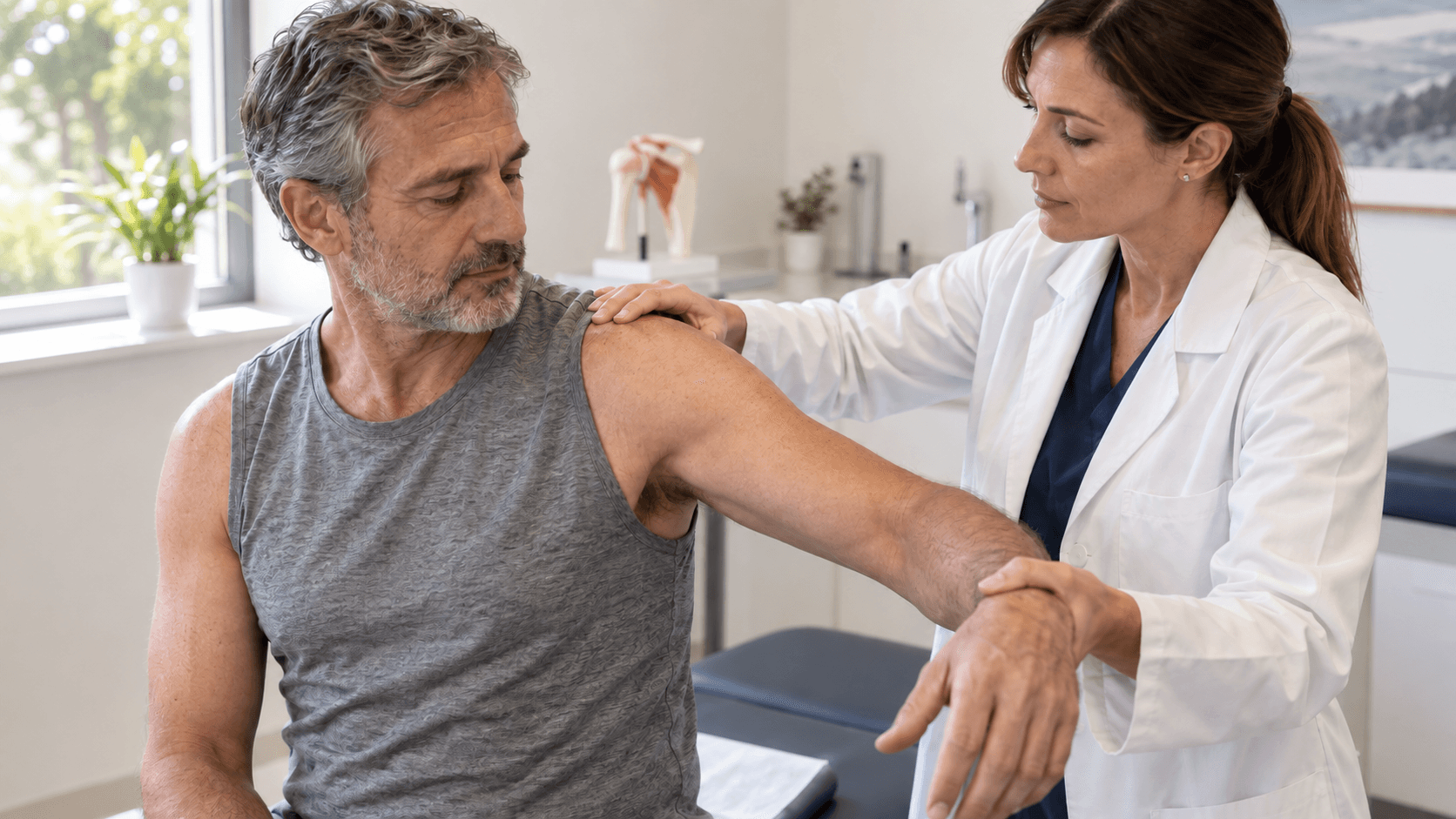
Rehabilitation is the first treatment in almost all tendinopathies and in many partial injuries, and in complete injuries it remains essential before and after any other procedure. The initial objective is to control pain and recover passive range of motion. Only then does strengthening begin, because loading an irritated tendon in a stiff shoulder worsens the condition.
The work focuses on three directions. Eccentric strengthening of external rotators, with elastic bands or small progressive loads, reorganizes collagen fibers and improves tendon tolerance to load. Scapular control corrects the dyskinesia that accompanies almost every painful shoulder and which alone can perpetuate subacromial impingement. Recovery of thoracic spine mobility returns to the scapula the base on which to glide, without which every strengthening exercise works in a disadvantaged position. On how manual work and regenerative approach support each other, we have collected elsewhere the theme of synergy between Lipogems and osteopathy.
It is worth saying also what physiotherapy cannot do, because this is the part that generates the most unmet expectations. A full-thickness interrupted tendon does not come together with exercise. In that case, rehabilitation work improves compensation, the strength of residual muscles, and movement quality, while the anatomical injury remains. Distinguishing the functional objective from the structural one avoids months of therapy based on the wrong assumption.
When to operate the rotator cuff
Surgical indication arises from the intersection of four elements: the type of injury, the person's age and functional demand, tendon quality, and response to conservative treatment. A complete traumatic injury in a young and active patient is repaired early, because the tissue is of good quality and time works against, since the stump retracts and the muscle undergoes progressive fatty degeneration.
The picture changes in degenerative injuries of advanced adulthood. Here a substantial portion of patients achieve good symptom control without surgery, and arthroscopic repair is reserved for those who retain disabling pain and functional limitation after a conservative course properly conducted for at least three to six months.
Finally, there is the category of massive chronic injuries, with retracted tendon and degenerated muscle, where direct repair has low probability of holding over time. In these cases, more complex reconstructive solutions are evaluated, and it is here that prolonged waiting is most costly, because postponing specialist evaluation hoping for spontaneous improvement progressively reduces available options.
Regenerative treatments: treatment with Lipogems
The regenerative approach is positioned in the space between rehabilitation and the operating room, and is aimed at those with chronic tendinopathy or partial injury that no longer responds to conservative treatment. Lipogems uses the patient's own adipose tissue, with a small harvest from abdomen or flanks under local anesthesia, processing with the patented system that micro-fragments the tissue while preserving its vascular niche and extracellular matrix, and an ultrasound-guided infiltration at the site to be treated. The procedure takes place on an outpatient basis, lasts between forty-five and sixty minutes, and allows same-day return home.
The rationale is biological before mechanical. Micro-fragmented adipose tissue brings to the site mesenchymal stromal cells, growth factors, and cytokines that modulate local inflammation and support tendon repair processes, instead of suppressing the symptom. The technology was developed by Prof. Carlo Tremolada, scientific director of IMAGE REGENERATIVE, and now has extensive peer-reviewed literature on musculoskeletal applications. The same principle is applied in athletes through Lipogems Sport protocols, where the priority is return to activity.
Comparison with alternatives helps to correctly frame expectations.
Treatment | Mechanism | Effect horizon |
Cortisone injection | Suppresses local inflammation | Weeks; repeated administrations weaken the tendon |
Hyaluronic acid | Improves gliding and lubricates the joint | Several months, then the cycle must be repeated |
Physiotherapy | Reorganizes collagen and rebuilds motor control | Lasting on functional level, null on tendon continuity |
Arthroscopic repair | Brings together and fixes the tendon to bone | Stable, with long recovery and brace for several weeks |
Lipogems | Autologous tissue that modulates inflammation and supports repair | Progressive in the months following a single outpatient session |
Recovery and healing times
Timing changes dramatically depending on the path taken, and knowing them in advance is part of the decision.
After a Lipogems infiltration, a complex rehabilitation course is not required, so anti-inflammatories and exertion are avoided for the first forty-eight hours, then daily activity is resumed and a guided exercise program is started. Improvement is progressive and builds over two to three months, because it follows the biology of tissue repair and not the immediate effect of a drug. The same procedure can also be used as biological support associated with surgery, to accompany healing of the repaired tendon.
After arthroscopic repair, the course is longer and more rigid, with a brace for four to six weeks, early passive mobilization, active strengthening from the second month, and return to load-bearing sports activities between the fifth and sixth month.
In both scenarios, the variable that weighs most remains consistency in rehabilitation. In our team's experience, the best results come from patients who accept a gradual course and respect the phases, and the initial evaluation at our Milano and St. Moritz locations also serves to establish which of the two paths makes sense to propose, together with a plan for post-injury recovery.
Frequently asked questions
Why does the shoulder hurt more at night?
In the supine position or on the affected side, the subacromial space is reduced and pressure inside the tendon increases, while muscle relaxation removes protection from the joint. This is why night pain is considered one of the most specific signs of rotator cuff suffering.
Can you heal without surgery?
Tendinopathies and many partial injuries respond well to conservative treatment, possibly associated with a regenerative approach. A complete injury, however, does not close spontaneously: rehabilitation can restore good function, while the anatomical continuity of the tendon is restored only surgically.
How long does recovery take after Lipogems treatment?
Resumption of daily activities occurs within a few days, while benefit develops progressively over two to three months, following the timing of biological repair. The rehabilitation program accompanies the entire period and conditions the result.
Can Lipogems be used after shoulder surgery?
Yes. Micro-fragmented adipose tissue is also used as biological support in association with surgery, to support healing of the repaired tendon and reduce the inflammatory component. The indication is evaluated case by case during specialist consultation.
Related Articles
 regenerative-medicine
Intravenous NAD+ Therapy: What It Is and What It's For
Intravenous NAD+ therapy: what it is, what it's for, and the benefits for energy and anti-aging. How the session works, differences with supplements, and side effects.
 regenerative-medicine
Deflated Breasts After Breastfeeding: Causes and Solutions
Deflated breasts after breastfeeding: causes and solutions, from exercises to firm the breasts to medical solutions like mastopexy and lipofilling. Complete guide.
 regenerative-medicine
Longevity, Anti-Aging and Biohacking: What They Really Mean
Longevity, anti-aging and biohacking: what they really mean and how they differ, between longevity medicine and optimization of body and mind.
Want More Info?
If you need more information, call us at +39 02 76280736, message us on WhatsApp, email us at info.milano@imageregenerative.com, or use the form below.