
Regenerative Medicine
Thread Lift Face: How They Work and How Long They Last
The moment when one begins to consider a facelift almost always arrives in front of the mirror, in the evening: the lower third of the face appears less defined, the jawline loses its profile, the cheekbones seem to have slipped downward.
At IMAGE REGENERATIVE, in our Milano and St. Moritz locations, thread lift face treatment addresses this request without going through the operating room, with a visible lifting effect already at the end of the session.
However, very different expectations circulate around threads, and the gap between what they can deliver and what is imagined is the first thing to clarify. Let's see how they work, which materials exist, how long the result lasts, and in which situations it's better to look elsewhere.
What Are Thread Lifts and How Do They Work
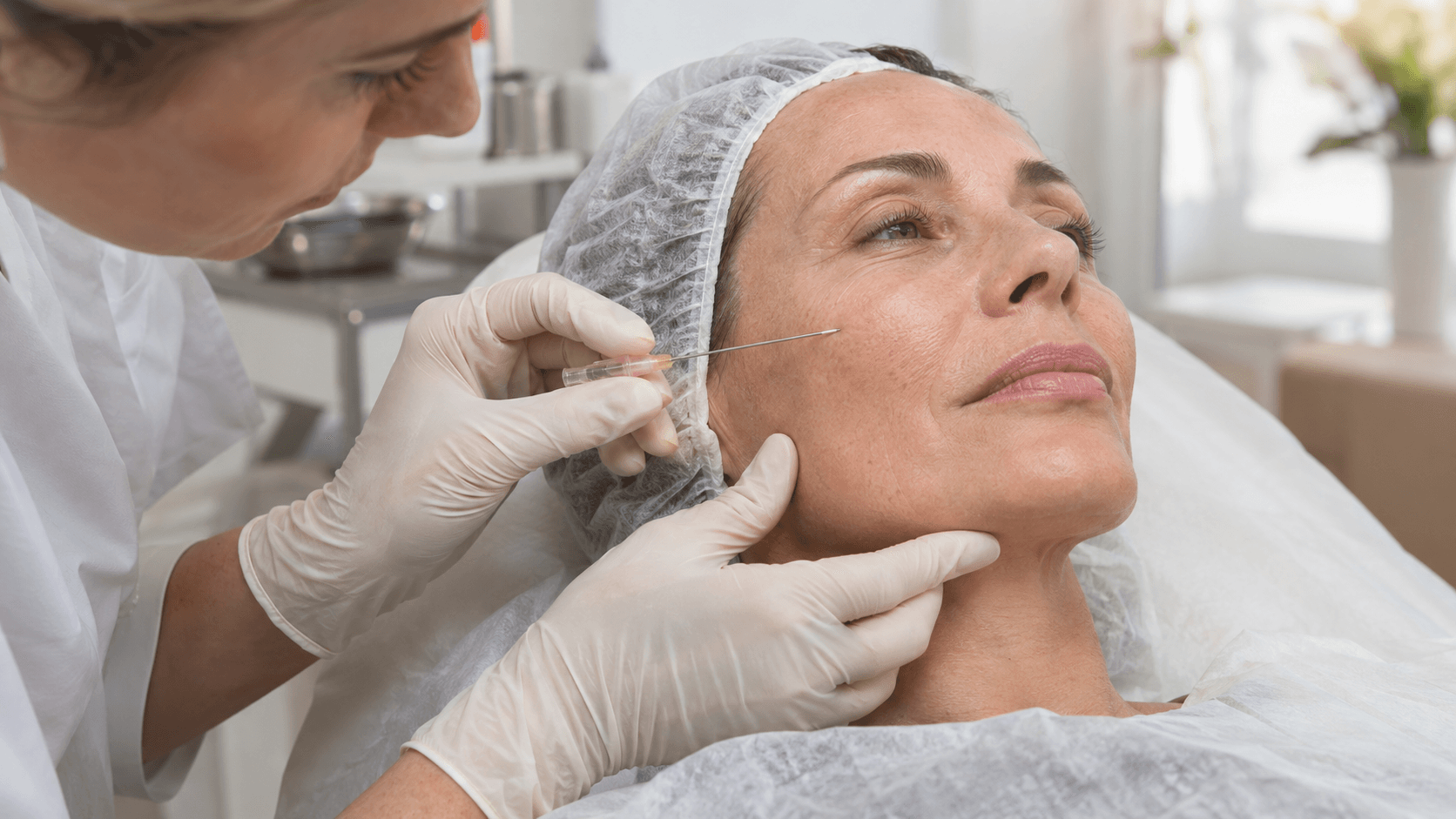
Thread lifts are devices made of biocompatible and completely absorbable material, inserted into the subcutaneous fat layer through thin needles or microcannulas. They are available in lengths ranging from three to twenty centimeters, and their surface is processed with cones or bidirectional micro-barbs, which hook into the tissue and allow it to be repositioned upward without any incision.
The mechanism of action is dual, and understanding it helps to correctly interpret the timing of results. The first component is purely mechanical, because as soon as the thread is inserted, it anchors the relaxed tissues and lifts them, with an immediate effect that is already visible during the treatment. The second component is biological and slower. The presence of the thread and the controlled microtrauma of insertion activate fibroblasts, which begin to produce new collagen and elastin along the path of the material.
As the thread is absorbed, this neocollagen framework remains and continues to support the tissue. This is why the effect lasts beyond the life of the device, and why the treatment improves skin firmness and texture, in addition to changing its position. The session requires between twenty and thirty minutes and takes place under local anesthesia, with the arrangement of threads designed according to the individual's physiognomy.
Types of Threads: Absorbable, PDO, and Collagen
Different materials coexist on the market, and the choice affects both duration and the type of predominant effect. Polydioxanone, abbreviated as PDO, is the most widespread and guarantees good mechanical hold with relatively rapid absorption. Polylactic acid and caprolactone have a different profile, with slower absorption and collagen production stimulus distributed over a longer period.
This distinction is overlaid by another, often overlooked, which concerns geometry. Smooth or spiraled threads work mainly as biostimulators and improve skin quality without producing a real lift, while those equipped with cones or bidirectional barbs are the only ones to exert real traction on tissues. When referring to collagen threads in commercial language, it almost always means devices of the first type, with biostimulation purposes rather than lifting.
Material | Absorption Time | Predominant Action |
Polydioxanone (PDO) | About six to eight months | Immediate mechanical traction and initial collagen stimulus |
Polylactic acid | About twelve months | Prolonged biostimulation, more gradual lifting |
Caprolactone | Over twelve months | Slow collagen stimulus sustained over time |
The combination of different types in the same session is common practice, with lifting threads to redefine contours and biostimulating threads to work on skin quality in surrounding areas.
How Long Do Thread Lifts Last
The question actually contains two distinct questions, and confusing them generates most misunderstandings. One thing is the duration of the thread, meaning the time the body takes to absorb it. Another is the duration of the clinical result, which extends beyond the disappearance of the material thanks to the collagen produced in the meantime.
In practical terms, the lifting effect is maintained on average between ten and twelve months, with cases reaching sixteen. Variability depends on elements worth knowing beforehand, such as skin thickness and quality, the extent of initial laxity, age, body weight stability, sun exposure, and smoking. Thin, collagen-poor tissue retains traction less well than still-elastic tissue.
Certain behaviors shorten the result more than imagined. Significant weight fluctuations in the months following the session modify the volume of facial fat compartments and nullify part of the traction obtained. Sun exposure without protection degrades newly produced collagen, and smoking reduces dermal perfusion precisely when fibroblasts are working. Even sleeping predominantly on one side, in the first weeks, can introduce a small asymmetry in settling.
A recurring observation in our team's experience concerns subsequent sessions after the first. When the treatment is repeated within the year, the tissue is already enriched by previous neocollagenesis and the result tends to stabilize better. For this reason, the reference protocol provides for a session every ten to twelve months, in a maintenance pathway rather than an isolated intervention.
Results: Before and After Treatment
The before and after comparison should be read across three different moments, because the result changes form over time. Immediately after the session, mechanical lifting is observed, with the jawline redefining, cheekbones rising, and folds toward the corners of the mouth softening.
In the following two to three weeks, the picture goes through a settling phase. Modest swelling may appear, some bruising at insertion points, and a sensation of tension during wide facial movements, all transient phenomena. During this period, the effect may appear slightly more marked than the final result, and photographs taken in this window tend to be misleading.
Areas also respond differently from each other. The zygomatic region and jawline, where tissue is thicker and the anchor point more solid, return the most evident and stable result. The neck and submental region respond to a lesser extent, because the skin is thin and traction finds less support. The tail of the eyebrow, on the contrary, requires very little material to open the gaze perceptibly. Setting distinct expectations area by area during the consultation avoids the feeling of uneven results that some people report after a few weeks.
From the second month onward, the regenerative component comes into play, and collagen production improves skin firmness, thickness, and luminosity, so the result takes on a more natural appearance. The correct moment to document before and after is therefore around three months, with the same lighting and head position. It should be stated clearly what is obtained, namely a redefinition of contours and improvement in skin quality, not volume restoration nor the result of surgical facelift.
Risks, Complications, and Contraindications
The complications of thread lifts are largely transient and closely linked to technique, but knowing them before the session is part of an informed choice:
· Bruising and swelling at insertion sites, which generally resolve within ten to fifteen days.
· Surface irregularities, known as dimpling, caused by thread anchoring too superficially.
· Traction asymmetry between the two sides, correctable but more likely when the number and arrangement of threads are not balanced.
· Device extrusion or migration, a rare occurrence that manifests with one end of the thread protruding under the skin.
· Local infection at the insertion site, which requires prompt medical evaluation.
Contraindications concern active skin infections in the area to be treated, pregnancy and breastfeeding, autoimmune diseases in active phase, and anticoagulant therapies not agreed upon with the physician. To these is added a contraindication of indication, more than safety, because marked skin laxity with excess skin requires a surgical approach, and insisting with threads in these cases leads to modest and short-lived results. The recovery period involves avoiding facial massages for seven to ten days, sauna and Turkish bath for two weeks, and intense physical exertion for about fifteen days.
Opinions and Who They Are Suitable For
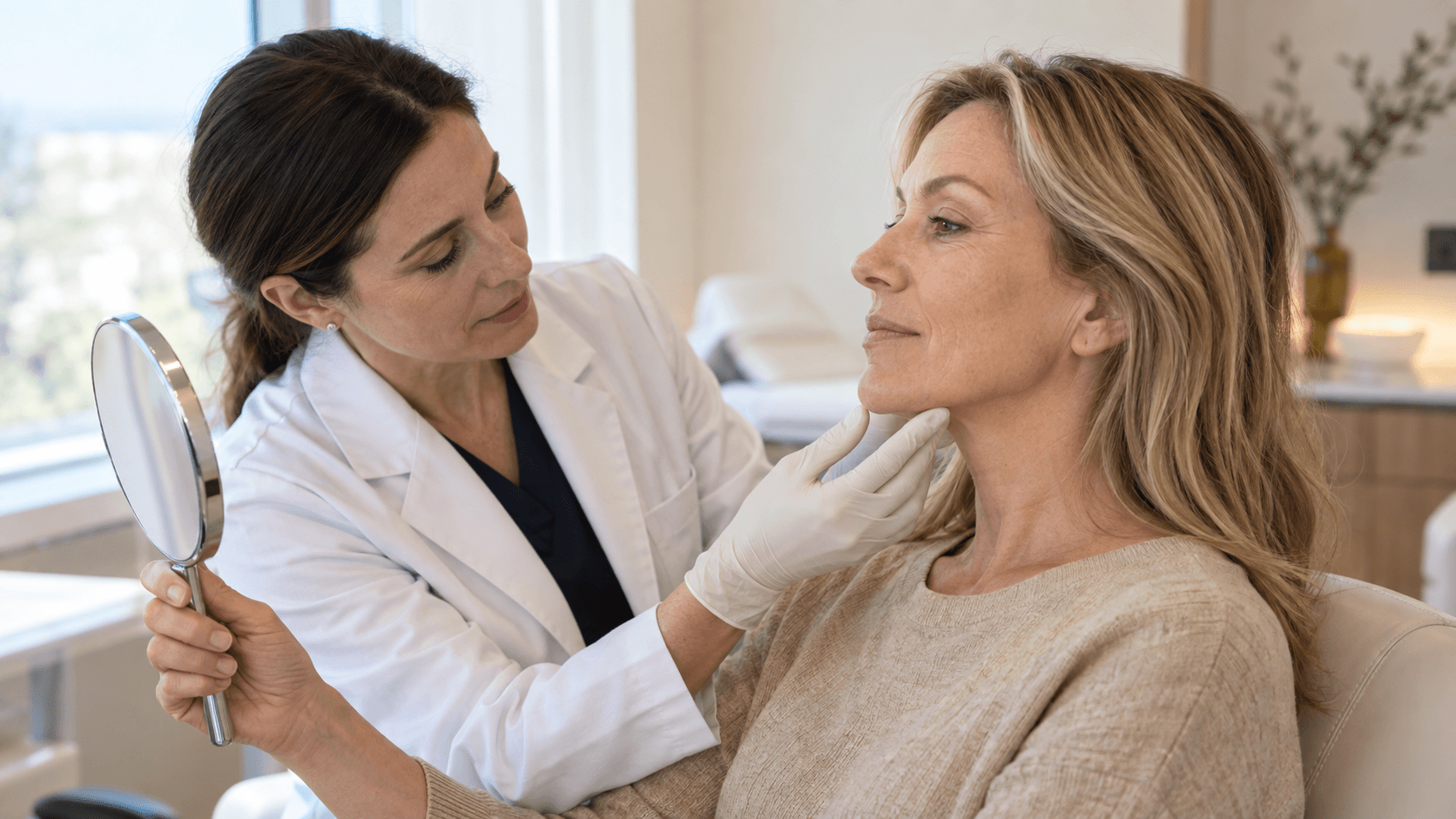
The contrasting opinions read about threads almost always arise from poorly posed indication, rather than the device itself. The candidate who obtains the best results is between thirty-five and fifty-five years old, presents mild to moderate laxity, retains good skin quality, and has a bone structure that still supports the tissues. In this profile, traction finds tissue capable of responding and the result appears natural.
Those with significant sagging, with evident excess skin on the neck and jaw, face a predictable disappointment, because the weight of the tissue exceeds the anchoring capacity of the threads and the effect is exhausted in a few months. For these situations, the correct path remains surgical facelift, possibly in the version described in our in-depth piece on regenerative facelift. Proposing a less invasive alternative out of caution means wasting time for the person in front of you.
In clinic practice, threads perform best when they enter a combined plan. The association with Lipogems Beauty allows working simultaneously on mechanical support and tissue regeneration, while biostimulators and laser technologies intervene on texture and discoloration. The initial evaluation, available at our Milano and St. Moritz locations, serves to establish which of these tools weighs more in the individual case and in what sequence they should be used.
Frequently Asked Questions
How Long Do Thread Lifts Really Last?
The lifting effect is maintained on average between ten and twelve months, with cases reaching sixteen. The thread is absorbed earlier, but the collagen produced during the process continues to support the tissue, which is why the clinical result extends beyond the life of the device.
Is Thread Lift Treatment Painful?
The session takes place under local anesthesia and is generally well tolerated. In the following days, it is common to feel a sensation of tension during wide facial movements and modest discomfort at insertion points, which resolves spontaneously within the first week.
What Is the Difference Between Thread Lifts and Surgical Facelift?
Threads reposition tissues from the inside, without incisions and without removing excess skin, with a result lasting about a year. Surgical facelift intervenes on deep planes and skin excess, with a result of a different order and a longer post-operative recovery period.
Can Thread Lifts Be Repeated?
Yes, and the reference protocol provides for a session every ten to twelve months. In sessions following the first, the tissue is already enriched by previously produced collagen, a condition that tends to make the result more stable.
Related Articles
 regenerative-medicine
Intravenous NAD+ Therapy: What It Is and What It's For
Intravenous NAD+ therapy: what it is, what it's for, and the benefits for energy and anti-aging. How the session works, differences with supplements, and side effects.
 regenerative-medicine
Deflated Breasts After Breastfeeding: Causes and Solutions
Deflated breasts after breastfeeding: causes and solutions, from exercises to firm the breasts to medical solutions like mastopexy and lipofilling. Complete guide.
 regenerative-medicine
Longevity, Anti-Aging and Biohacking: What They Really Mean
Longevity, anti-aging and biohacking: what they really mean and how they differ, between longevity medicine and optimization of body and mind.
Want More Info?
If you need more information, call us at +39 02 76280736, message us on WhatsApp, email us at info.milano@imageregenerative.com, or use the form below.