Regenerative Medicine
Reading time: 2 minutes
Trigger Finger: What It Is and Treatment Options, Including Regenerative Medicine
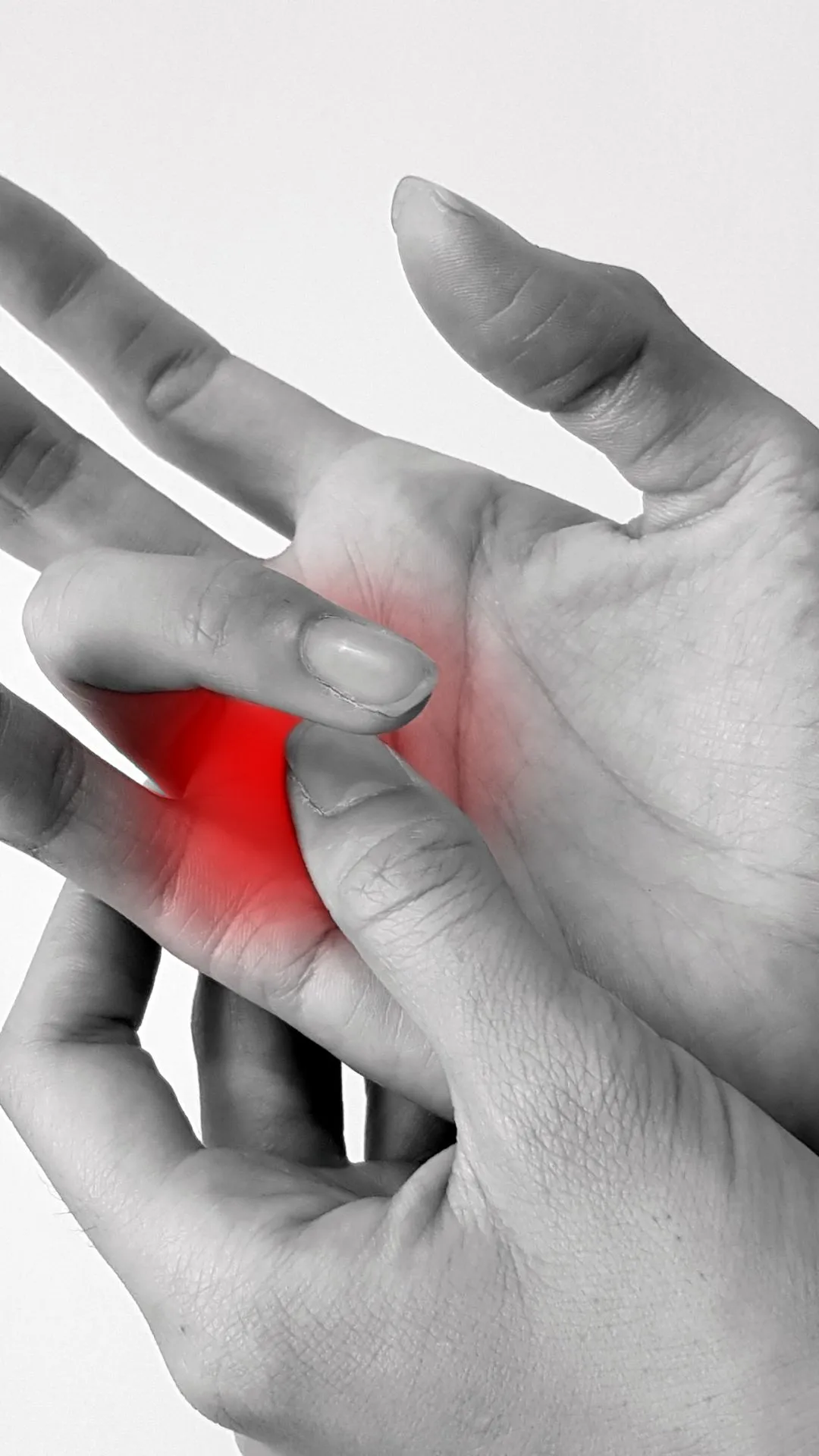
You may wake up in the morning or during manual work to find a finger locked and stiff in a bent position. This can affect chefs, musicians, painters, smartphone and computer users, as well as athletes. It's an unpleasant sensation, as if the finger catches or clicks during flexion-extension movement. If this occurs, you may have Notta's disease, or stenosing tenosynovitis of the flexor tendons, more commonly known as trigger finger.
We discuss this condition with Dr. Laura Loda, hand surgeon at Image Regenerative Clinic.
What is trigger finger and what causes it?
Risk factors for trigger finger include gender and age, with women and people over 40 being more susceptible, as well as certain medical conditions (diabetes, hypothyroidism, rheumatoid arthritis, gout, connective tissue diseases, and congenital digital canal stricture causing trigger finger in children).
What are the symptoms of trigger finger?
Symptoms of trigger finger include swelling at the base of the finger, tenderness at the finger base which may reveal a small nodule upon palpation, movement difficulty, finger clicking, and finger locking in flexion or extension.
How is trigger finger diagnosed?
Trigger finger diagnosis is made during specialist examination through clinical evaluation and palpation of the tendon thickening that causes pain at the base of the finger.
What are the treatment options for trigger finger?
In early stages, conservative treatment is indicated, which may include arnica, ice, corticosteroid injections, anti-inflammatory and analgesic medications, ozone therapy, ultrasound, laser therapy, tecar therapy, more frequent breaks from repetitive manual work, and splinting.
Post-operative physiotherapy treatment by a physical therapist is recommended to prevent scar tissue adhesions and enable faster, more satisfactory recovery.
Interested in this treatment?
Lipogems Orthopedics in Milan and St. Moritz: Knee, Hip, Shoulder and Other Joints
Interested in this treatment?
Lipogems Orthopedics in Milan and St. Moritz: Knee, Hip, Shoulder and Other Joints
Related Articles
 regenerative-medicine
Red Touch Laser: collagen awakened by light
Red Touch Laser at 675 nm: how it stimulates collagen without needles, what it can improve on fine lines and texture, how many sessions are needed and why energy must be dosed carefully.
 regenerative-medicine
When a Therapy is Promising but Not Yet Proven
When a therapy is promising but not yet proven: what scientific evidence means, the phases of clinical research, and how to navigate with caution.
 regenerative-medicine
Breast Ptosis: Degrees, Causes and When to Have a Mastopexy
Breast ptosis (sagging breasts): degrees, causes and when to have a mastopexy. Difference between breast lift with and without implants and before and after results.
Want More Info?
If you need more information, call us at +39 02 76280736, message us on WhatsApp, email us at info.milano@imageregenerative.com, or use the form below.