Regenerative Medicine
Visceral Massage: Benefits for the Intestine
Those who arrive at our Milano and St. Moritz locations with persistent abdominal bloating, slow digestion or constipation have often already ruled out the most feared causes with appropriate tests, without finding a satisfactory answer.
It is in this space that visceral massage is positioned, a manual technique derived from osteopathy that at IMAGE REGENERATIVE is an integral part of the Longevity pathway.
It works on the mobility of abdominal organs and the tissues that surround them, with the same logic we describe when discussing the synergy between osteopathy and regenerative medicine: addressing function before symptom.
What visceral massage is

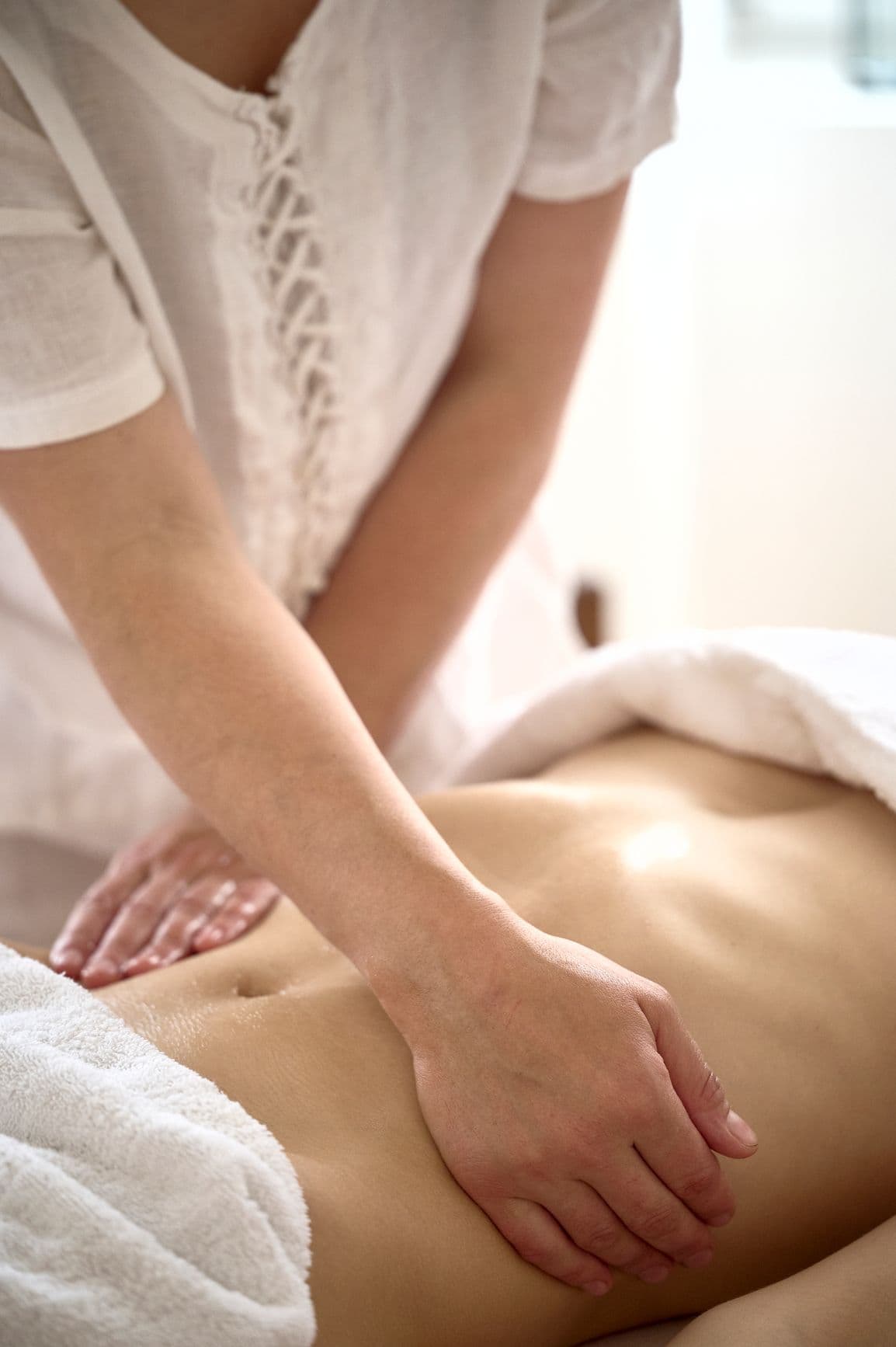
Visceral massage, also called gastroenteric massage, is an osteopathic technique that focuses on the mobility and functionality of organs contained in the abdominal cavity, particularly the stomach, intestine, liver and kidneys.
The anatomical premise is simple and often overlooked. Internal organs are not suspended in a void: they are wrapped and connected to each other by connective tissues and membranes that allow reciprocal sliding with each breath and trunk movement. When these tissues lose elasticity, due to repeated inflammation, surgical outcomes, prolonged stress or incorrect postural habits, mobility is reduced and organ function may be affected.
The treatment acts precisely on this level, with calibrated manual maneuvers that restore sliding and reduce deep tensions. One point should be clarified immediately: this is slow, low-intensity work on tissues, far from the idea of vigorous abdominal massage.
The difference from a relaxing abdominal massage lies precisely here. Aesthetic or decontracting massage works on the surface, on the wall musculature and on the perception of immediate wellbeing. Visceral technique has a precise anatomical target, identified through manual tests, and proceeds with targeted corrections on individual structures. It is a treatment built on assessment, which explains why two sessions addressing the same disorder can be very different from each other.
How it acts on the intestine and colon
The action on the intestine develops along three directions that reinforce each other.
The first is mechanical and direct. Fascial and muscular techniques work on the intestinal muscular layer and the tissues supporting the loops, promoting peristalsis, that is, the orderly progression of content along the digestive tract on which transit times depend.
The second passes through the diaphragms. The respiratory diaphragm above and the pelvic floor below delimit the abdominal cavity and regulate internal pressure. Restoring mobility to these two structures rebalances intra-abdominal pressure, improves respiratory excursion and acts on the stagnation of gas and fluids that generates the sensation of bloating.
The third direction is nervous and perhaps the most interesting. The intestine communicates with the central nervous system through the vagus nerve, and approximately ninety percent of the body's serotonin is produced at the intestinal level. Manual work that reduces visceral tensions and promotes diaphragmatic breathing acts on the tone of the autonomic nervous system, shifting it towards a rest and digest mode. This is why the effects reported by patients often also concern sleep and stress management.
Benefits for digestion, constipation and bloating

The observed benefits concern three main areas.
On the digestive level, the treatment promotes more efficient digestion, reduces the sensation of acidity and heaviness after meals and acts on hiatal hernia principles and gastroesophageal reflux, due to the direct relationship between diaphragm mobility and the junction between esophagus and stomach.
On intestinal transit, the objective is regularization, which means counteracting constipation in people with slowed times and stabilizing bowel movements in those who alternate between constipation and diarrhea phases. The improvement in gas and fluid drainage translates into a reduction in bloating and that sensation of a lighter abdomen that patients describe first.
On bloating, it is worth adding a clarification, because it is the most frequent reason for consultation and also the most misunderstood. Perceived bloating rarely depends on abdominal fat and much more often on a combination of retained gas, slowed transit and altered pressure balance between diaphragm and pelvic floor. This is a distinction that changes the approach: acting on visceral mobility and breathing addresses the mechanical cause of the disorder, while strategies aimed at body composition intervene on a different level and leave the symptom unchanged.
The third area is the one that surprises those approaching this technique for the first time. The release of visceral tensions is reflected in lumbar and cervical back pain, through viscero-somatic referred pain, that is, the mechanism by which an organ in difficulty generates muscle and joint pain at a distance. Benefits are also reported on menstrual pain, venous and lymphatic circulation of the lower limbs and mood regulation.
On these effects it is appropriate to maintain an honest position. These are functional benefits, reported by patients and observed in the clinic during a cycle, which concern daily life quality more than the modification of a laboratory parameter. Visceral massage acts on function and tissue tension, thus making more efficient what the body already does, while it does not correct structural alterations nor replace prescribed therapies. Presenting it within these boundaries is what allows it to be correctly placed in a care pathway, alongside other tools and never in their place.
Visceral massage and irritable bowel syndrome
Irritable bowel syndrome is a functional disorder: tests are normal while symptoms, abdominal pain, bloating and bowel movement alteration, remain present and affect the day. It is a diagnosis made by exclusion and requires medical evaluation before any manual treatment.
In this context, visceral massage is positioned as support and should be presented for what it is. It acts on some factors that fuel the picture, namely the abdominal tension component, visceral hypersensitivity linked to autonomic nervous system activation and transit time alteration. Many people report a reduction in the frequency and intensity of episodes, with a benefit that builds up over a cycle of sessions and must be maintained over time.
It should be said with equal clarity that the treatment is not a definitive cure for the syndrome and does not replace the gastroenterological pathway, dietary management or stress management, which remain the cornerstones of care. Its value lies in supporting them, in an integrated approach where each tool covers a part of the problem.
Who it is indicated for and when to avoid it
Visceral massage is indicated in various recurring situations:
· Recurring digestive and intestinal disorders.
· Abdominal tensions and lumbar pain linked to visceral imbalances.
· Chronic stress and autonomic nervous system disorders, such as insomnia, hyperactivation and bruxism.
· Psychosomatic visceral dysfunctions, that is, persistent intestinal disorders despite a correct lifestyle.
The technique is suitable for all ages, from pediatric to geriatric patients, with maneuvers calibrated to the individual.
On when to avoid it, the rule is one of clinical common sense and comes before any technical consideration. Acute and sudden abdominal pain, fever, presence of blood in stool, unexplained weight loss or a recent and persistent change in bowel habits require medical evaluation before any manual treatment, because in those cases the priority is reaching a diagnosis. The same applies in pregnancy, after recent surgery and in the presence of known abdominal pathologies: the initial assessment establishes whether, when and with what modalities to proceed.
This is why every pathway begins with a thorough interview. Visceral massage is a functional treatment and not a diagnostic tool, and recognizing when something else is needed is part of the practitioner's work.
How an abdominal massage session unfolds
A session lasts between thirty and forty-five minutes and is divided into four distinct moments.
Session phase | What it includes |
Personalized history | Reconstruction of symptoms, habits and related disorders, to identify imbalances to be treated |
Abdominal palpatory tests | Manual assessment of restrictions in visceral tissues and mobility of different organs |
Work on diaphragms and abdominal muscles | Relaxation techniques to improve breathing, abdominal mobility and internal pressure |
Targeted organ treatment | Specific maneuvers on involved structures, calibrated on what emerged from tests |
For preparation, a few practical indications apply. It is advisable to present on an empty stomach and wear comfortable clothing. In the twelve hours following the session it is appropriate to avoid considerable physical exertion, to allow the work on tissues to integrate without stress.
The basic cycle provides for a minimum of five sessions, a number that increases in the presence of specific conditions or disorders that have lasted for many years, where tissues need more time to modify an established pattern. The frequency is defined by the osteopath based on the observed response, because tissue reactivity varies considerably from person to person. In our team's experience, the first changes in bloating and digestion quality emerge already in the first sessions, while regularization of transit and benefits on sleep and general tension require the continuity of the entire cycle.
Frequently asked questions
Does visceral massage hurt?
The treatment is low intensity and works by listening to tissues, so it is generally well tolerated. In areas with greater restrictions, a sensation of tension or moderate discomfort may be felt during the maneuver, which subsides quickly. The practitioner calibrates pressure based on tissue response, and communicating what is felt during the session is part of the method.
How many visceral massage sessions are needed?
The basic cycle provides for a minimum of five sessions, with a higher number in the presence of specific conditions or longstanding disorders. The first effects on bloating and digestion often emerge in the first sessions, while regularization of intestinal transit and benefits on general tension require completing the pathway and must then be maintained over time.
Does visceral massage help with irritable bowel?
It can offer useful support, acting on abdominal tension, visceral hypersensitivity and transit times, which are three factors involved in the disorder. However, it remains a complementary treatment: the syndrome requires gastroenterological evaluation and management that includes nutrition and stress. Massage supports that pathway without replacing it.
How do you prepare for an abdominal massage session?
It is advisable to present on an empty stomach, avoiding large meals in the preceding hours, and wear comfortable clothing that allows working easily on the abdominal area. In the following twelve hours it is appropriate to avoid significant physical exertion. It is useful to bring any recent tests to the session, because they help frame the disorder and exclude conditions requiring other priorities.
Related Articles
 regenerative-medicine
Intravenous NAD+ Therapy: What It Is and What It's For
Intravenous NAD+ therapy: what it is, what it's for, and the benefits for energy and anti-aging. How the session works, differences with supplements, and side effects.
 regenerative-medicine
Deflated Breasts After Breastfeeding: Causes and Solutions
Deflated breasts after breastfeeding: causes and solutions, from exercises to firm the breasts to medical solutions like mastopexy and lipofilling. Complete guide.
 regenerative-medicine
Longevity, Anti-Aging and Biohacking: What They Really Mean
Longevity, anti-aging and biohacking: what they really mean and how they differ, between longevity medicine and optimization of body and mind.
Want More Info?
If you need more information, call us at +39 02 76280736, message us on WhatsApp, email us at info.milano@imageregenerative.com, or use the form below.