
Regenerative Medicine
Active Aging: Longevity Is Also Recovery Capacity
On October 27, at Il Sole 24 Ore's Health & Longevity Summit, Silvio Garattini called for a revolution founded on prevention, essential for people's health and for the sustainability of the National Health Service.
At IMAGE REGENERATIVE, in our Milano and St. Moritz locations, the regenerative longevity pathway starts from that message and adds a question: what happens when prevention is no longer enough.
The medicine of the future must help us live better, as well as longer, even when the body has already sustained damage.
Active Aging: The Revolution Starts with Prevention
Garattini's call, founder and president of the Mario Negri Institute, comes at a precise moment. The population is aging, chronic diseases weigh increasingly on families and the health system, and prevention remains the most effective tool to change the trajectory. It's a fundamental message that opens a broader reflection on the very meaning of aging well.
The idea of active aging originates here. The World Health Organization defines healthy aging as the process that maintains the functional capacity necessary for well-being in advanced age, and on this definition built the Decade of Healthy Ageing 2020-2030 program, as reconstructed by a review published in Maturitas. The goal, therefore, is the ability to move, decide, and do what one desires, rather than the absence of disease.
In practice, functional capacity is measured in everyday things. Climbing stairs without stopping, carrying groceries, traveling, playing with grandchildren, sleeping without pain. These are the parameters by which people judge their age, much more than their date of birth, and these are what longevity medicine should measure itself against.
For too long we have associated medicine with disease and prevention with the fear of getting sick. Today there is an opportunity to change perspective and make health a positive project, linked to freedom of movement, autonomy, energy, and quality of life. Health thus becomes a value people choose to invest in, not just a right to be protected when in danger.
On how longevity medicine is changing the approach to medicine, we wrote in a dedicated in-depth article. Here we are interested in a subsequent step, the one concerning those who already have damage.
When Prevention Is Not Enough
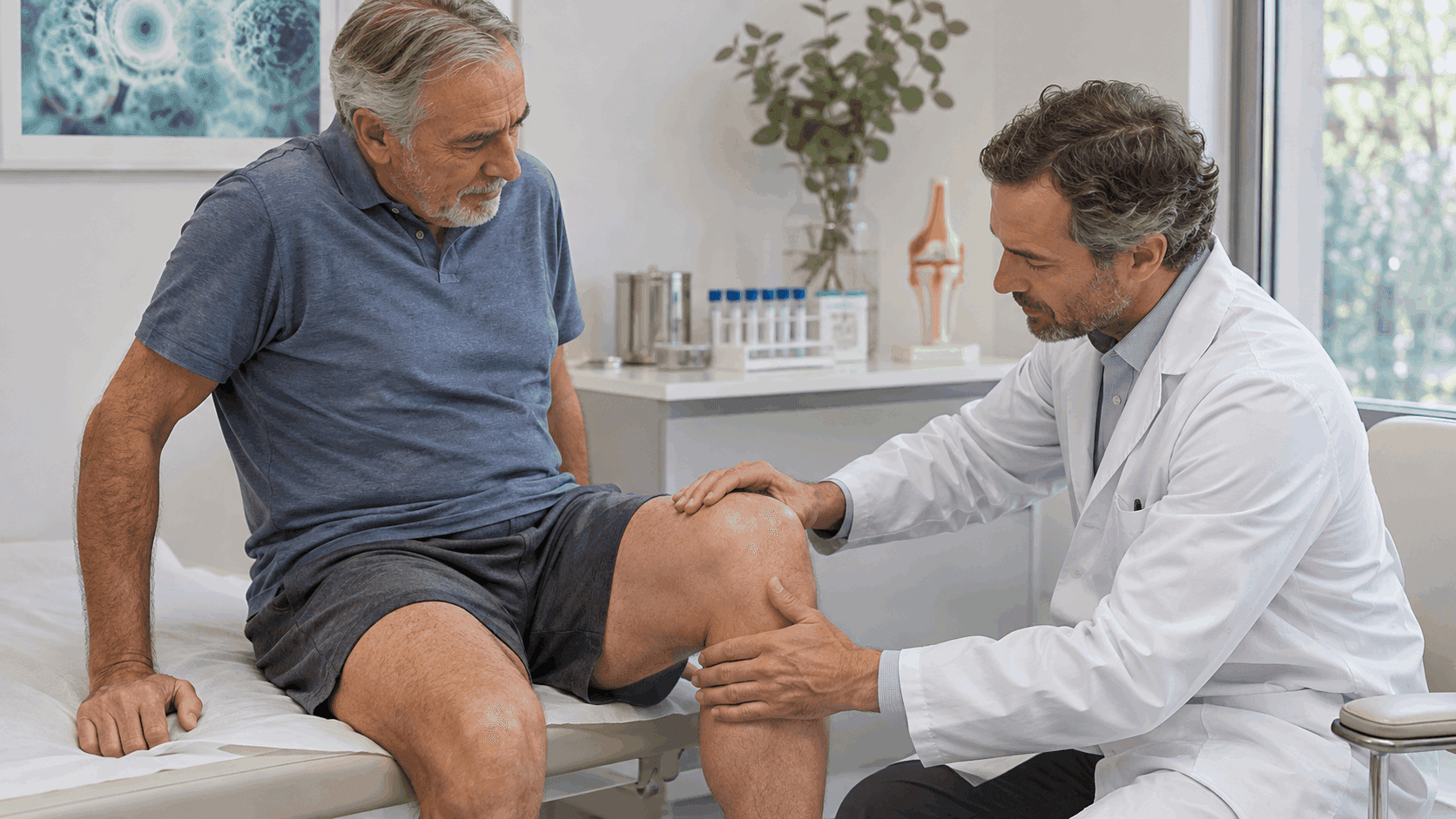
Prevention is essential. However, a question remains that anyone working with adult patients knows well: what to do when prevention arrived too late or was not sufficient. The situations in which this happens are mainly three:
- An already compromised joint, as occurs in osteoarthritis of the knee, hip, or shoulder.
- Damaged tissue, for example a tendon or cartilage that has sustained an injury or progressive wear.
- A biological function that has deteriorated over time, reducing strength, mobility, or resistance.
In these cases, lifestyle remains important because it slows deterioration and supports every therapy, but alone it does not restore what has been lost. It can happen to those who have done everything right, exercised, maintained proper nutrition and check-ups, and still end up with a knee that hurts and limits daily activities.
Certain signs indicate it's time for a specialist evaluation. Joint pain lasting for months that responds poorly to usual therapies, stiffness that limits daily movements, loss of strength that makes previously simple activities difficult. Recognizing them early matters because many therapies work best when damage is still contained. The same applies to those who suffer a sports injury in adulthood, when recovery times tend to lengthen and incomplete healing can have consequences for years.
This is where a vision of longevity limited to prevention shows its limitation. Living longer with a joint that doesn't allow enjoyable walking, or with pain that takes away autonomy, means adding years without adding quality. This is why recovery deserves the same space as prevention in how we design people's health.
What Regenerative Medicine Can Do for Tissues
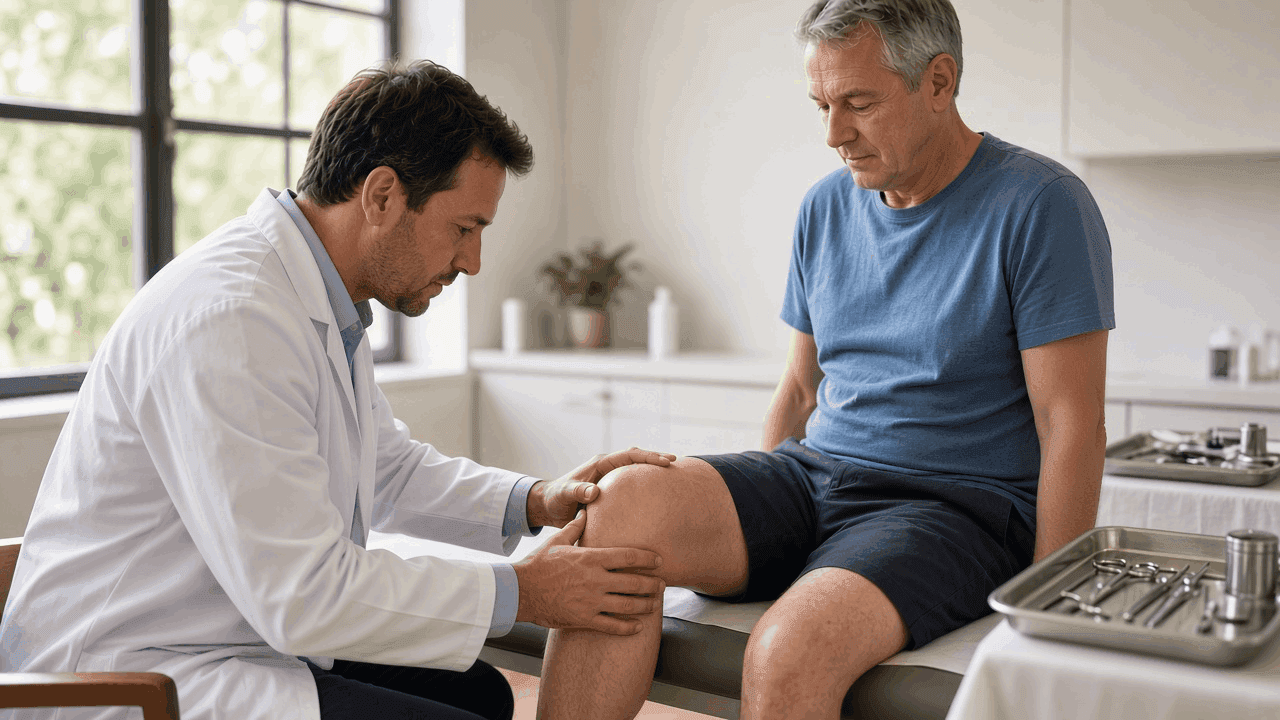
This is where regenerative medicine can offer an important contribution. Research has expanded knowledge of the mechanisms by which the body responds to damage and activates its own repair processes. Regenerative medicine studies how to use these mechanisms, when clinically appropriate, to support tissue recovery and function.
It doesn't mean promising to stop aging, but addressing some of its consequences through applied science. The difference is substantial, because it shifts the goal from an impossible promise to a measurable result, like a joint that hurts less or a movement that becomes possible again.
A concrete example is the Lipogems® method, developed by Prof. Carlo Tremolada, which uses the patient's own adipose tissue, rich in mesenchymal cells, to support the repair of damaged tissues. In orthopedic applications, it is used in osteoarthritis of the knee, hip, shoulder, and ankle, in tendinopathies and cartilage lesions, with the goal of reducing inflammation and supporting functional recovery.
It's worth mentioning the limitations too. In osteoarthritis, the best results come in mild to moderate forms, before degeneration is too advanced, and this is one reason why recovery should be considered early, not as a last resort. The treatment is outpatient, lasts between forty-five and sixty minutes, and allows you to return home the same day. The indication always comes from a specialist visit that evaluates the stage of the disease, previously tried therapies, and the patient's expectations.
It's also the principle Prof. Tremolada describes in the book "The Body That Heals Itself," published by Mondadori: understanding the body's biology to transform scientific knowledge into concrete therapeutic solutions. The fundamental idea is to help the body do what it does best—repair itself—instead of merely intervening from the outside on what has been damaged. In clinical practice, the principle becomes a simple rule: choose the least invasive treatment capable of providing real benefit and reserve more demanding interventions for cases where they are truly necessary.
Predict, Prevent, Regenerate: The Three Dimensions of Longevity
The challenge of longevity therefore requires medicine capable of holding together three dimensions, which in clinical practice overlap and feed each other.
Dimension | What It Means | With What Tools |
Predict | Know individual risk factors, including genetic ones | Clinical evaluation, targeted tests, genetic analysis when indicated |
Prevent | Reduce risks before they become disease | Lifestyle, early diagnosis, personalized interventions |
Regenerate and Recover | Support repair when damage already exists | Evidence-based strategies that enhance the body's repair capabilities |
The three dimensions work only if they dialogue. Predicting without preventing produces information that remains on paper, preventing without knowing how to recover leaves uncovered those who get sick, and recovering without preventing exposes to new damage. A well-constructed longevity pathway moves from one to another depending on the life stage and the person's condition.
An example helps to see them together. A sixty-year-old person with family history of cardiovascular disease and a knee beginning to hurt experiences all three. Predicting means knowing their cardiovascular risk and joint status, preventing means working on nutrition, movement, and check-ups, recovering means treating the knee so that movement, which is also prevention, remains possible.
Sustainable Longevity, for People and Society
This integration is also a possible answer to the challenge of sustainability. A population that ages while maintaining autonomy and functional capacity longer can help reduce the burden of chronic diseases, disability, and care on the health system. For this to happen, innovation must demonstrate three things:
- Clinical efficacy, verified with appropriate studies.
- Appropriateness, meaning use in patients and situations where it's truly needed.
- Economic sustainability, for people and for the health system.
Longevity cannot become a privilege for the few. The challenge is to transform scientific progress into an increasingly accessible benefit, and this is where sustainability and desirability meet. When people understand the value of their health, they become protagonists of prevention, while medicine can accompany them with increasingly personalized tools.
It is on this integration between prevention, regenerative medicine, genetic knowledge, and applied science that IMAGE REGENERATIVE is developing its vision of health and longevity. The regenerative longevity pathway lasts one year, begins with initial care and interventions, becomes personalized as diagnostic data arrive, and includes reassessments at six and twelve months. When indicated, it includes regenerative interventions, and in St. Moritz intensive modules of four or five days can be added. Its four phases, from initial care to personalization, from optimization to consolidation, serve precisely to hold together the three dimensions over time, instead of entrusting them to separate interventions. For those who experience it, there's also a practical advantage, because a single group of doctors knows the person's history, tests, and goals, and can decide when to insist on prevention and when it's time to work on recovery.
The future of medicine consists of treating better and, at the same time, creating the conditions for people to live better, longer. The true achievement will be making health desirable for people and sustainable for society.
Frequently Asked Questions
What is meant by active aging?
It's the idea, promoted by the World Health Organization, that aging well means maintaining the functional capacity that allows well-being in advanced age, meaning the ability to move, decide, and do what one desires. More than the absence of disease, what counts is autonomy in everyday life.
Is it possible to stop aging?
No. However, medicine can slow some of its effects and address its consequences, through prevention and, when damage is already present, with therapies that support tissue recovery and function. The realistic goal is to live better longer.
What did Silvio Garattini say about prevention?
At the Health & Longevity Summit organized by Il Sole 24 Ore in Milano on October 27, 2026, the founder and president of the Mario Negri Institute stated that preserving the National Health Service requires a revolution founded on prevention, and linked longevity to the future of the health system.
What can regenerative medicine do for an already compromised joint?
It can support repair processes and help reduce inflammation, with treatments that use the patient's own tissues. With the Lipogems® method, for example, autologous adipose tissue is used in osteoarthritis of the knee, hip, shoulder, and ankle. The indication is always decided after a specialist visit.
Content reviewed by the medical-scientific committee of IMAGE REGENERATIVE. The information provided has educational purposes and does not replace specialist consultation.
Related Articles
 regenerative-medicine
Red Touch Laser: collagen awakened by light
Red Touch Laser at 675 nm: how it stimulates collagen without needles, what it can improve on fine lines and texture, how many sessions are needed and why energy must be dosed carefully.
 regenerative-medicine
When a Therapy is Promising but Not Yet Proven
When a therapy is promising but not yet proven: what scientific evidence means, the phases of clinical research, and how to navigate with caution.
 regenerative-medicine
Breast Ptosis: Degrees, Causes and When to Have a Mastopexy
Breast ptosis (sagging breasts): degrees, causes and when to have a mastopexy. Difference between breast lift with and without implants and before and after results.
Want More Info?
If you need more information, call us at +39 02 76280736, message us on WhatsApp, email us at info.milano@imageregenerative.com, or use the form below.