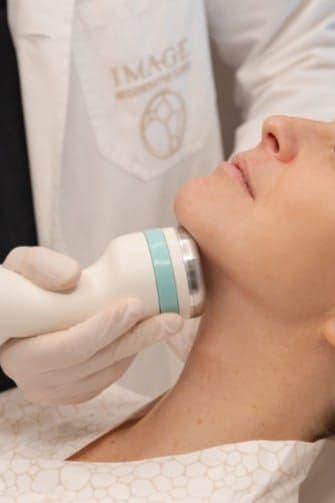
Regenerative Medicine
Morpheus 8, XERF, Thermage: clarifying the names
XERF, Morpheus8, CoolSculpting, Fraxel, Thermage, Ultherapy. These are names that appear increasingly on social media, in magazines and in patient searches, and each seems to promise something completely new.
At IMAGE REGENERATIVE, in Milano and St. Moritz, the personalized regenerative analysis serves precisely to bring order, starting from the patient's skin rather than the name of the latest machine.
More lifting, more collagen, more depth, less recovery time. Behind the promises there is almost always a technology we have known for some time, and that is where it is worth starting.
What Morpheus 8, XERF, Thermage and other names really are
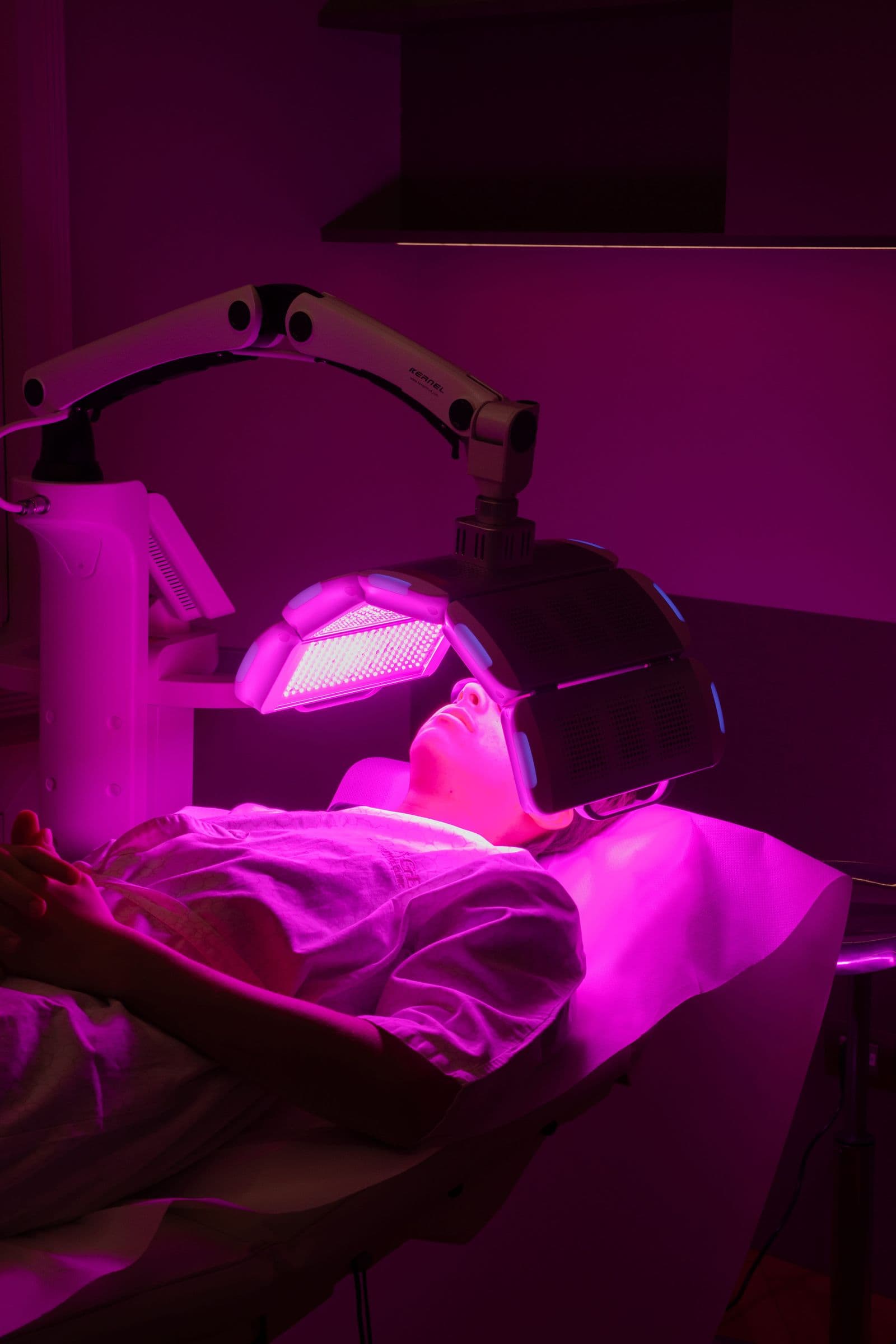
In most cases these names do not identify a new branch of aesthetic medicine. They are commercial names of devices, and each device belongs to a technological family that medicine has known and used for years, such as laser, radiofrequency, ultrasound, cryolipolysis or pulsed light. Tracing the name back to its family is the first step in understanding what it can and cannot do.
Commercial name | Technological family | Primary target |
XERF | Multifrequency monopolar radiofrequency | Laxity and dermal quality |
Morpheus8 | Fractional radiofrequency with microneedles | Texture, scars and laxity |
Thermage | Monopolar radiofrequency | Skin laxity |
Ultherapy | Microfocused ultrasound | Laxity of deeper layers |
CoolSculpting | Cryolipolysis, controlled cold | Localized fat deposits |
Fraxel | Fractional laser | Texture, wrinkles and photoaging signs |
Take Morpheus8. It belongs to the family of fractional radiofrequency with microneedles, the same as Vivace, the technology we use in the clinic for wrinkles, acne scars and enlarged pores. A review published in Facial Plastic Surgery Clinics of North America dedicated to this technology compares precisely the differences between devices in the family and emphasizes that optimizing treatment parameters is essential for safety and efficacy. The same review reports uses on acne scars, skin laxity and hyperhidrosis.
This does not mean that the devices are all the same, nor that innovation is lacking. Within the same family, frequencies, wavelengths, depths reached, the way energy is delivered, cooling systems, precision, comfort and safety profile can change. These are real differences that matter. However, they come after the most important question, which is what problem you want to treat. Those who have had good results with one device and disappointing ones with another from the same family may have experienced precisely this, different parameters and indications rather than different technologies.
Technological families: laser, radiofrequency, ultrasound, cold
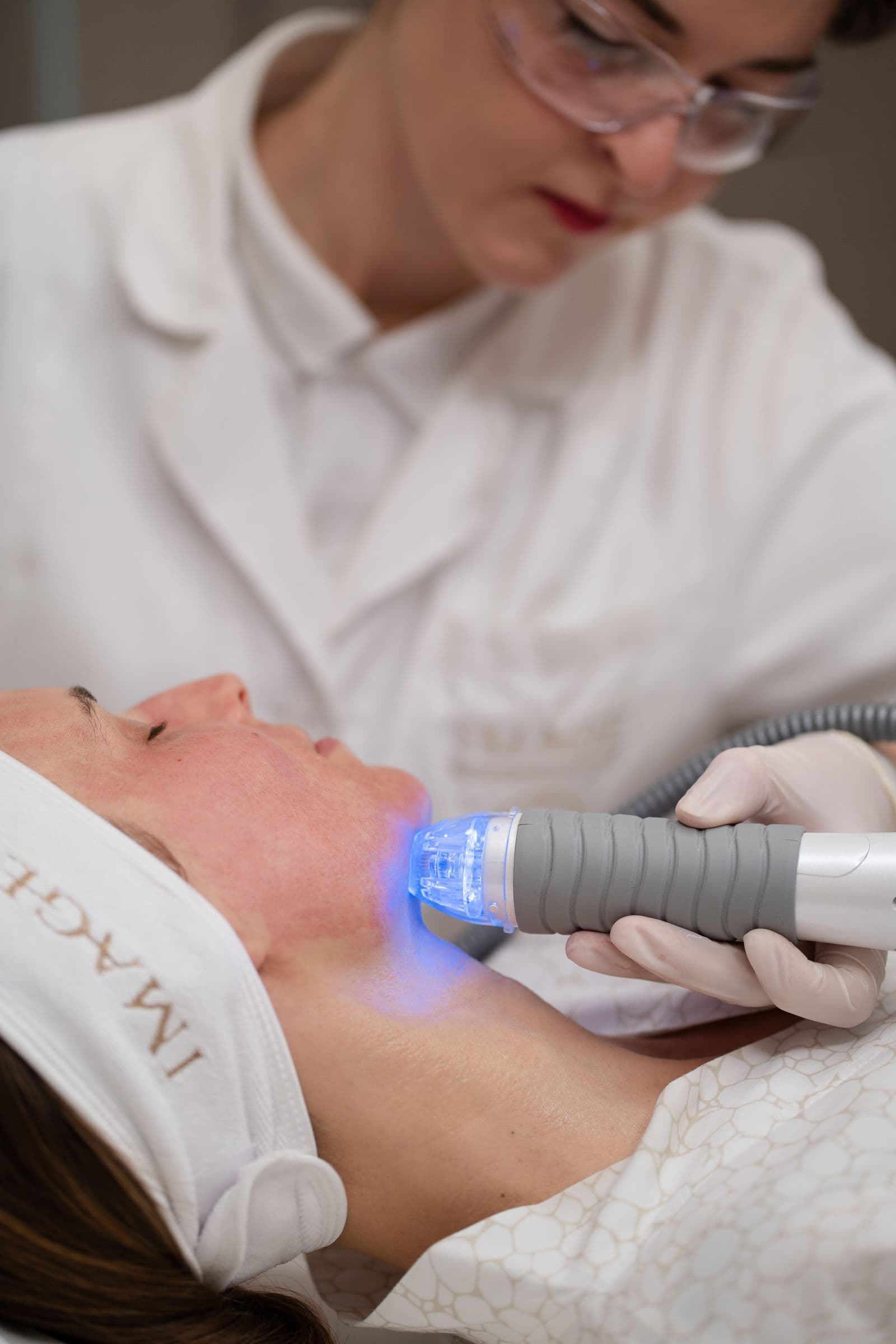
Laser uses light, and its wavelength decides which skin target absorbs the energy. There are lasers for pigment, lasers for vessels and lasers that work on water or collagen. The fractional version treats the skin in micro-columns, leaving the tissue between them intact, and thus accelerates healing. In the clinic this family includes, among others, the Fraxel Dual fractional laser, the ablative fractional CO2 laser and the RedTouch laser at 675 nanometers, which targets collagen.
Radiofrequency transfers energy in the form of heat and stimulates collagen remodeling. In the monopolar version the heat is distributed volumetrically in the deep layers of the skin, while in the fractional version with microneedles it is released at precise points in the dermis through ultra-thin needles, which allow depth adjustment zone by zone. Thermage and XERF belong to the first variant, Morpheus8 and our Vivace microneedle radiofrequency to the second.
Microfocused ultrasound concentrates energy in small points at an established depth, and for this reason can reach deeper skin layers. Ultherapy is the best-known name in this family.
Pulsed light, often confused with laser, is a family of its own. It emits a broad spectrum of filtered light, which is used for superficial spots, redness and hair removal, with less selective action than that of a laser dedicated to a single target.
In the field of body contouring the families change again. Cryolipolysis uses controlled cold to act on adipose cells, and is the technology of CoolSculpting, whose sessions and treatable areas we have described. Other systems work with heat, such as Coolwaves, which uses selective microwaves on adipose tissue, connective tissues and skin. Two different technologies for the same need, with opposite mechanisms, chosen based on the area and type of fat.
First diagnosis, then technology and only then the device
Knowing the families serves above all to reverse the order in which a treatment is often chosen. The name of the machine comes later. First come diagnosis and target, and the reasoning starts from the problem to be treated:
- A spot requires understanding what pigmentation you are facing, because different spots respond to different treatments.
- Capillaries and redness indicate a vascular target, with technologies dedicated to vessels.
- Wrinkles and photoaging may require resurfacing and dermal remodeling.
- Laxity must be evaluated in depth, to understand at what level it is located and whether an energy treatment is really indicated.
- Localized fat brings us into the field of body contouring, where cold, heat and other technologies act with very different mechanisms.
At that point you choose the most appropriate technological family, and only then the device. It is an order that protects the patient from two frequent errors, treating with the wrong technology a well-recognized problem and treating with the right technology a problem that does not exist.
Two people may ask for the same treatment seen on social media for opposite reasons. One has dull skin, with sun spots, and their target is pigment. The other notices a less defined oval, and their target is laxity. The same commercial name, chosen from the start, would serve at most one of the two well.
On laxity it is worth being clear. When sagging concerns the deep layers of the face, no energy applied from the outside will restore it to where it was, and the most effective response may be another, including surgical. Saying this during consultation is part of the doctor's job, as is choosing the right parameters when an energy treatment is indicated.
When a new machine is truly an innovation
When a new machine comes to market, the scientifically interesting question should be what it allows us to do that we could not do before, or that we can now do better, rather than whether it is the latest available technology. A new machine represents an important evolution when it brings at least one of these advantages:
- Greater selectivity on the target to be treated.
- A depth of action truly different from that of existing devices.
- Better control of energy delivered.
- Greater safety, with less pain for the patient.
- Better results, documented by studies and not just announced.
If instead it uses a physical principle already available to treat the same clinical indication, we might be facing a new technological interpretation of the same need. It may have appreciable qualities, such as better ergonomics or shorter session times, but it remains the same tool with a new name.
And this is where medicine and marketing must be distinguished. Marketing needs novelty and presents it as such, while medicine needs evidence and asks what changes for the patient. For those who must choose, the practical criterion is to ask what studies support the new machine, for which indication and with what comparison to already available technologies. A precise answer is a good sign, an answer made of adjectives is much less so.
You do not need to have all the machines, you need to be able to treat all the problems
A technologically complete center is not necessarily the one that owns the greatest number of devices. It is the one that has a sufficiently broad and complementary spectrum of technologies to be able to choose treatment based on the patient, without being forced to adapt the patient to the available machine.
The major clinical needs are few and well defined. Pigment, vascular, resurfacing, collagen and dermal quality, texture and scars, laxity and tightening, localized fat, hair removal. Once these are adequately covered, the arrival of each new device should lead to a very simple question, whether it adds a therapeutic possibility that was missing or offers a different way of doing something we already know how to do.
It is an important distinction, because XERF is first and foremost radiofrequency, Morpheus8 is radiofrequency with microneedles, CoolSculpting is a cryolipolysis device and Fraxel is a fractional laser platform, rather than a synonym for rejuvenation. Knowing this difference allows the patient to stop choosing a treatment because they know its name and start asking why that technology is indicated precisely for their problem.
In our practice this means covering each need with technologies whose possibilities and limits we know well, and being able to say when an energy treatment is the right choice and when another path is advisable, from filler to surgery. Often, then, the best result comes from the combination of different technologies within a pathway, each on its own target and with its own timing.
The most useful question to ask the doctor, then, is "Why is this technology the most suitable for my case?". Much less useful is asking if the practice has the latest machine. You do not need to have all the machines. You need to be able to treat all the problems.
Frequently asked questions
What is Morpheus 8?
It is a fractional radiofrequency device delivered through microneedles. The needles release energy deep into the skin and the heat stimulates collagen remodeling. It belongs to the same family as other microneedle radiofrequency systems, which differ in depth, parameters and delivery method.
What is Thermage?
It is a monopolar radiofrequency system, used mainly for skin laxity. The name identifies a device, while the technology is shared by other monopolar radiofrequency devices, which may differ in frequencies, cooling and depth of action.
Is microneedle radiofrequency suitable for dark skin?
A review dedicated to microneedle radiofrequency reports several studies indicating minimal risks even in dark phototypes, provided treatment parameters are optimized. Phototype assessment remains a step in the consultation, along with that of the problem to be treated.
How to choose the right technology for your case?
Starting from diagnosis. First identify the problem and target, which can be pigment, vessels, collagen, laxity or fat, then the most suitable technological family and only at the end the device. The question to ask the doctor is why that technology is most indicated for your case.
Content reviewed by the medical-scientific committee of IMAGE REGENERATIVE. The information provided is for informational purposes and does not replace specialist consultation.
Related Articles
 regenerative-medicine
Red Touch Laser: collagen awakened by light
Red Touch Laser at 675 nm: how it stimulates collagen without needles, what it can improve on fine lines and texture, how many sessions are needed and why energy must be dosed carefully.
 regenerative-medicine
When a Therapy is Promising but Not Yet Proven
When a therapy is promising but not yet proven: what scientific evidence means, the phases of clinical research, and how to navigate with caution.
 regenerative-medicine
Breast Ptosis: Degrees, Causes and When to Have a Mastopexy
Breast ptosis (sagging breasts): degrees, causes and when to have a mastopexy. Difference between breast lift with and without implants and before and after results.
Want More Info?
If you need more information, call us at +39 02 76280736, message us on WhatsApp, email us at info.milano@imageregenerative.com, or use the form below.