Regenerative Medicine
Precision Medicine: The True Revolution in Longevity
For a long time, health was something to be concerned about mainly when it was lacking. Medicine intervened, cured, repaired, and prevention remained on the margins of everyday choices.
At IMAGE REGENERATIVE, in Milano and St. Moritz, precision assessment stems from a shift in perspective, starting from the individual and their risks before the disease.
Today, that perspective has become a widespread desire, and precisely for this reason it deserves careful examination, distinguishing promises from evidence.
Longevity Has Made Health Desirable
Something has changed, and in just a few years. Longevity has accomplished a cultural revolution and has made health desirable, a goal to pursue rather than a good to defend when in danger. The desire to appear young remains, but alongside it another has grown, deeper. To preserve energy, clarity, strength, and autonomy, and to continue doing what we love for as long as possible.
Health is becoming a form of personal aspiration, a conscious investment in one's quality of life. This is evident in the questions that arise during consultations, which increasingly concern less a single ailment and more how the body will age, memory, muscle strength, sleep, the ability to remain independent. Even the language has changed, and words like prevention, muscle mass, or sleep quality have entered everyday conversations.
This is an important change because it shifts attention from disease to the person, from treatment to prevention, from life expectancy to the quality of years lived. For medicine, it is a rare opportunity, because it finds patients willing to take care of their health before falling ill, precisely when prevention can do the most.
However, the opportunity carries a risk. The more health becomes desirable, the more the supply grows from those promising to improve it, and not everything presented as innovation delivers on its promises.
Desirable Does Not Mean Better: Tests, Supplements, and Promises
Making health desirable does not necessarily make it better. The growing interest in longevity has fueled a market of technologies, tests, supplements, and protocols that promise to optimize the organism. This is a phenomenon rich in opportunities, but it poses a fundamental question: how much of what is proposed as innovation truly translates into a health benefit.
The difference lies entirely in one step. Gathering information about one's organism has become easy, while knowing how to use it to make clinical decisions remains medical work. A report with dozens of values, read without a person and medical history alongside, can generate anxiety, false alarms, or conversely an unfounded sense of security.
Those approaching this world often encounter overlapping terms, and we have already clarified in a dedicated article what distinguishes longevity, anti-aging, and biohacking. Here, a simpler principle matters. Data is worth the decision it allows to be made, and a test that does not change anything in the way of preventing or treating adds information without adding health.
This is why true precision medicine begins with the clinical question and only then chooses the tests. The reverse path, many tests in search of a question, is what fuels the market and leaves the patient with more data and less guidance. A genetic test performed independently, without a clinical question, can flag variants of uncertain significance or modest risks and leave those reading it with doubts that no one has the task of resolving. The same information, inserted into a medical assessment, instead finds its place and its weight.
What Is Precision Medicine and What Can DNA Tell Us
Precision medicine is an approach that adapts prevention, diagnosis, and treatment to the characteristics of the individual, their genetic heritage, lifestyle, and risks, instead of applying the same path to everyone. Genetics is one of its foundations and is opening a new frontier in personalized medicine.
In appropriate clinical contexts, knowledge of our genetic heritage can help identify hereditary predispositions, recognize specific risks, guide prevention pathways, and, in some cases, choose more targeted therapies. Pharmacogenomics, for example, can provide indications on individual response to certain drugs, while cancer genetics can help identify hereditary predispositions and guide some therapeutic decisions.
Area | What It Can Indicate | What It Does Not Tell |
Hereditary predispositions, as in cancer genetics | A higher risk for some diseases, useful for guiding prevention and monitoring | If and when the disease will appear |
Pharmacogenomics | How a person may respond to certain drugs | Applies to some drugs, not all therapies |
Longevity | A portion of the variability in lifespan | How long we will live, because genes explain only a small part |
The value of this information depends on who interprets it and what is done with it. A genetic variant read alone is data, while read together with family history, tests, and the person's lifestyle becomes an indication. It is the same principle as laboratory medicine, where an abnormal value is always evaluated within the overall picture.
The type of variant also matters. In hereditary predispositions addressed by cancer genetics, a single alteration can significantly modify risk, and this is where the test directly impacts monitoring and choices. In more common conditions, conversely, many variants each contribute a small part, and their weight must always be read together with that of habits and environment.
DNA Is Not a Sentence: From Genetic Risk to Prevention

DNA is not a sentence. Knowing a predisposition does not necessarily mean developing a disease, and not every genetic risk is modifiable or clinically actionable. For many common conditions, genes increase or reduce probability, while environment and lifestyle decide much of how things will go.
This also applies to lifespan, which has long been considered largely hereditary. A study published in Genetics, which analyzed family trees of hundreds of millions of people who lived between the nineteenth and early twentieth centuries, estimated that the actual heritability of longevity is well below one-tenth. Previous estimates, which were higher, were inflated by the fact that couples tend to share habits and living conditions, and therefore similarity between relatives did not depend solely on genes.
Knowing the risk is the first step. The real challenge is knowing what to do with that knowledge, and there are essentially four possible actions:
- Prevent, when risk can be reduced through lifestyle or targeted monitoring.
- Diagnose early, scheduling the right tests at the right time.
- Intervene with the most appropriate tools for that person.
- Address the disease, if it manifests, with a personalized treatment pathway.
From this perspective, a genetic test is useful when it changes one of these four actions. If it does not change them, it is interesting information that the physician must know how to contextualize, and sometimes also to put into perspective, so that the patient does not experience it as destiny.
From Research to Applied Science: Integrating Prevention and Treatment
This is where applied science comes into play. Research produces knowledge, applied science seeks to transform it into concrete solutions. It is the transition from understanding biological processes to being able to intervene in them, through diagnostic tools, technologies, drugs, and therapeutic approaches. Regenerative medicine is one expression of this evolution, because it studies tissue repair mechanisms and develops clinical applications that, where supported by evidence, add therapeutic possibilities.
However, no single discipline can respond to the complexity of human health. The future of medicine will depend on how well we can integrate knowledge and translate it into clinical practice, more than on the amount of data we manage to accumulate. It requires competencies that dialogue within the same pathway:
- Genetics, which helps recognize individual predispositions and risks.
- Prevention, which translates those risks into habits and monitoring.
- Advanced diagnostics, which measures the actual state of the organism.
- Specialized medicine, which interprets data and treats pathologies.
- Regenerative medicine, which works on tissue repair mechanisms.
Future medicine must be able to keep healthy people healthy and, with the same commitment, accompany those who fall ill, manage the complexity of pathologies, and use the best available knowledge to choose the most appropriate strategies. This is the vision that guides IMAGE REGENERATIVE, an ecosystem of scientific and clinical competencies where genetics and personalized medicine meet applied science and regenerative medicine.
In practice, the precision assessment lasts approximately two hours and combines DNA testing for genetic predispositions, oxidative stress measurement, lipidomic analysis for cardiovascular and metabolic risk, and sleep and circadian rhythm studies, along with Body Check and body composition analysis. The tests are read together and converge into an integrated clinical report, from which the treatment plan is built only after diagnosis.
Science acquires its deepest value when it becomes applied medicine. Longevity has made health desirable, genetics helps us understand it, and applied science allows us to act, and it is in the integration of knowledge, prevention, and treatment that the future of medicine is built.
Frequently Asked Questions
What is precision medicine?
It is an approach that adapts prevention, diagnosis, and treatment to the characteristics of the individual, including genetic ones, their risks, and lifestyle, instead of applying the same pathway to everyone. Genetics is an important foundation, but data gains value only when a physician translates it into decisions.
What is a genetic test for?
In appropriate clinical contexts, it serves to identify hereditary predispositions, recognize specific risks, guide prevention, and, in some cases, choose more targeted therapies. The result must be interpreted by a physician, because a predisposition increases a probability and is not equivalent to a diagnosis.
What is pharmacogenomics?
It is the study of how a person's genetic characteristics influence drug response. It can provide indications on individual response to certain medications, useful to the physician for guiding therapy selection, and it concerns some drugs, not all treatments.
Does DNA determine how long we will live?
Much less than commonly thought. A study of hundreds of millions of people, reconstructed from family trees, estimated that the actual heritability of lifespan is well below one-tenth. Therefore, factors not written in genes, such as environment and lifestyle, weigh more heavily.
Content reviewed by the medical-scientific committee of IMAGE REGENERATIVE. The information provided is for educational purposes and does not replace specialist consultation.
Related Articles
 regenerative-medicine
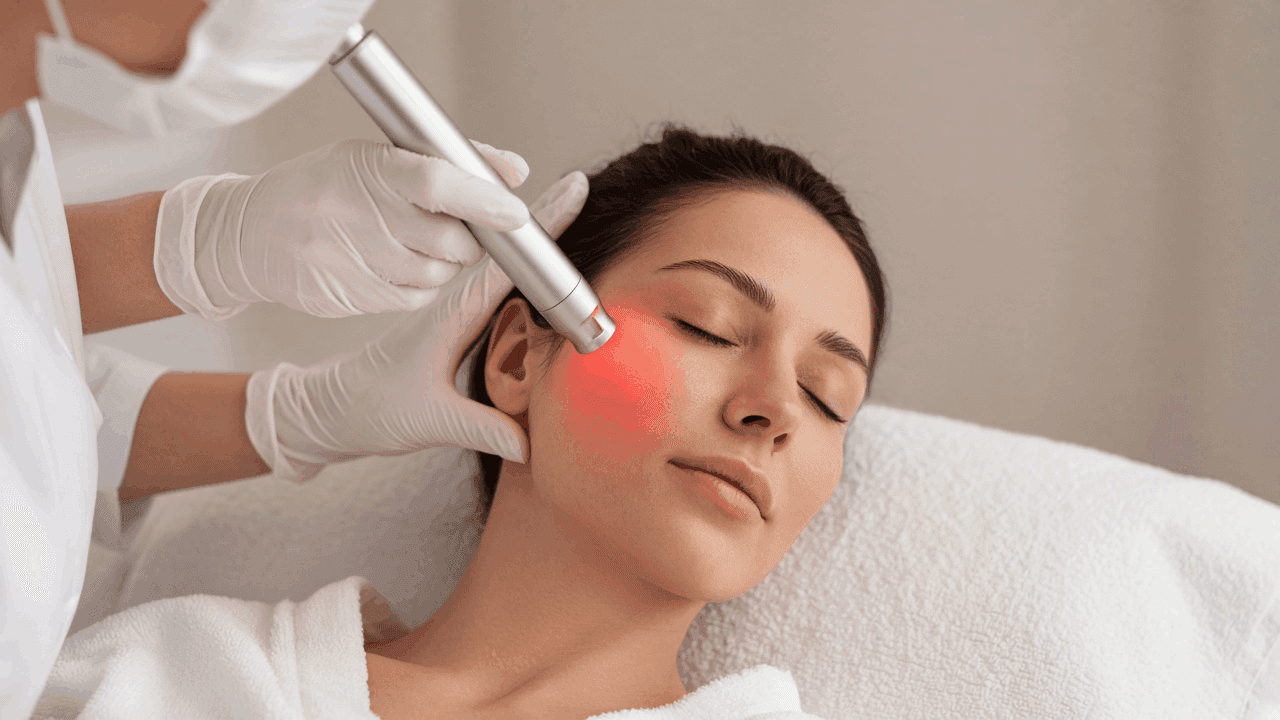
Red Touch Laser: collagen awakened by light
Red Touch Laser at 675 nm: how it stimulates collagen without needles, what it can improve on fine lines and texture, how many sessions are needed and why energy must be dosed carefully.
 regenerative-medicine
When a Therapy is Promising but Not Yet Proven
When a therapy is promising but not yet proven: what scientific evidence means, the phases of clinical research, and how to navigate with caution.
 regenerative-medicine
Breast Ptosis: Degrees, Causes and When to Have a Mastopexy
Breast ptosis (sagging breasts): degrees, causes and when to have a mastopexy. Difference between breast lift with and without implants and before and after results.
Want More Info?
If you need more information, call us at +39 02 76280736, message us on WhatsApp, email us at info.milano@imageregenerative.com, or use the form below.